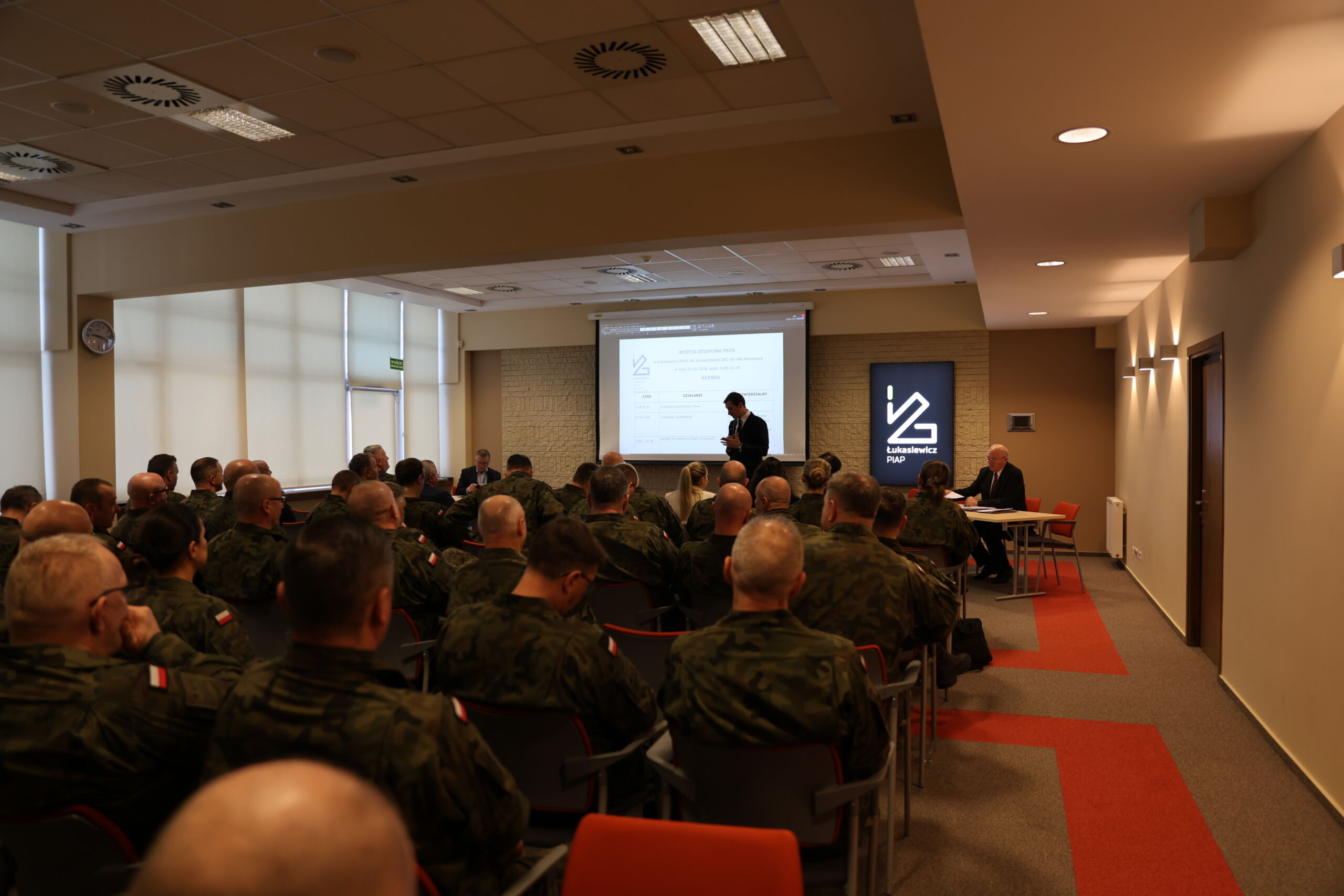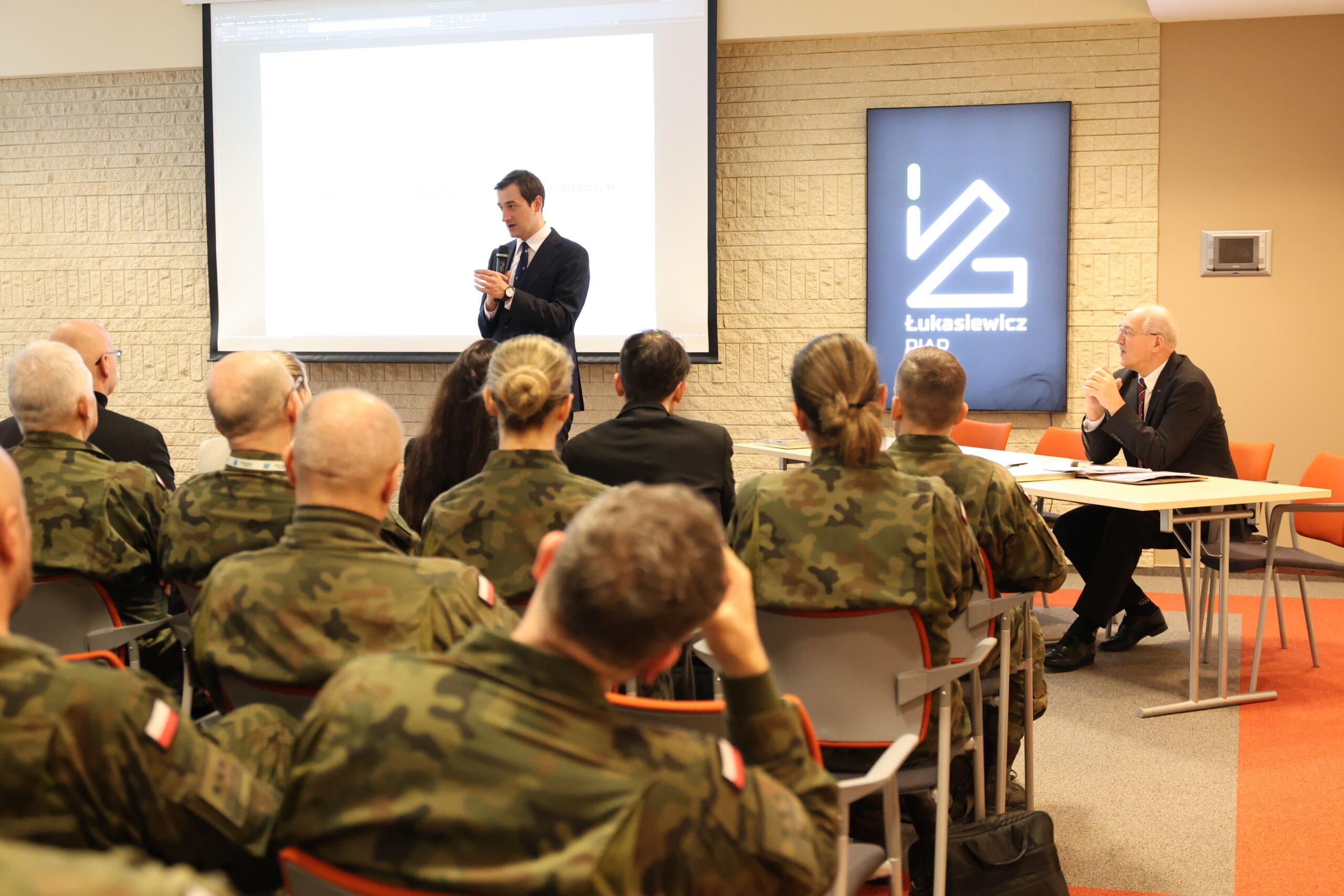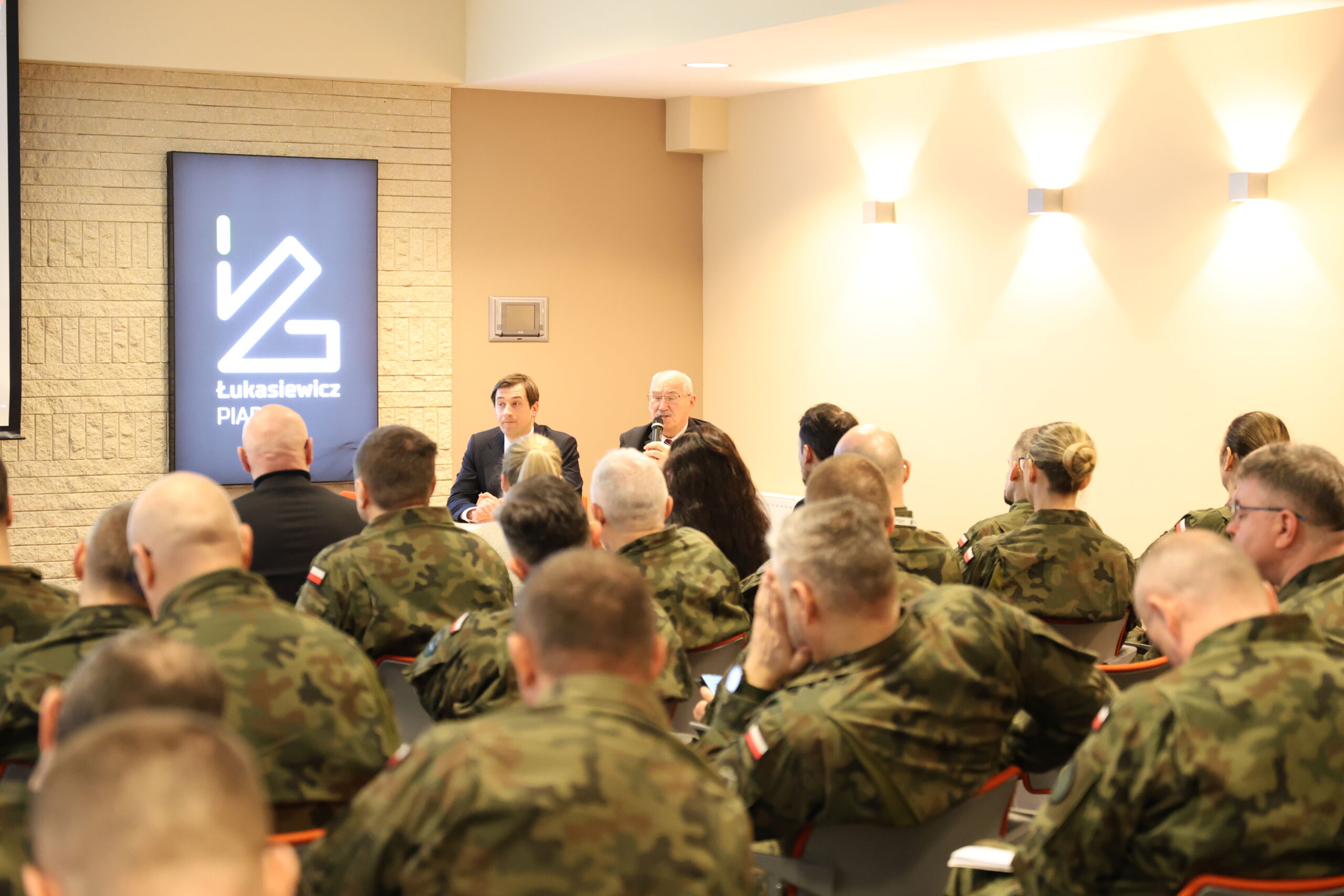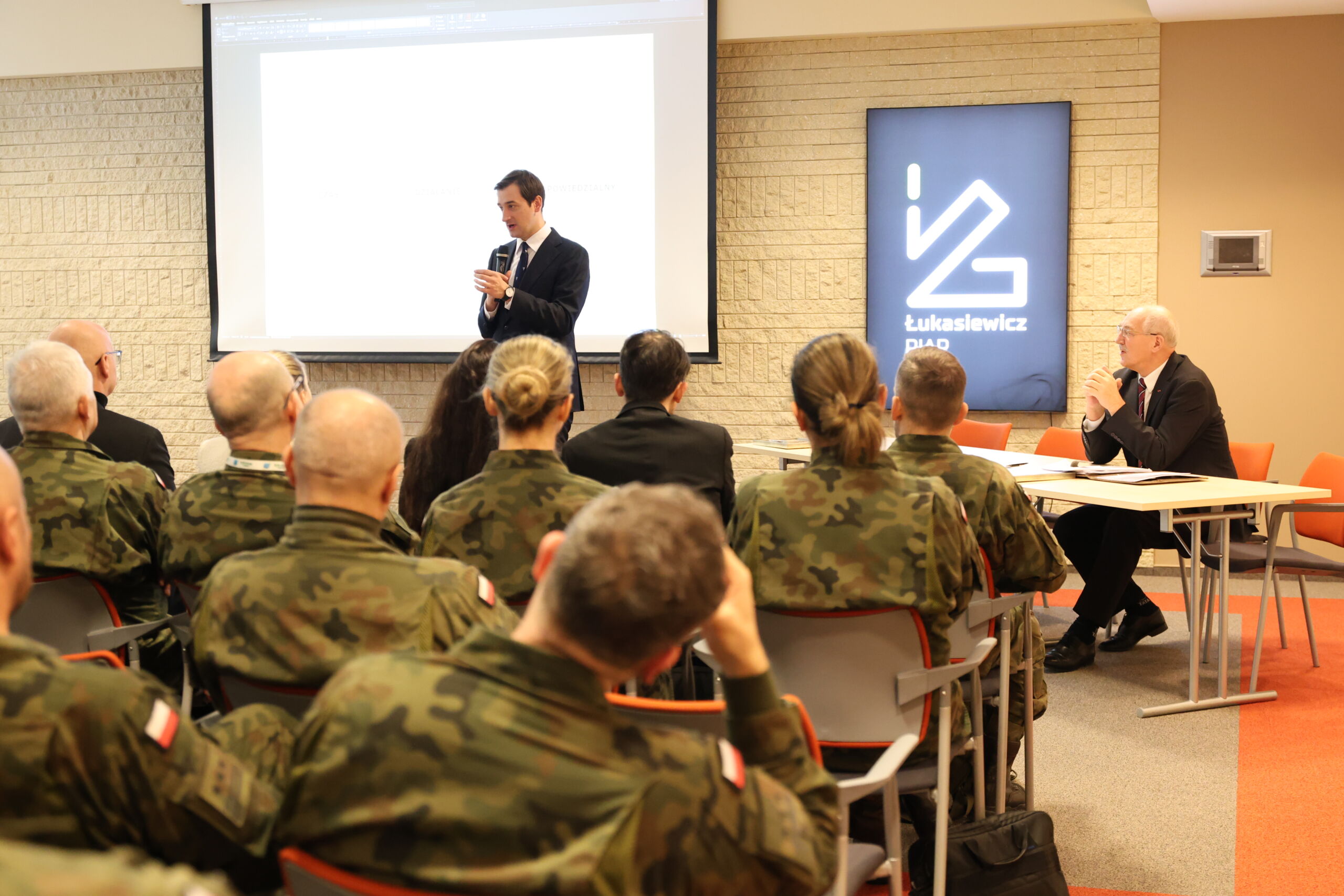
Łukasiewicz Research Network – Industrial Research Institute for Automation and Measurements PIAP hosted participants of the Postgraduate Studies in Defence Policy (PSPO) at the War Studies University in Warsaw. These studies are intended for officers and representatives of institutions responsible for state security, combining strategic knowledge with first-hand exposure to key actors in the defence system. This is why the programme included a study visit to a research institute such as Łukasiewicz – PIAP.
PSPO study visits are a mandatory part of the programme and allow participants to learn about the technologies, processes and people behind the state’s defence capabilities. Their purpose is to understand how strategic decisions translate into research projects, solutions for the military and cooperation with industry.
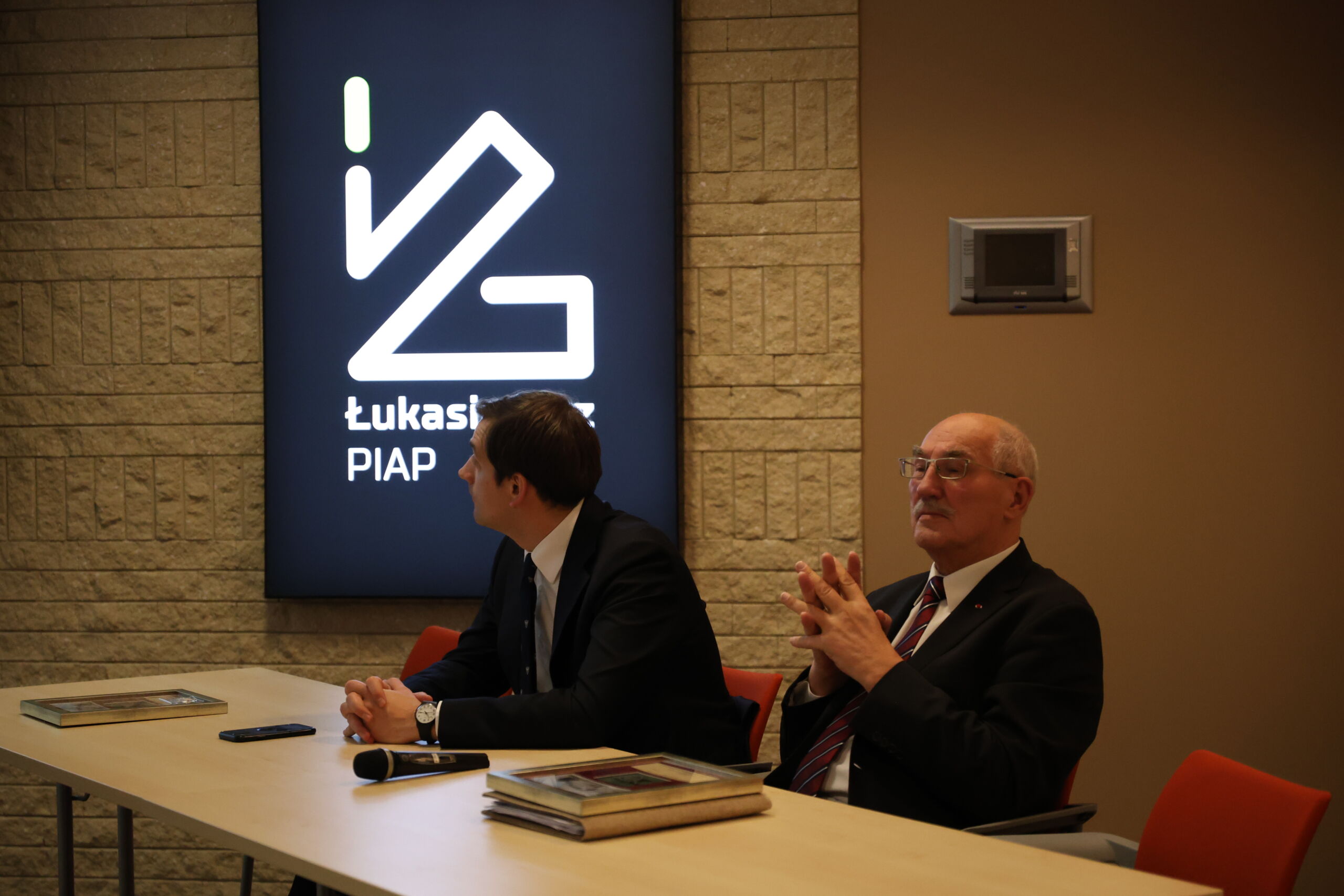
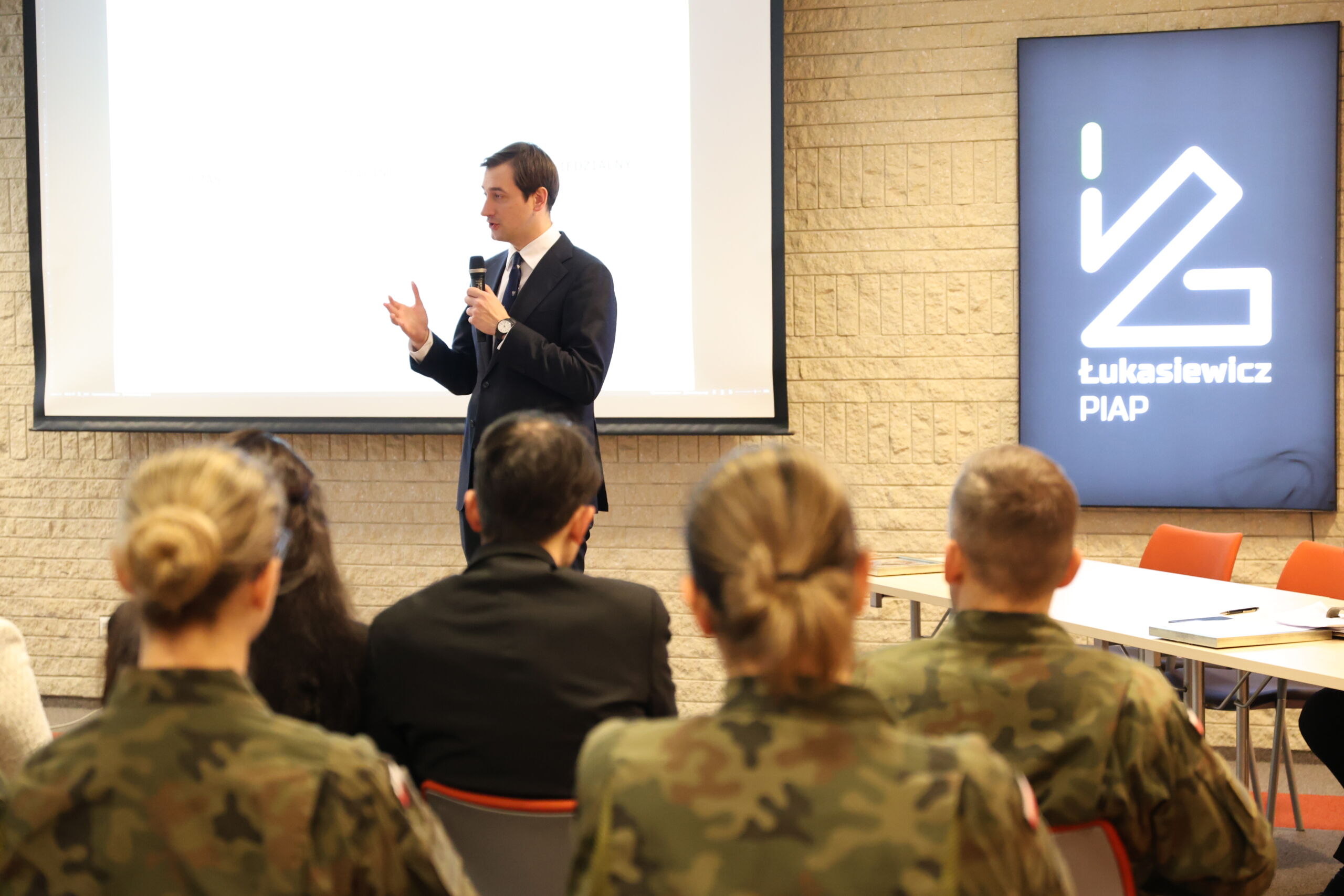
The meeting was opened by Dr Hubert Cichocki, President of the Łukasiewicz Center, who welcomed the PSPO participants and emphasised the role of the Łukasiewicz Research Network in building Poland’s modern defence capabilities. He noted that, at a time of the most significant technological transformation in decades, the security of the country rests on the shoulders of today’s military personnel.
Dr Hubert Cichocki stated that, in an era of current geopolitical tensions, national security requires technological sovereignty. He referred to research showing a direct relationship between spending on domestic defence technologies and the growth of R&D expenditure:
“The challenge of innovativeness in the Polish economy comes at a time when we are recording a significant increase in defence spending. This is a major opportunity for us, because all the data indicate that defence expenditure, and the companies created on the basis of this expenditure, are the greatest lever for economic innovativeness. In the defence industry, the intensity of research and development work is the highest in the economy and stands at around 15%, while the second-ranking industrial sector reaches around 8%.”
The level of innovativeness of our economy will determine whether Poland manages to make another leap forward and catch up with the wealthy countries of Western Europe in terms of development. This is why the institutes of the Łukasiewicz Research Network engage in all projects connected with the defence sector in order to increase synergy between defence companies and research institutes, to the benefit of the innovativeness of the Polish economy.
Łukasiewicz – PIAP for the military
For more than two decades, Łukasiewicz – PIAP has been among the pioneers of ground robotics for military and security applications. The institute develops and manufactures mobile reconnaissance robots that support soldiers and services in reconnaissance, engineering and counter-terrorism operations. The devices it produces are now used by the Polish Armed Forces and other uniformed services.
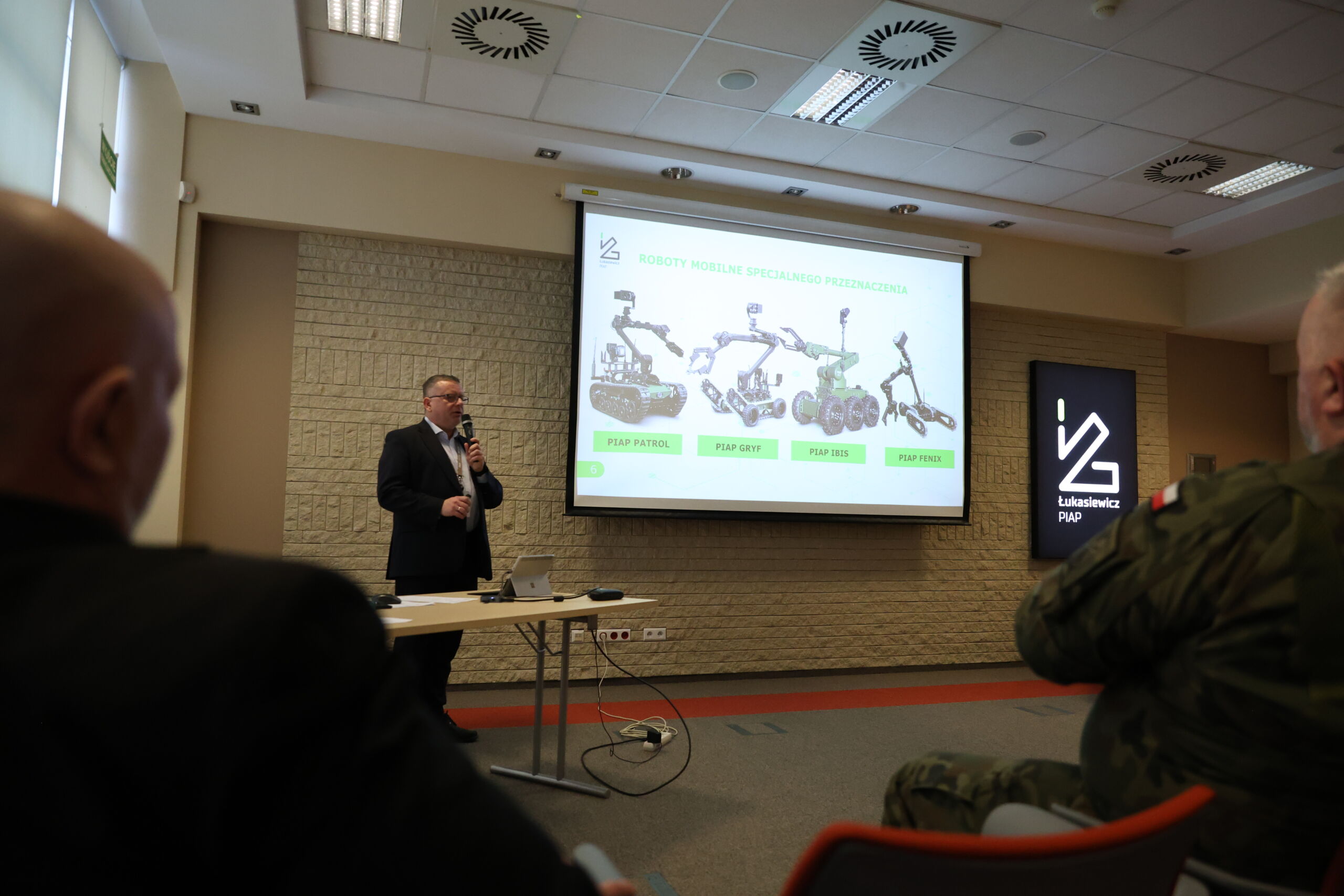
The Institute is currently developing an entire family of robotic platforms, including PIAP GRYF, PATROL, IBIS, FENIX and HUNTeR. These projects are developed in cooperation with the military and tested in training-ground conditions both in Poland and abroad. The Institute also has the capability to tailor the parameters of ordered devices. Łukasiewicz – PIAP solutions have already reached many foreign customers, including police and military forces in South Korea, China and Western European countries.
Gen. Mieczysław Cieniuch on innovation in the Armed Forces
The first substantive item of the meeting was a lecture entitled “Innovation in the Armed Forces”, delivered by Gen. Mieczysław Cieniuch, a retired general of the Polish Armed Forces, former Chief of the General Staff of the Polish Armed Forces and former Ambassador of the Republic of Poland to Turkey. In his address, the General focused on the role of technology in shaping the modern battlefield.
Gen. Mieczysław Cieniuch presented concepts of modern warfare based on the long-term economic resilience of the state and its ability to generate its own resources. He pointed to the important role of modern tools in optimising the costs of conducting war, such as precision-guided ammunition, as well as the development of new battlefield domains, including the cyber domain.
However, he warned against the excessive use of artificial intelligence by the command staff of the Polish Armed Forces, arguing that a commander should be unpredictable, and AI algorithms cannot provide that. He also noted the impact of drone technologies on the transformation of the battlefield and the need to adapt doctrine. As he said: “A soldier is best prepared for the war that has already taken place.”
Robots, autonomy and unmanned systems at Łukasiewicz – PIAP
Participants also listened to a presentation on the Competence Centre for Unmanned Systems within the Łukasiewicz Research Network, delivered by Prof. Piotr Szynkarczyk, Director of Łukasiewicz – PIAP. He presented the history and portfolio of the Institute, from the first EOD robots used by the Polish Armed Forces, through successive generations of mobile reconnaissance robots, to new projects in the field of automation and sensor technologies.
Another element of the visit was a presentation of selected robots. Łukasiewicz – PIAP instructors demonstrated the capabilities of the platforms developed by the Institute. The solutions created at the Institute respond to the growing need to reduce risks for soldiers and to transfer some tasks — from reconnaissance to threat neutralisation — to unmanned systems.
The substantive part of the meeting concluded with a presentation of the “CESAR” concept, prepared by Col. (Res.) Józef Wrona, PhD, DSc, Eng., Director of the International Cooperation Programme in the area of defence technologies and coordinator of a horizontal area at the Łukasiewicz Research Network. PSPO participants learned about the assumptions of the project being developed at Łukasiewicz – PIAP, which fits into the Network’s broader stream of work on advanced soldier-support systems and improving situational awareness on the battlefield.
A shared space for the military, science and industry
The study visit ended with a summary led by Col. Marek Pytel, PhD, which underlined the importance of building lasting relationships between the Ministry of National Defence, military and civilian universities, and the domestic research and development base.
Łukasiewicz – PIAP, as part of the Łukasiewicz Research Network, is a natural partner for the Polish Armed Forces and institutions responsible for security, providing not only equipment but also the knowledge, analyses and competencies necessary to design a defence policy based on modern technologies.