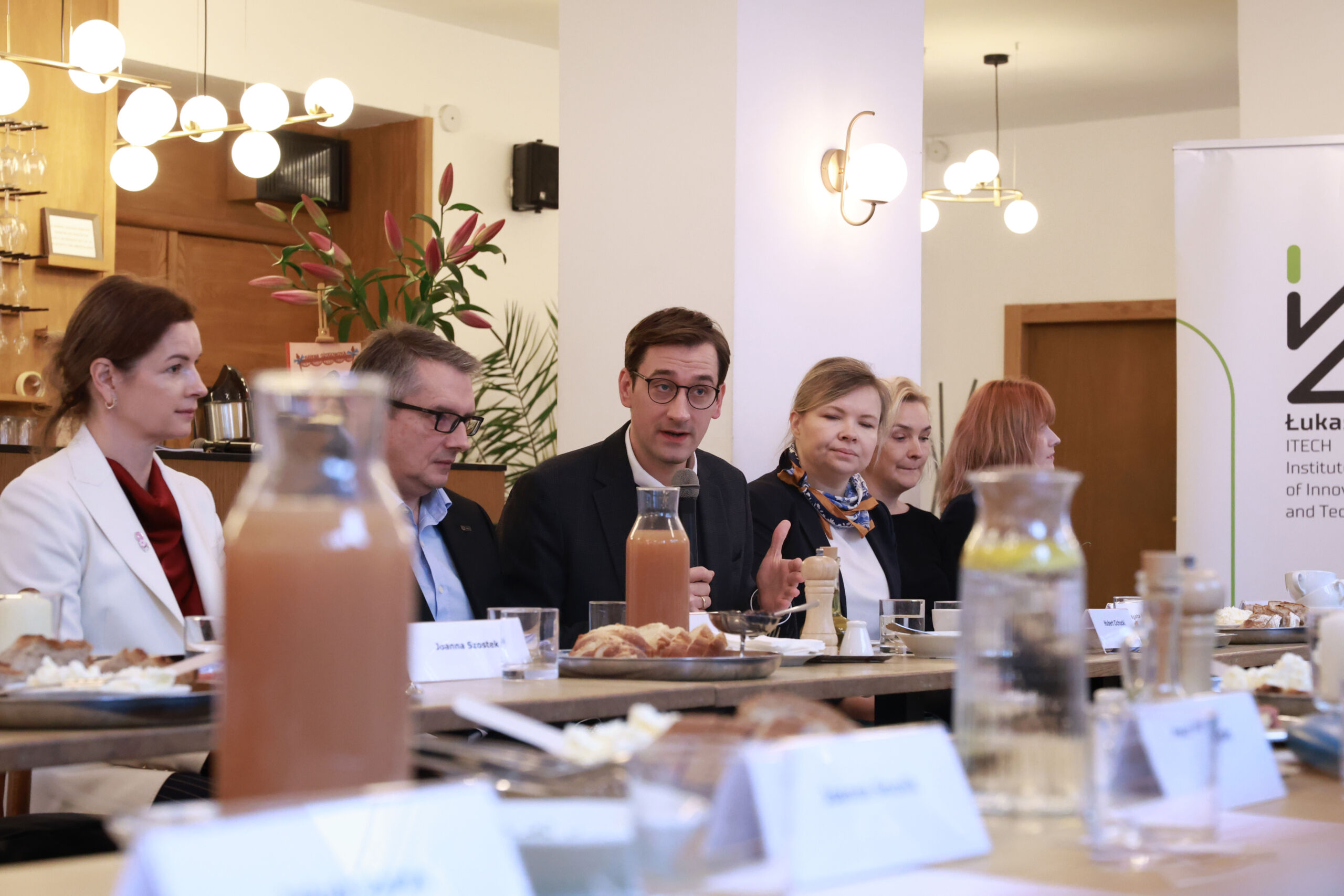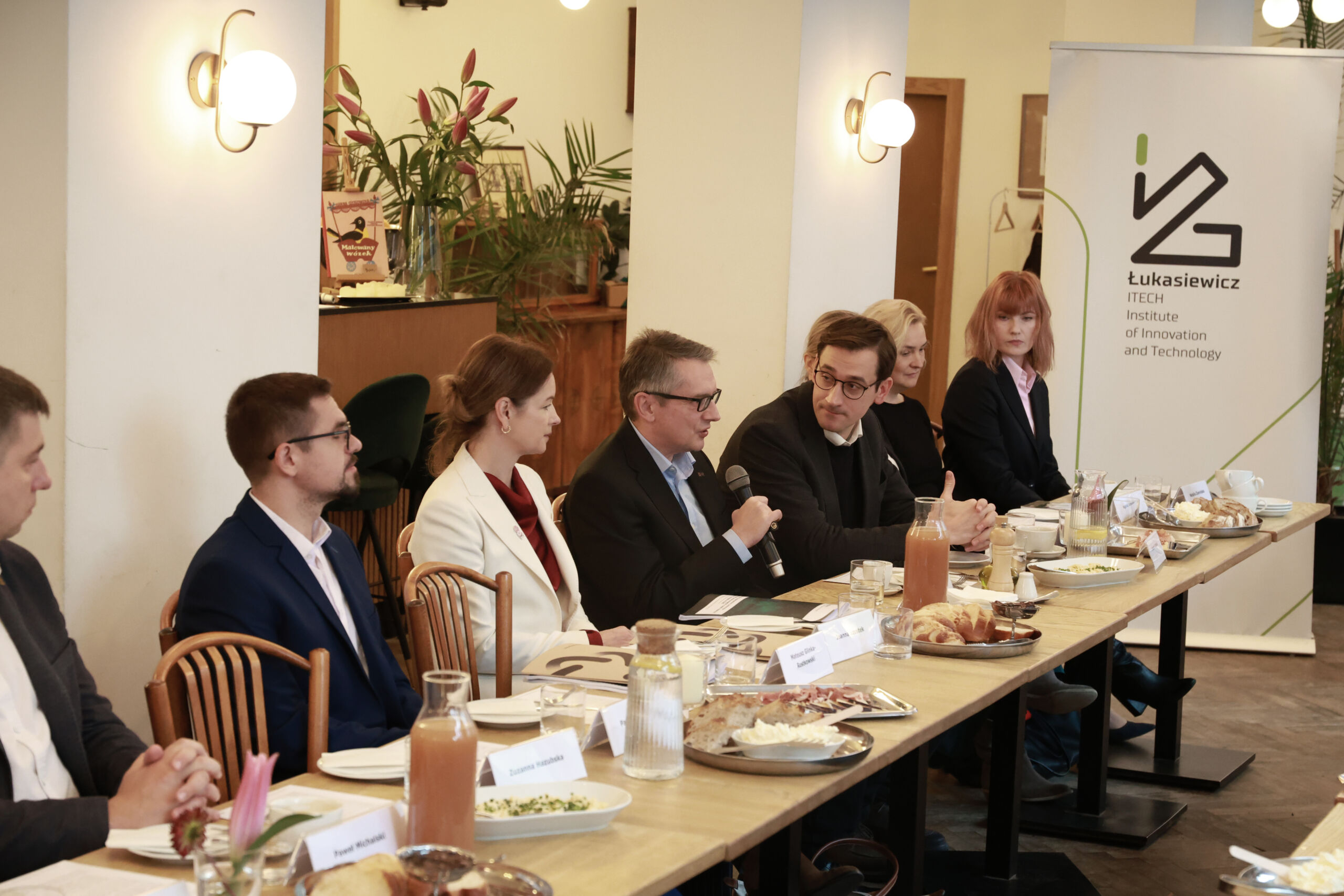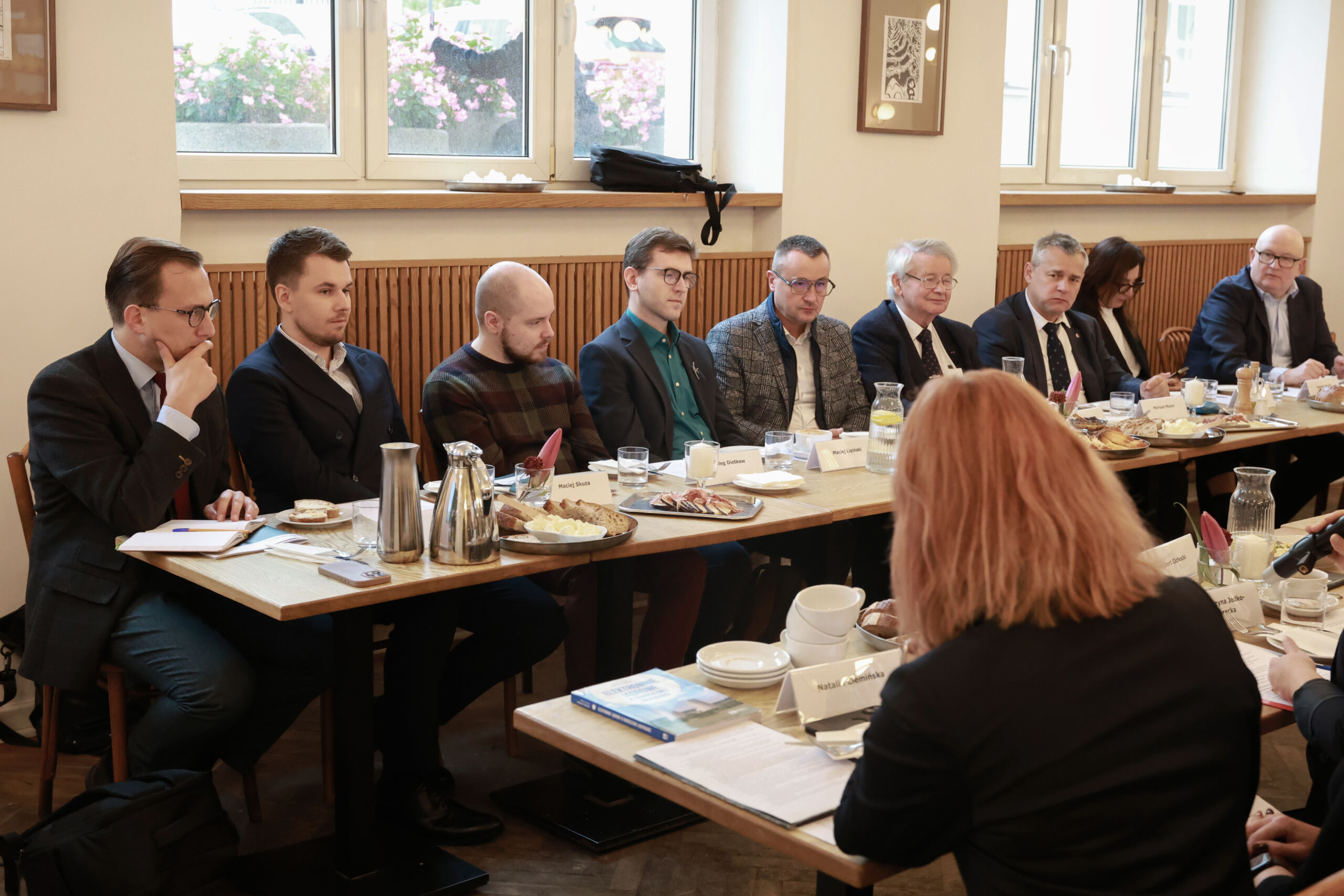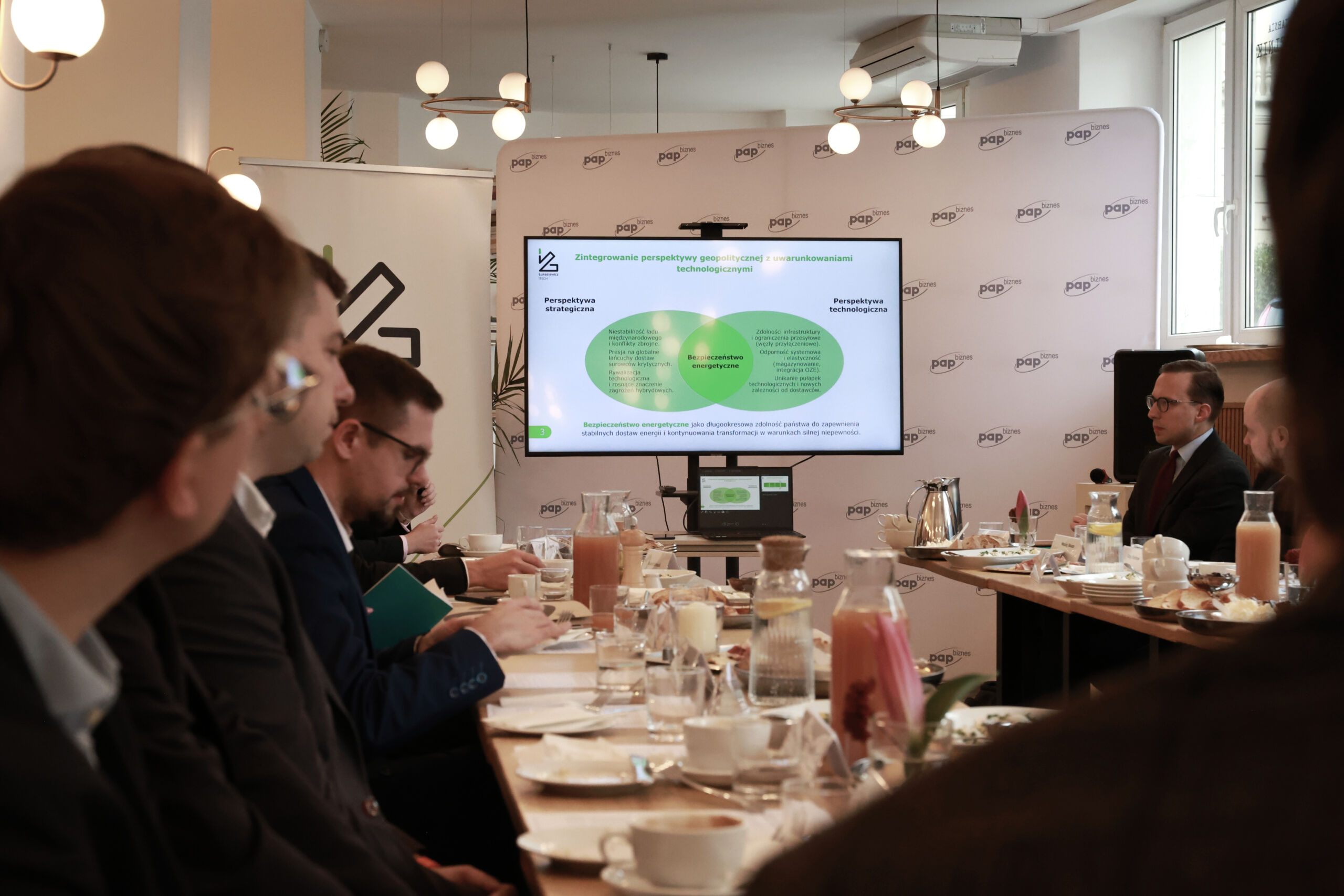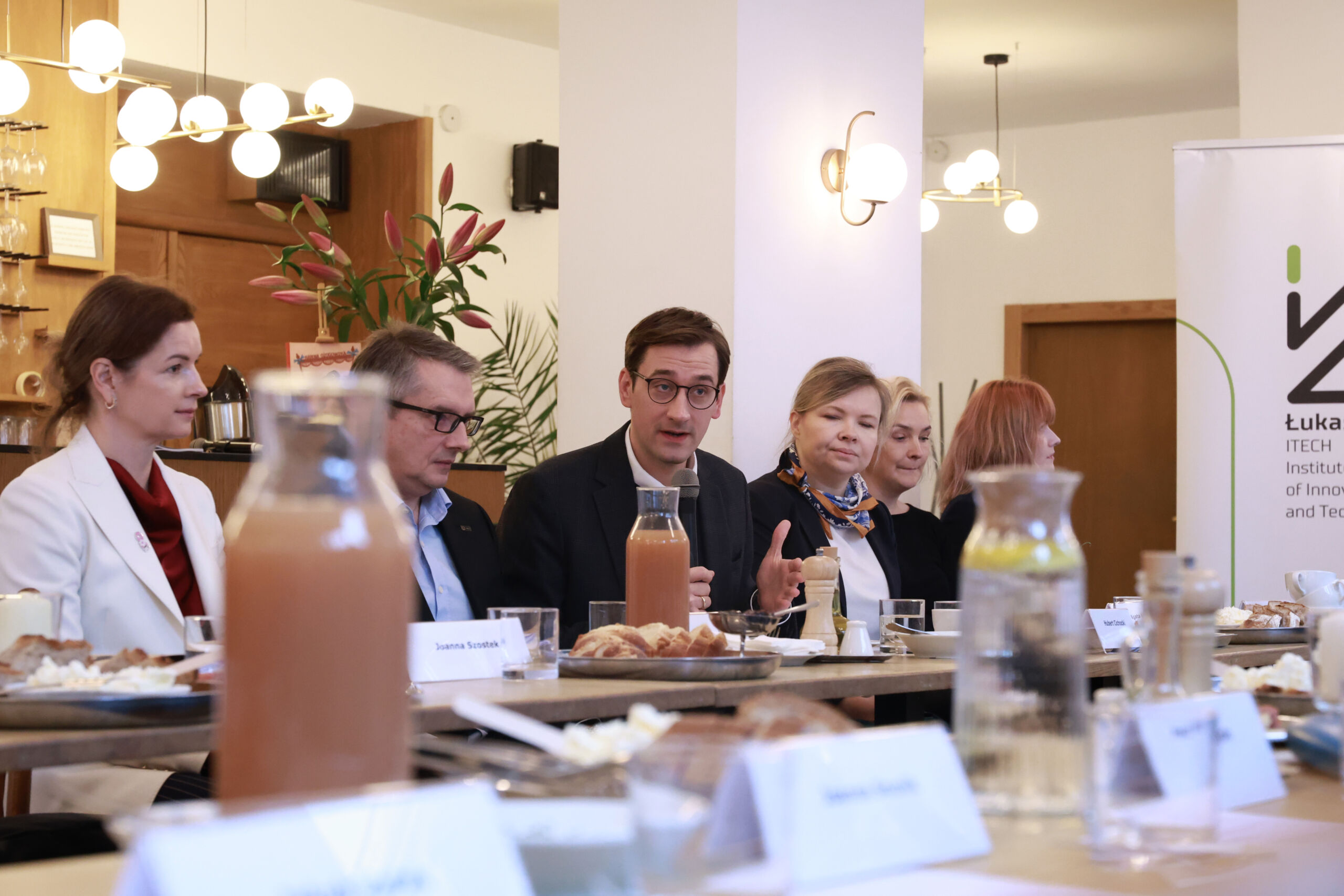
For the fourth time, Łukasiewicz – ITECH Institute of Innovation and Technology invited representatives from academia, industry, think tanks, and the media, among others, to an expert breakfast. This time, the occasion for the meeting at the “Czytelnik” café in Warsaw was the release of the foresight report titled “Resilience, Security, Transformation: Poland’s Energy Security 2040.” The analysis was prepared by the Center for Analysis and Technology Development at Łukasiewicz – ITECH.
The document, authored by Dr. Kamil Bromski, Dr. Eng. Natalia Ziemińska, and Kinga Panek, M.A., presents three possible trajectories for the nuclear program: a peripheral scenario, stable implementation, and an ambitious transformation. The transition between these trajectories is determined primarily by the stability of funding, political continuity, institutional efficiency, the pace of implementation, the resilience of supply chains, and public support. The theses presented in the publication were compared with the findings of the report “Poland’s Nuclear Energy Program: Prospects for Implementation in Light of Expert Opinions,” prepared by the Center for Energy Transition Research, Łukasiewicz – ITECH, and also served as a starting point for discussion among the invited guests. During the discussion, participants debated, for example, the need to continuously improve the skills of personnel involved in the initiative and considered ways to diversify the project’s funding sources.
Local content also plays a key role, as do the more than 120 Polish companies with international experience that are successfully operating in the nuclear energy sector. By having entities that have built up expertise and processes, we already have knowledge of their market-proven experience and capabilities. It is much easier to strengthen existing expertise in this way than to build it from scratch. “In addition, we will significantly increase the share of local participation in the entire project, which will also contribute significantly to economic growth,” emphasized Dr. Hubert Cichocki, president of the Łukasiewicz Research Network, during the debate.
The discussion that ensued after the presentation of the report’s main points focused, among other things, on areas such as the security and resilience of the entire cycle—including fuel supplies, components, and services, as well as issues related to technology transfer—including the preparation of suppliers and the development of sustainable capabilities within the domestic industry.
It is also essential to maintain public acceptance, which must be sustained through reliable information, public participation in decision-making, and a credible presentation of the benefits of development. And the benefits of nuclear energy are undeniable,” noted Dr. Katarzyna Jodko-Piórecka, Deputy Director of Research at Łukasiewicz – ITECH.
The guests also discussed issues related to the achievement of milestones—including the stability of funding, regulation, and institutional accountability, as well as the transparency and social sustainability of the program—including dialogue with local governments and communities.
The Łukasiewicz Research Network is actively involved in the development of the Polish nuclear sector. This is achieved, among other things, through cooperation with Polish Nuclear Power Plants and OSGE, the development of the Nuclear Competence Center at Łukasiewicz – IEL, and the implementation of joint projects that integrate the potential of the institutes. The report presented during the expert breakfast is thus another building block contributed by our researchers to the development of civil nuclear energy.
Poland’s first nuclear power plant is set to be built in the Pomeranian Voivodeship and begin generating electricity in 2036. The current schedule calls for submitting an application next year for a construction permit for the project in the municipality of Choczewo.