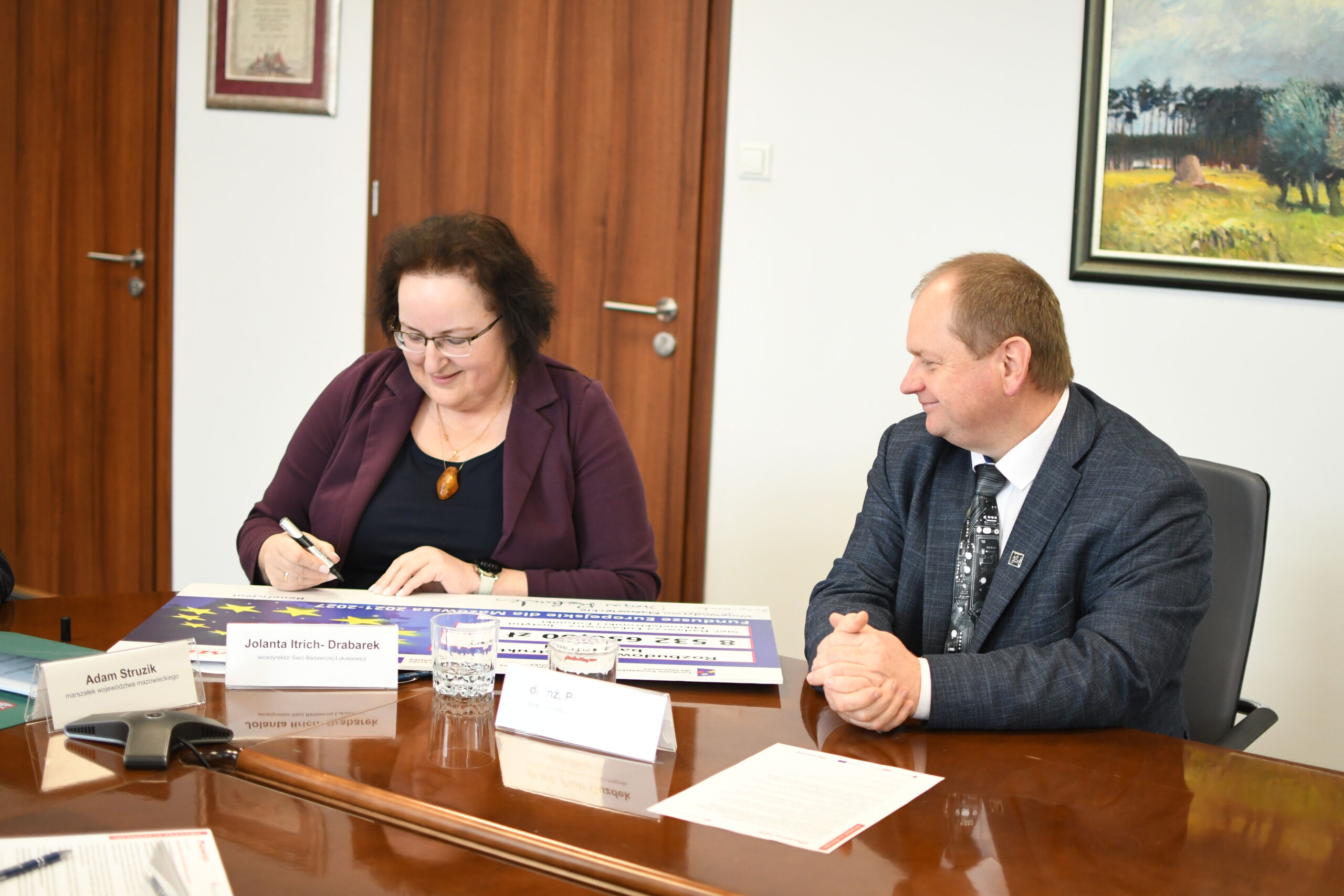
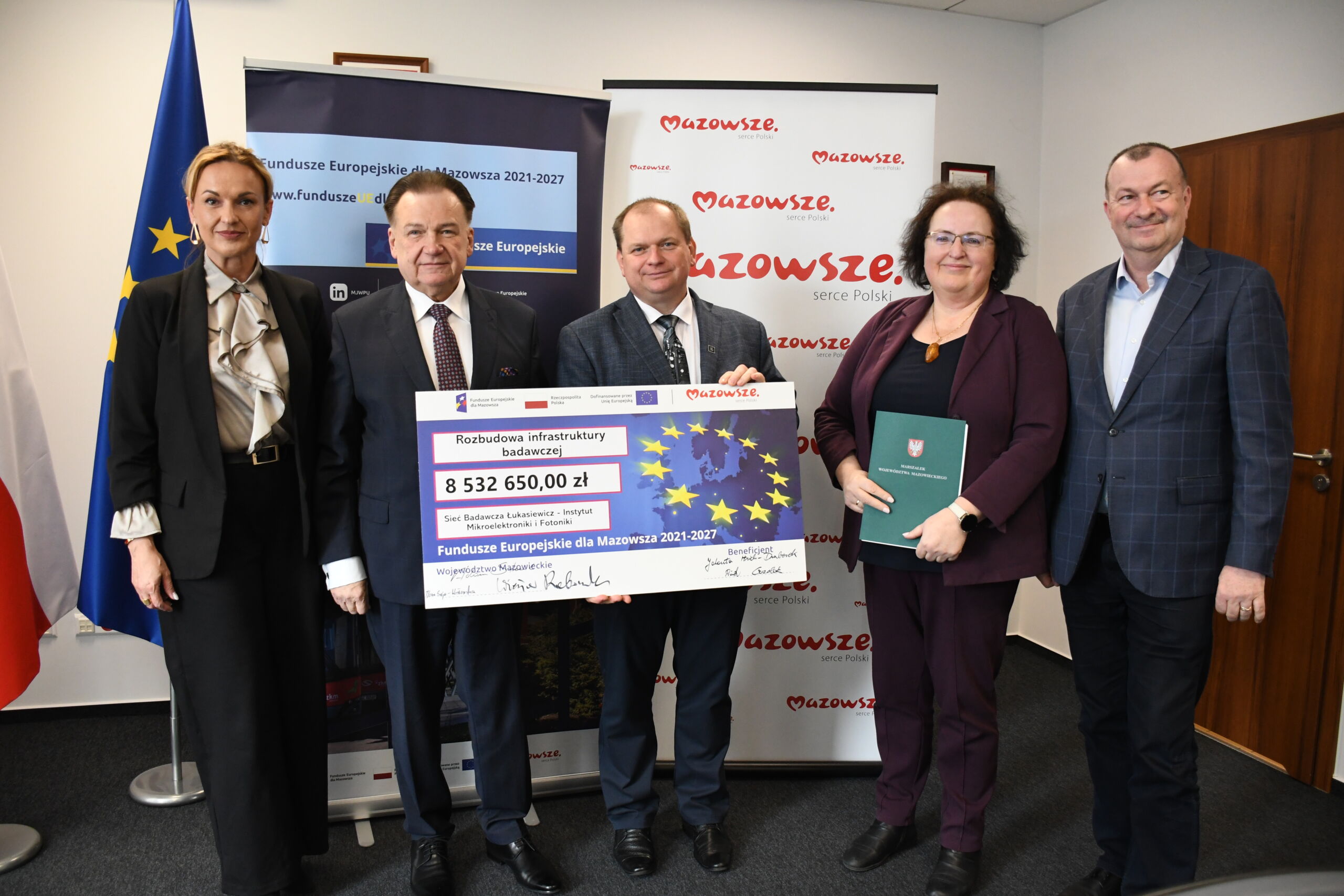
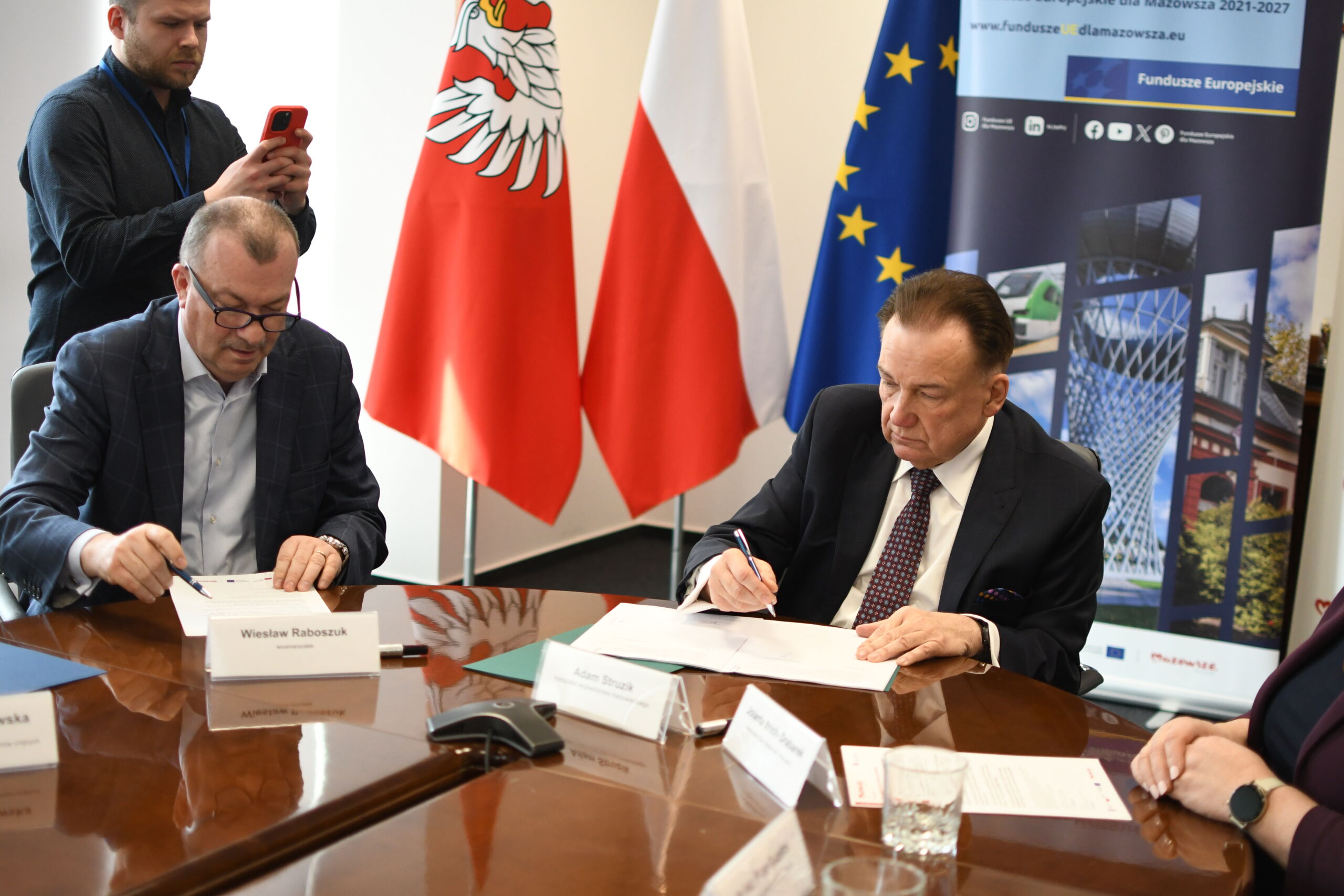
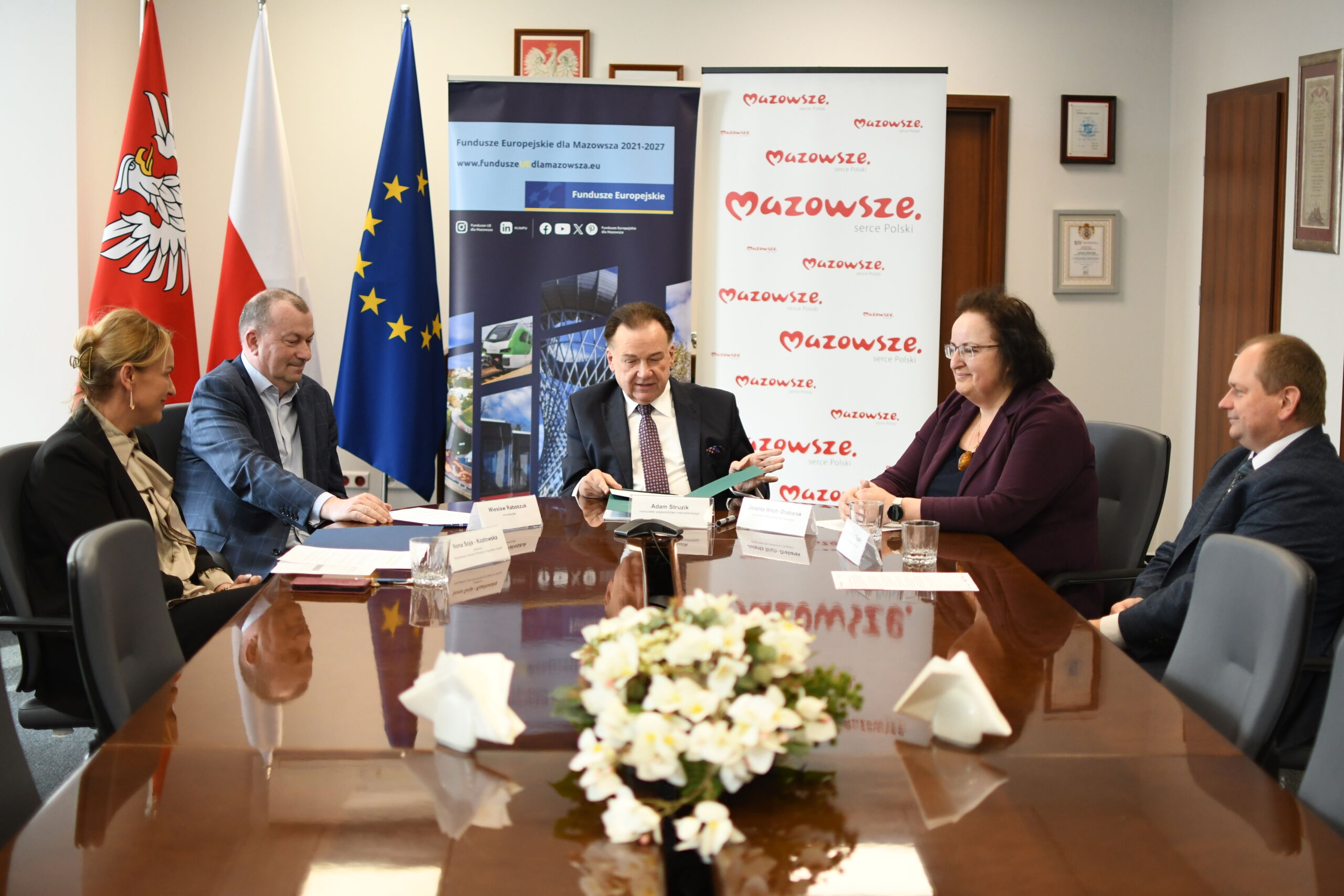
Łukasiewicz Research Network – Institute of Microelectronics and Photonics (Łukasiewicz – IMiF) has received more than PLN 8.5 million to develop modern research infrastructure. The funding comes from the European Funds for Mazovia 2021–2027 programme. As a result, a research and development centre for ICL and T2SL laser technologies, unique in Poland, will be established.
The Institute of Microelectronics and Photonics, which is part of the Łukasiewicz Research Network, will purchase a modern device: a molecular beam epitaxy (MBE) reactor that enables the creation of very thin layers of special materials. These materials are necessary for the production of advanced lasers, sensors and detectors operating in the infrared range.
“Our region will gain research facilities that are unique nationwide. Such technologies are used, among other areas, in medicine, industry, defence and modern electronics. Until now, this type of research has not been carried out in Poland. Now it will be possible here in Mazovia,” emphasises Adam Struzik, Marshal of the Mazowieckie Voivodeship.
“Polish research in photonics is at a high global level. Łukasiewicz – IMiF is the leading unit in this field in our country. We participate in many projects supporting the security and defence of the entire region. The purchase of the reactor brings us significantly closer to the goal of technological sovereignty for Poland and Europe,” says Piotr Guzdek, PhD, Eng., Director of Łukasiewicz – Institute of Microelectronics and Photonics.
We are strengthening defence capabilities and developing the economy
The importance of the project for the world of science and industry is emphasised by Prof. Jolanta Itrich-Drabarek, PhD, DSc, Vice-President for Research at the Łukasiewicz Center.
“The Łukasiewicz Research Network is systematically developing competencies that allow us to create new technologies and implement them in the economy. Support from European funds enables us not only to continue work on innovative solutions, but also to expand opportunities for cooperation with industry,” notes Vice-President Itrich-Drabarek. “We are pleased that the authorities of the Mazowieckie Voivodeship appreciate our potential and contribution to the development of Mazovia.”
The project includes not only the purchase of equipment, but also the adaptation of laboratories for its installation. The new device will be integrated with the institute’s existing infrastructure.
“The project implemented by Łukasiewicz – Institute of Microelectronics and Photonics shows that European funds effectively support the development of innovative technologies in Mazovia,” says Deputy Marshal Wiesław Raboszuk.
The total value of the investment exceeds PLN 16 million, of which PLN 8.5 million comes from EU funding. The project will be implemented by the Infrared Photonics Research Group. All work will continue until the end of 2026.
After the purchase of the reactor, Łukasiewicz – IMiF will be the only centre in Poland with a complete ICL + QCL line. It will become a natural partner for the photonics and microelectronics industry and will increase its attractiveness for researchers and doctoral students.
Laser technologies for the environment, security and medicine
Work in the medium- and long-wave infrared ranges (MWIR/LWIR) will enable precise detection of chemical substances and real-time identification of threats, which is crucial for environmental monitoring and public security systems.
The new infrastructure will make it possible to develop photonic integrated circuits (PIC), enabling the miniaturisation and increased efficiency of optical sensors. Such solutions will be used, among other applications, in gas detection systems, air quality control, industrial monitoring and dual-use technologies used in the defence sector.
In addition, the development of in-house epitaxy technology for III–V structures will increase the reliability and repeatability of device parameters, which is essential for their implementation in critical systems.
The purchase of the MBE reactor will also bring direct benefits to medicine by enabling the development of advanced infrared lasers and detectors used in modern diagnostics. Work in the mid-infrared range (3–5 µm) will make it possible to detect diseases non-invasively by analysing the chemical composition of a patient’s breath, for example in the early diagnosis of cancer, diabetes or metabolic diseases.
The new infrastructure will also enable the creation of miniature, energy-efficient medical sensors that can be used directly at the patient’s bedside or in outpatient diagnostics. In addition, the use of modern semiconductor structures will improve the safety and durability of medical devices, making it easier to implement them in clinical practice.
Original article: https://lukasiewicz.gov.pl/unijne-wsparcie-rozwoju-technologii-laserowych-w-sieci-badawczej-lukasiewicz/