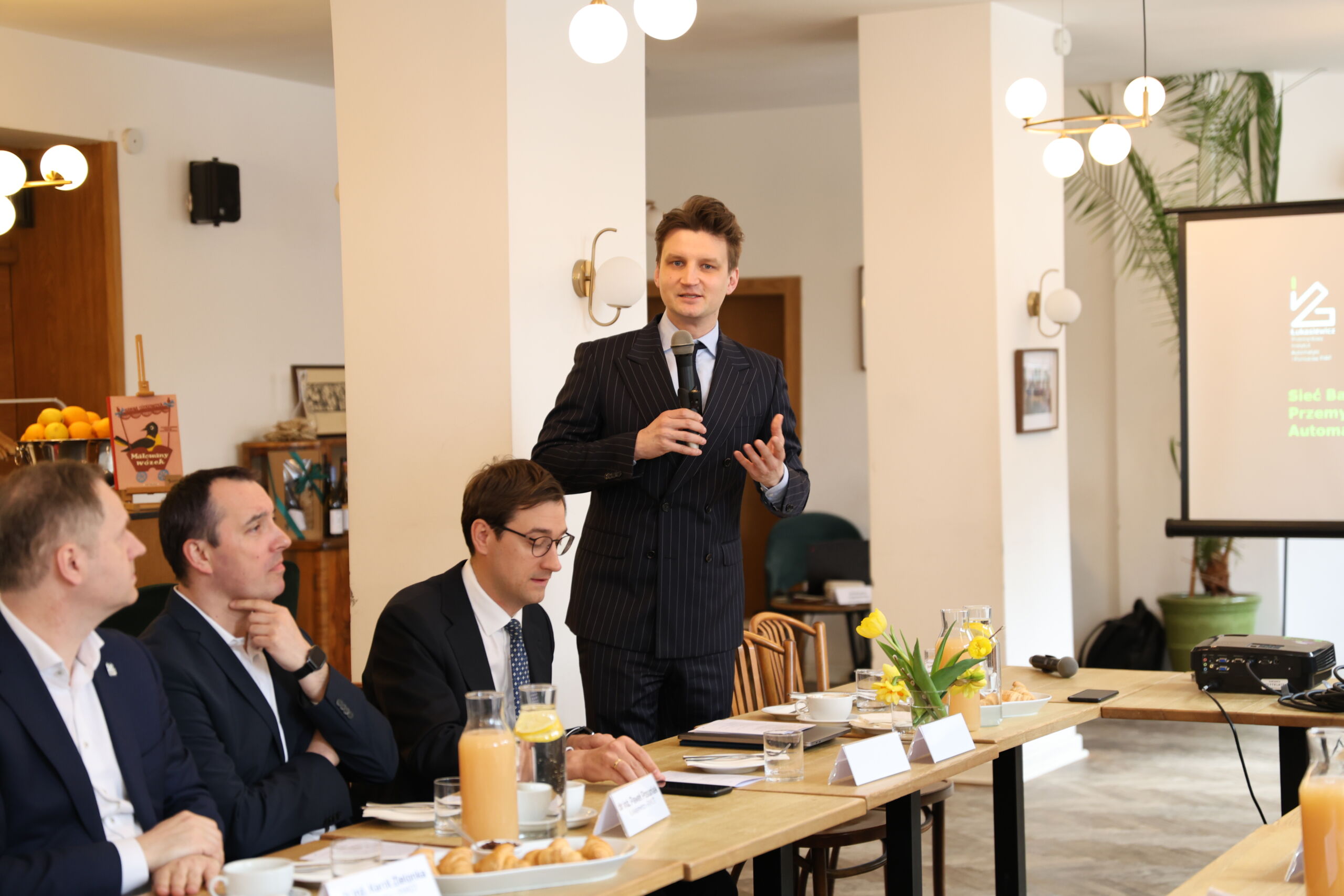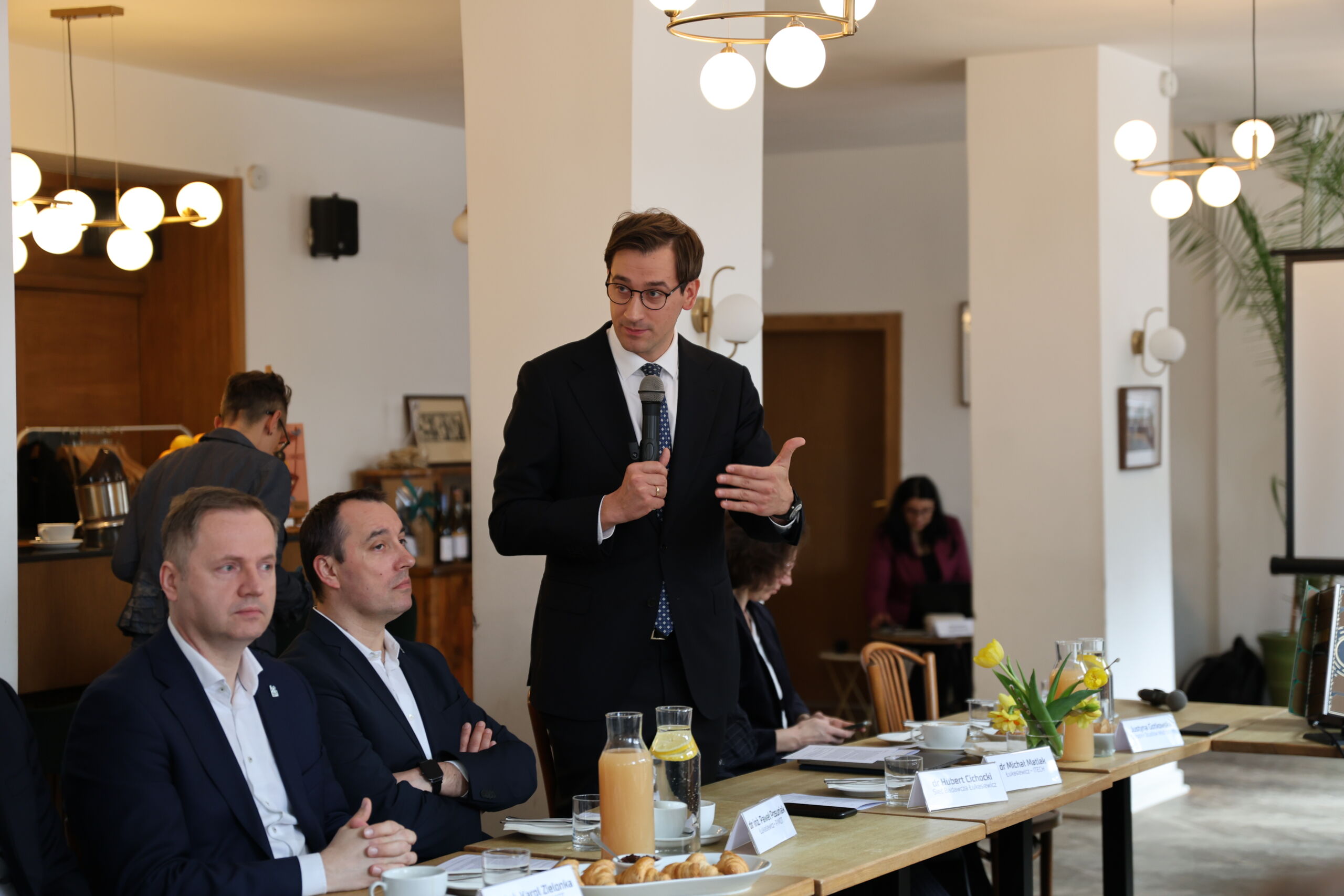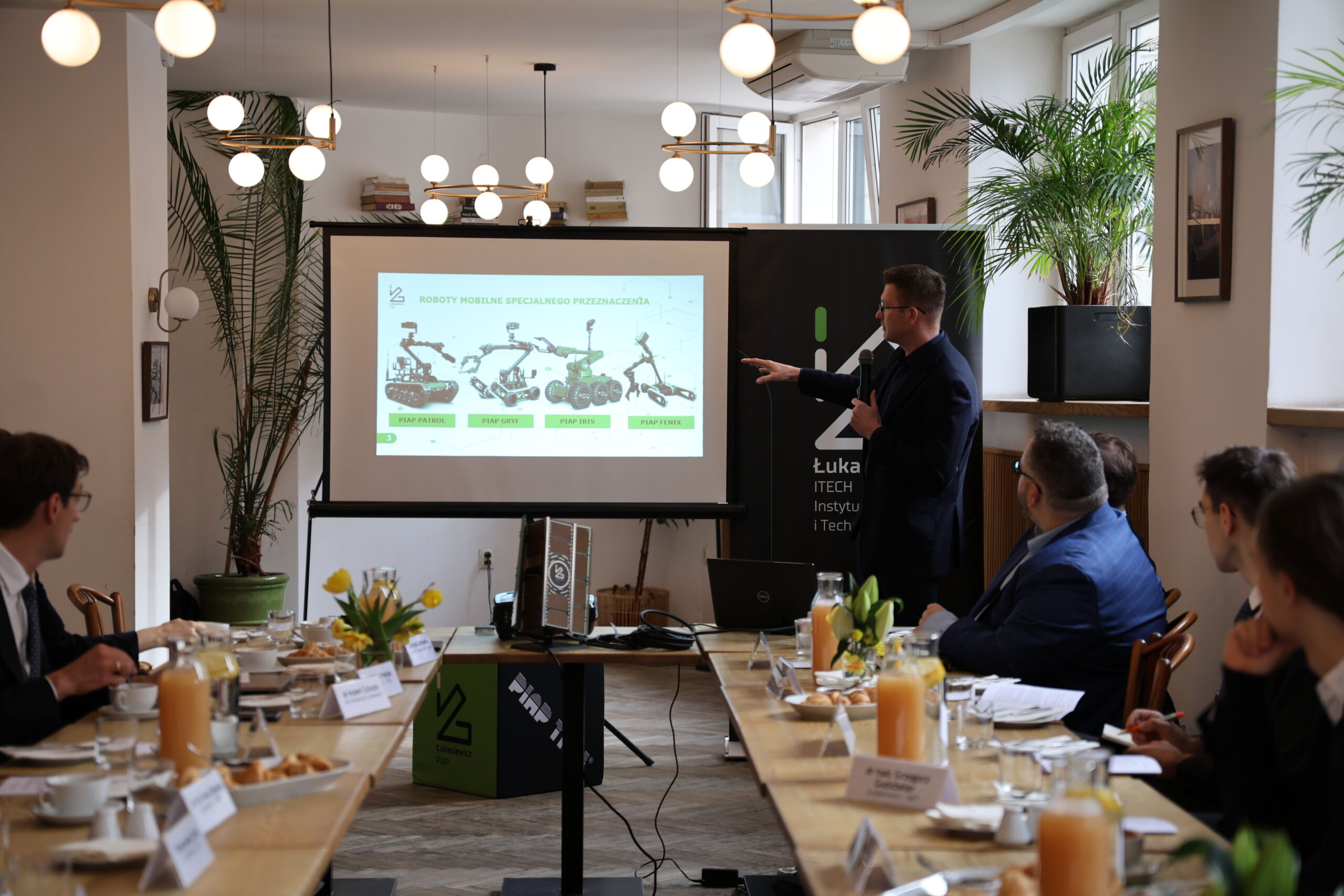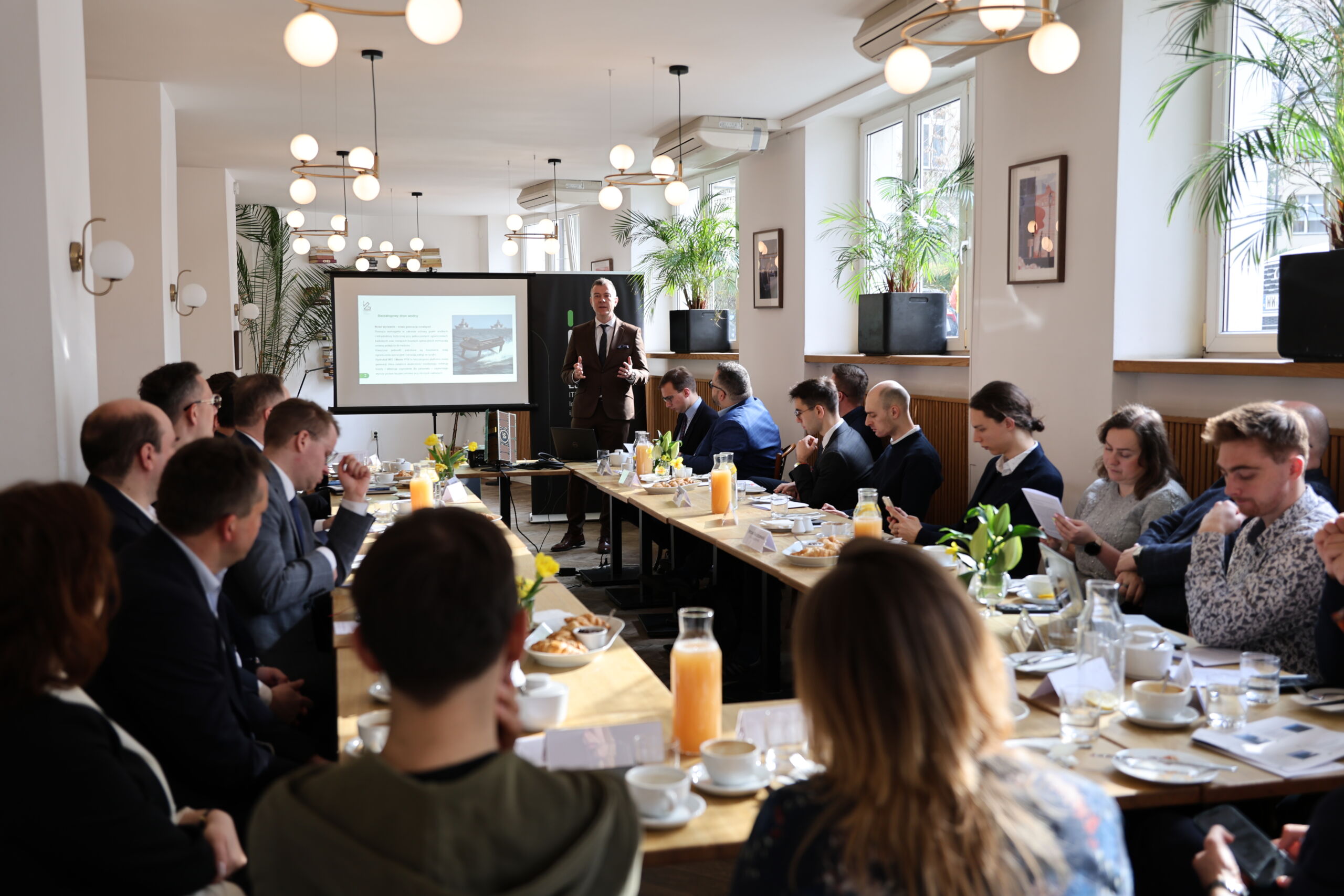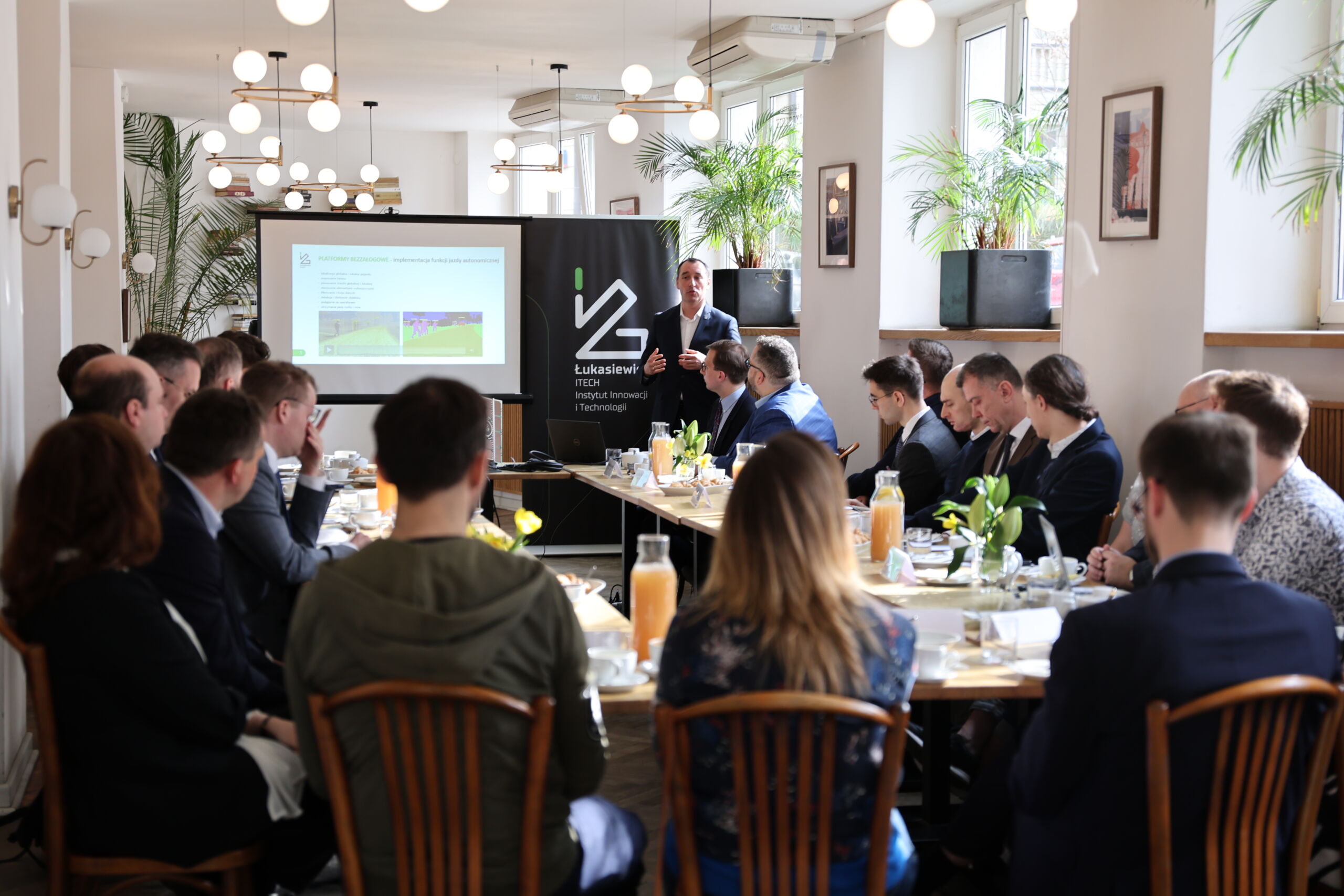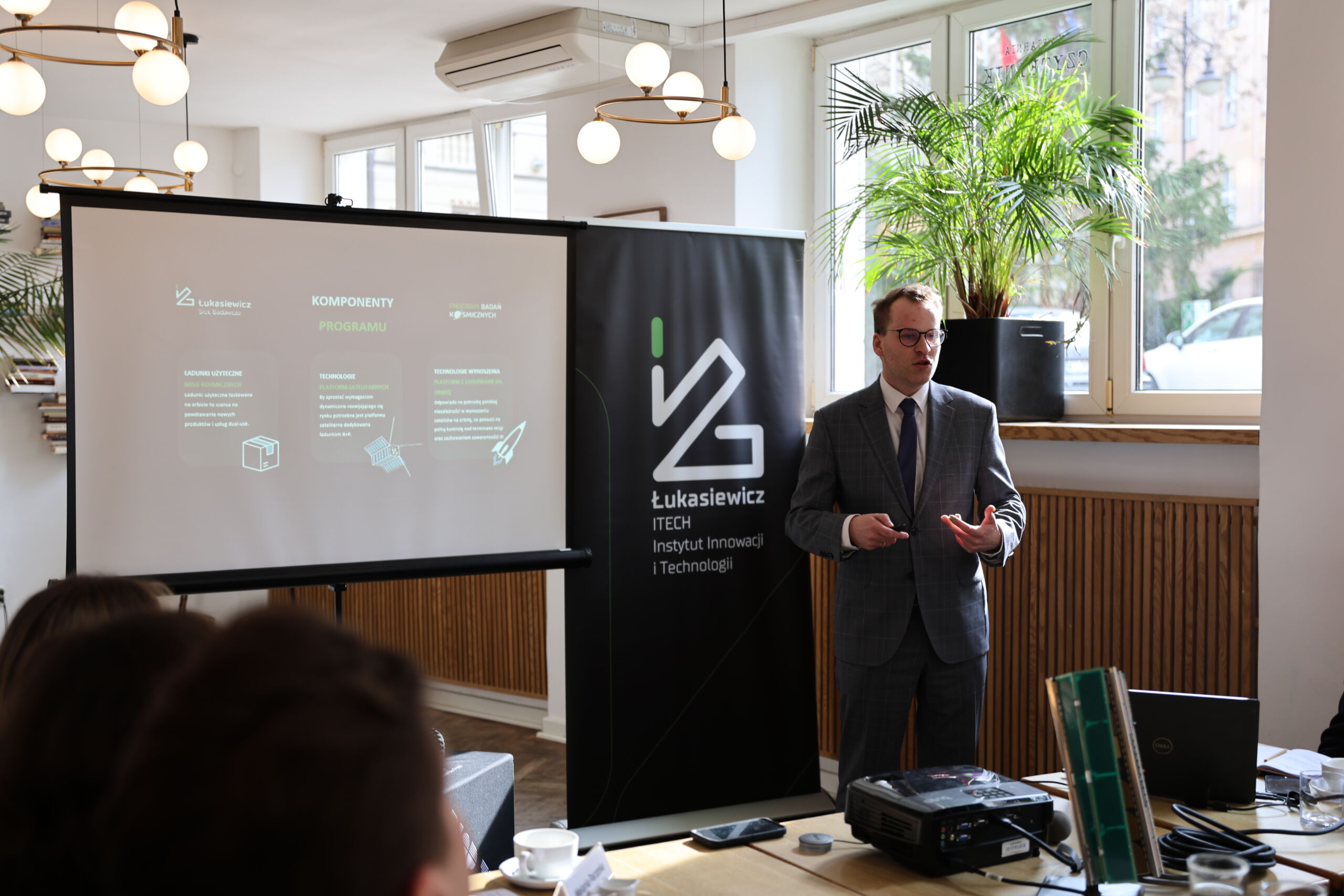
“No one cries for a robot. It can take a human’s place in the most dangerous areas of the battlefield or in zones at risk of explosion,” said Dr Maciej Cader of Łukasiewicz – PIAP, highlighting the value of automation and autonomisation. On 31 March, Łukasiewicz experts met with representatives of the media and think tanks to present the Network’s achievements in developing innovations for security.
Adam Okniński, who heads the Łukasiewicz Research Network Space Research Programme, presented the Network’s unique competences in rocket propulsion, satellite technologies, 3D printing and composite materials. What characterises these capabilities is their potential for dual-use applications. “In countries such as the United States and Israel, the same rocket stages are used in both civilian and defence products,” explained the Łukasiewicz – Institute of Aviation expert.
President of Łukasiewicz Centre Dr Hubert Cichocki emphasised that over the past two years the Network had been consolidating competences around technologies that can be used in security-related areas. Today, 67% of the organisation’s projects have such potential, compared with approx. 12.5% in 2023. “For the work of our engineers for security not to go to waste, we need buyers. The demand side is most often the Armament Agency, which is why we are building a broad expert coalition to support the implementation of Polish technologies in the defence industry and the Polish Armed Forces,” said the President of Łukasiewicz.
During the meeting, Łukasiewicz – WIT presented the Manta water drone, which can patrol bodies of water even in the face of heavy signal jamming. The platform, being developed towards full autonomy and the ability to scale from a single unit to a swarm system, is intended for monitoring critical infrastructure, rescue operations and reconnaissance before manned Border Guard or Polish Navy units enter an area.
Advanced terrain mapping and digital simulation technologies presented by Łukasiewicz – PIMOT have particular potential from the point of view of the Network’s synergy. – We are developing systems that collect data used to train neural networks, localise vehicles and recognise objects,” said Dr Eng. Karol Zielonka, Director of the institute.
This is one of many areas where cooperation between institutes creates additional value. “The heavy land drone PIAP – HUNTeR has to decide whether it can safely drive over a branch lying in the road, or whether there is a risk of damage. For humans this is easy, but autonomous vehicles require sophisticated software here,” explained Dr Maciej Cader.
The ILR-33 BURSZTYN 2K suborbital rocket, which has already been tested in space, attracted interest from the media and the non-governmental sector. The next step — the development of a rocket capable of placing satellites into orbit — will be pursued by Łukasiewicz together with partners over the next decade under the Space Research Programme. Rocket propulsion systems developed at Łukasiewicz – Institute of Aviation are to be used on board the French reusable rocket MaiaSpace, Europe’s response to SpaceX’s offering.
There are more Łukasiewicz Research Network initiatives operating on a European scale. These include, among others, the interoperability of our drones tested during HEDI (Hub for EU Defence Innovation) field exercises, and involvement in more than 50 European Space Agency projects.
The expert meeting was organised by the Warsaw-based Łukasiewicz – ITECH Institute of Innovation and Technology. The next one will focus on the energy transition. Interested representatives of the media and the non-governmental sector are encouraged to contact media@lukasiewicz.gov.pl.