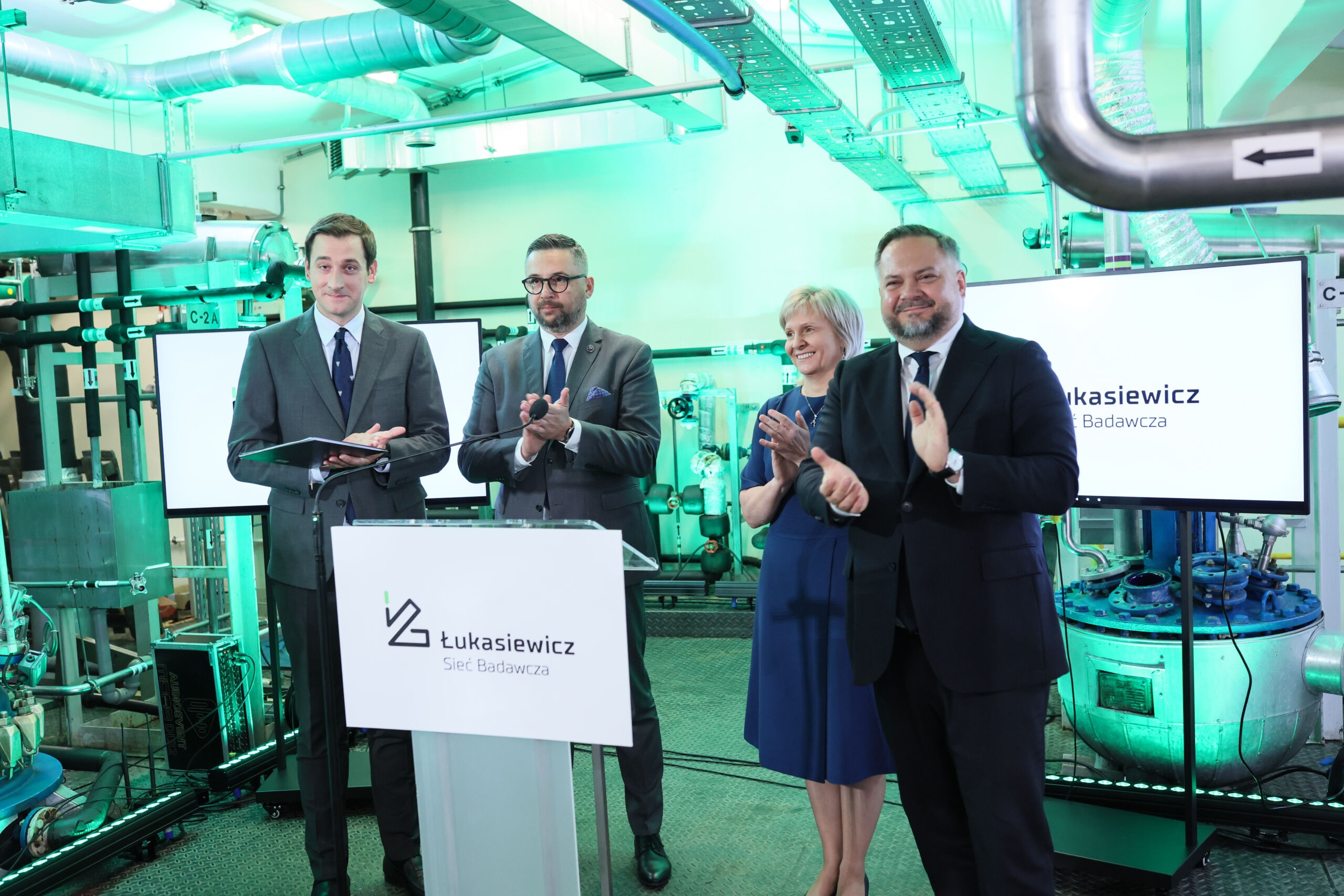
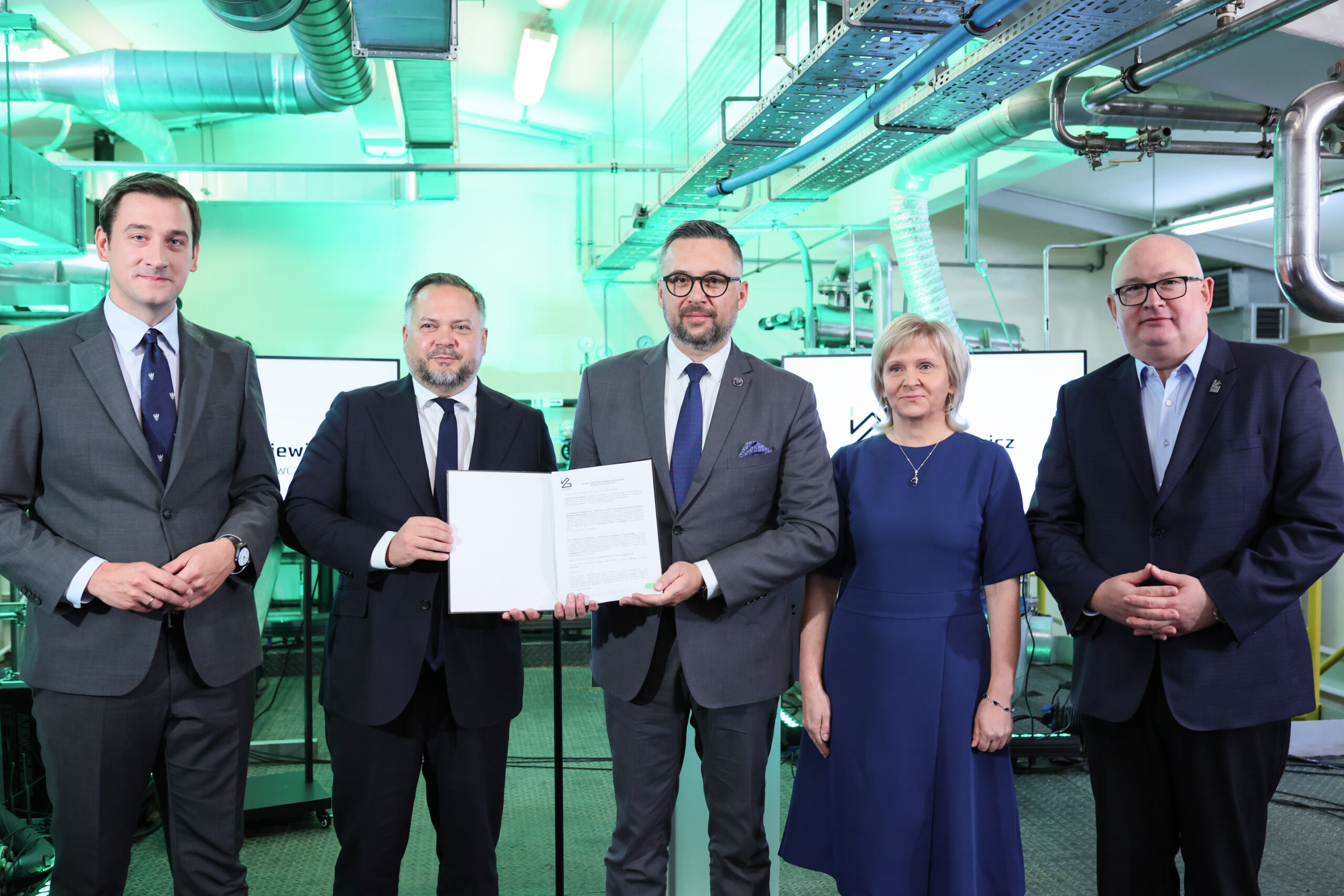
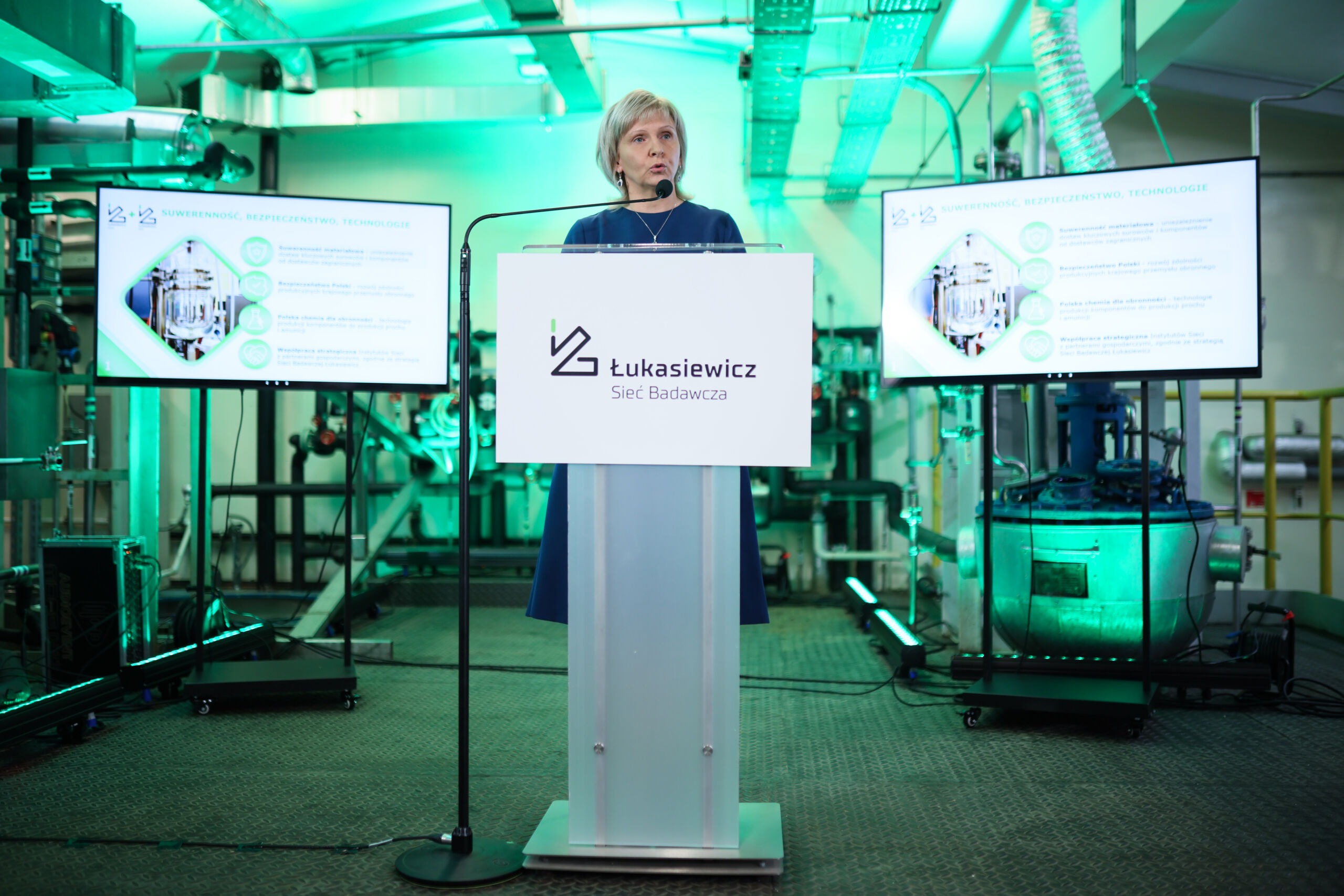
Łukasiewicz Research Network has launched two strategic research and development projects aimed at strengthening Poland’s sovereignty in ammunition production. The projects involve the development of domestic technologies for the production of nitrocellulose and nitroguanidine, essential components of multi-base powders and rocket fuels, which form the basis of modern ammunition.
In both cases, the planned results will not only reduce the unit costs of ammunition production, but above all, make the Polish defense industry independent of foreign supplies of raw materials and technologies.
“This is not just a scientific project, it is a strategic investment in the security and sovereignty of our country. Today, we are taking a step that makes us independent of foreign supplies and shows that modern technologies can be developed here in Poland with defense and sustainable development in mind,” says Minister of Science and Higher Education Marcin Kulasek.
The aim of the first project is to develop a technology to produce nitrocellulose based on cellulose recovered from wood and cotton waste and other waste materials. This will enable Poland to reduce imports – today, over 70 percent of Europe’s cellulose demand is covered by Asian supplies – and at the same time strengthen the circular economy. PLN 8.5 million has been allocated for this task.
The second project, with a budget of PLN 5.1 million, involves the development and verification of nitroguanidine synthesis technology. This substance is produced from urea, a chemical compound widely used in agriculture and the chemical industry, which is produced on a large scale in Poland.
These activities are in line with three of the four strategic directions of the Łukasiewicz Research Network: National Defense and Security, Chemistry for Industry, and Circular Economy.
“Providing technological components for the defense sector is our key task,” says Hubert Cichocki, President of the Łukasiewicz Center. “These two projects are a concrete, practical example of such activity. Thanks to them, solutions that are key to ammunition programs will be developed,” he adds.
The research work, as part of the task commissioned by the President of the Łukasiewicz Center, is being carried out by two institutes in the network: Łukasiewicz – Institute of Industrial Chemistry (Łukasiewicz – IChP, project leader) and Łukasiewicz – Institute of Organic Industry (Łukasiewicz – IPO). Łukasiewicz – IChP offers expertise in advanced chemical synthesis and unit processes, as well as a well-developed research infrastructure, while Łukasiewicz – IPO offers expertise in working with explosives.
Both institutes employ a total of over 500 specialists with the experience necessary to solve technological problems and implement the results of R&D work in the economy. The activities are coordinated by the Łukasiewicz Center. The technology for obtaining nitrocellulose will be ready for implementation within two years.
“The projects of the Łukasiewicz Research Network are in line with the needs of the defense industry,” says retired Polish Army General Mieczysław Cieniuch, former Chief of the General Staff of the Polish Army. He adds: “This will allow us to become independent from external suppliers more quickly in the production of the basic ‘means of combat’, which is large-caliber ammunition.”
Cooperation with Grupa Azoty
Grupa Azoty is interested in the results of Łukasiewicz’s projects. Since November last year, it has been working on the construction of a nitrocellulose plant and intends to develop nitroguanidine production technology.
We have many years of experience in supplying manufacturers of high-energy materials with the raw materials necessary for their production. In response to the needs of the Polish arms industry, we want to take our activities a few steps further, comments Andrzej Skolmowski, President of the Management Board of Grupa Azoty.
“In our updated business strategy, we anticipate the development of the high-energy products sector and the manufacture of products such as nitrocellulose, nitroglycerin, and nitroguanidine. We work closely with the Polish Armaments Group, and the Łukasiewicz Research Network provides us with the necessary research and development support in this area,” adds President Skolmowski.
It is worth recalling that at the end of 2024, Grupa Azoty and the Łukasiewicz Research Network signed a Letter of Intent concerning, among other things, cooperation in the field of defense and national security.
160 million from the National Reconstruction Plan for the development of Polish chemistry
As the leader of the Łukasiewicz project, IChP brings together the experience of several generations of Polish chemists. Exactly one hundred years ago, construction began on the headquarters in Warsaw’s Żoliborz district, where the institute has been operating continuously to this day.
The research infrastructure of Łukasiewicz – IChP is currently being expanded with additional advanced laboratories, and the technological and analytical facilities are being upgraded as part of the “Mościcki Campus” project, co-financed by the National Reconstruction Plan with nearly PLN 160 million. As a result, it will be one of the most modern chemical centers in Europe.