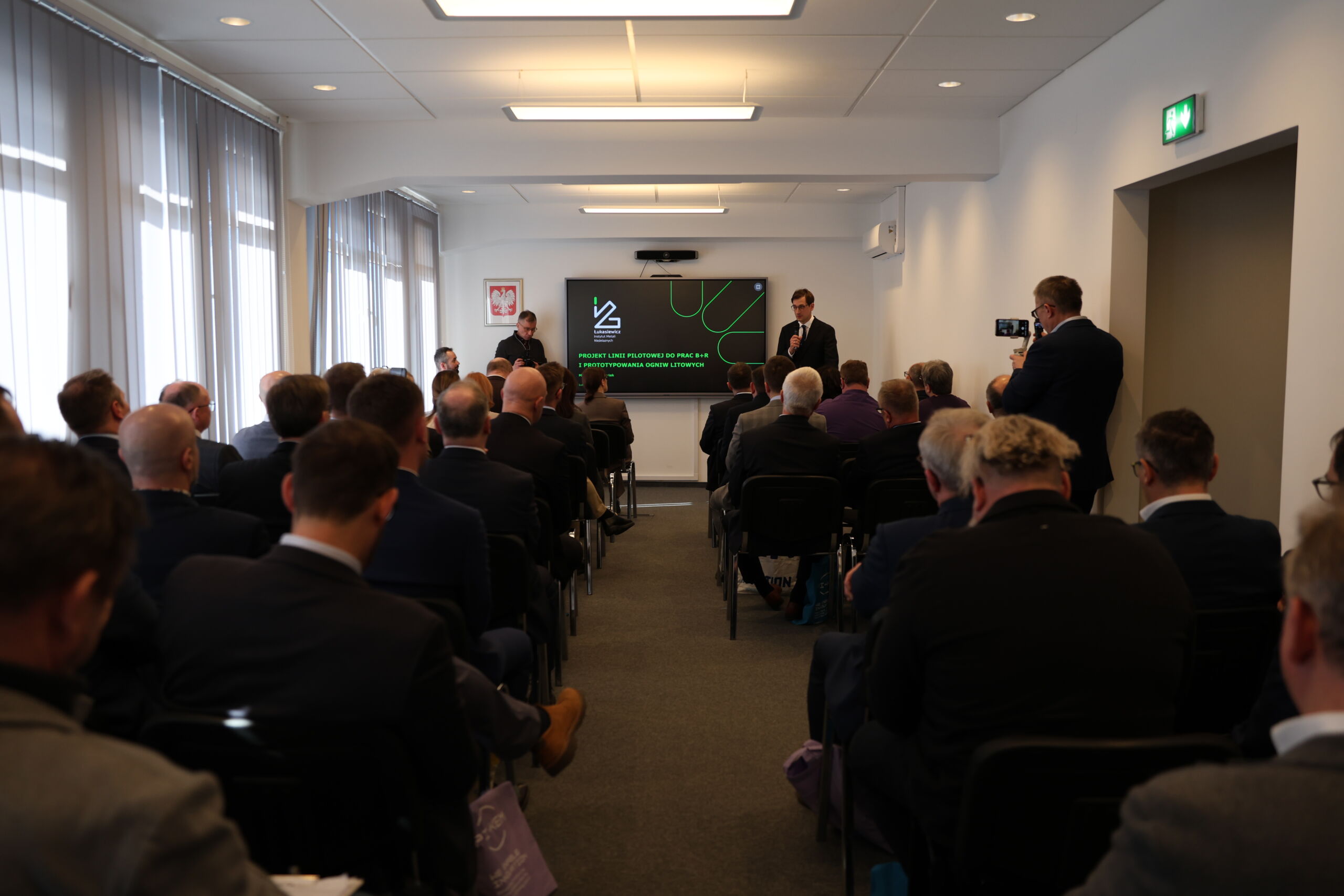
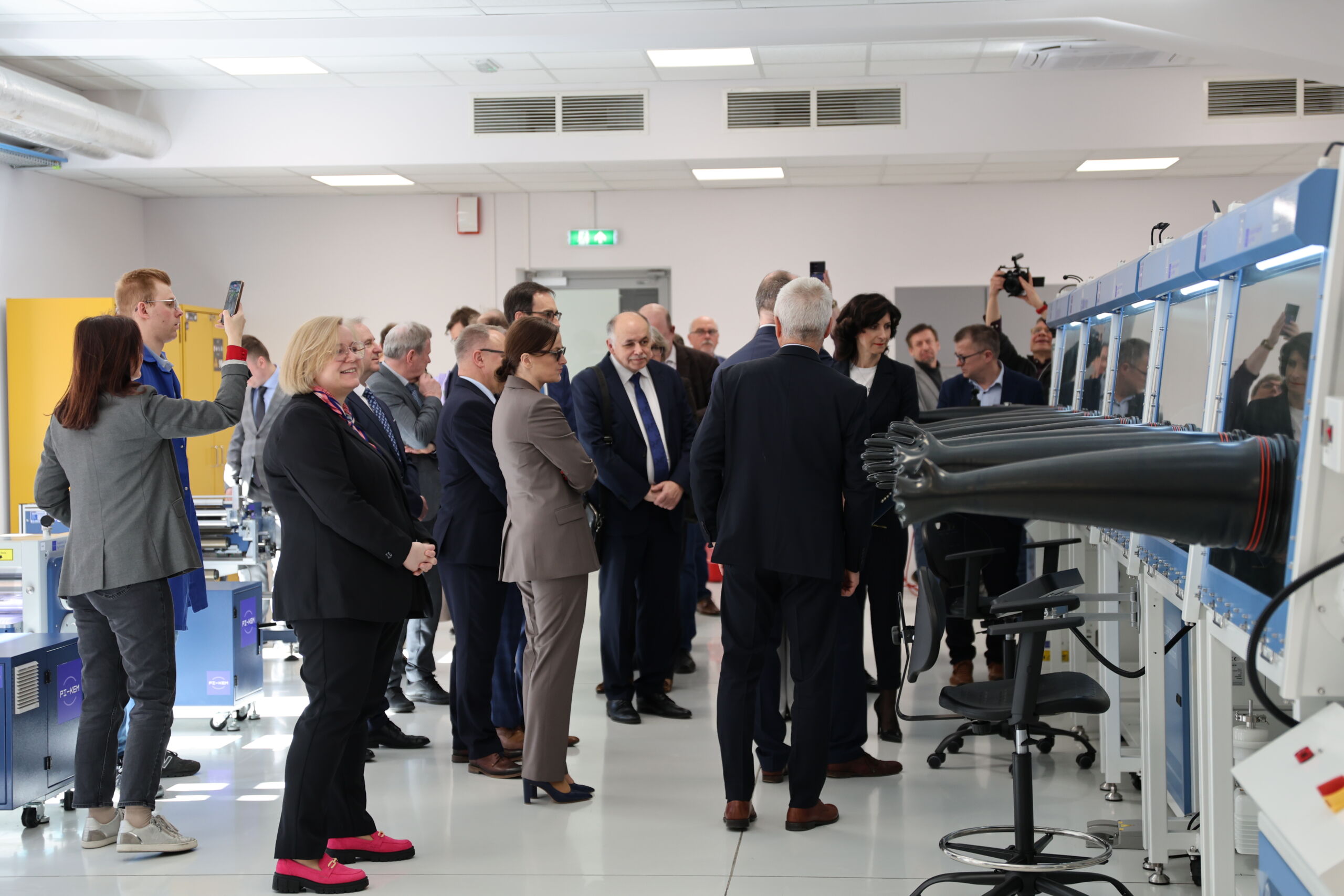
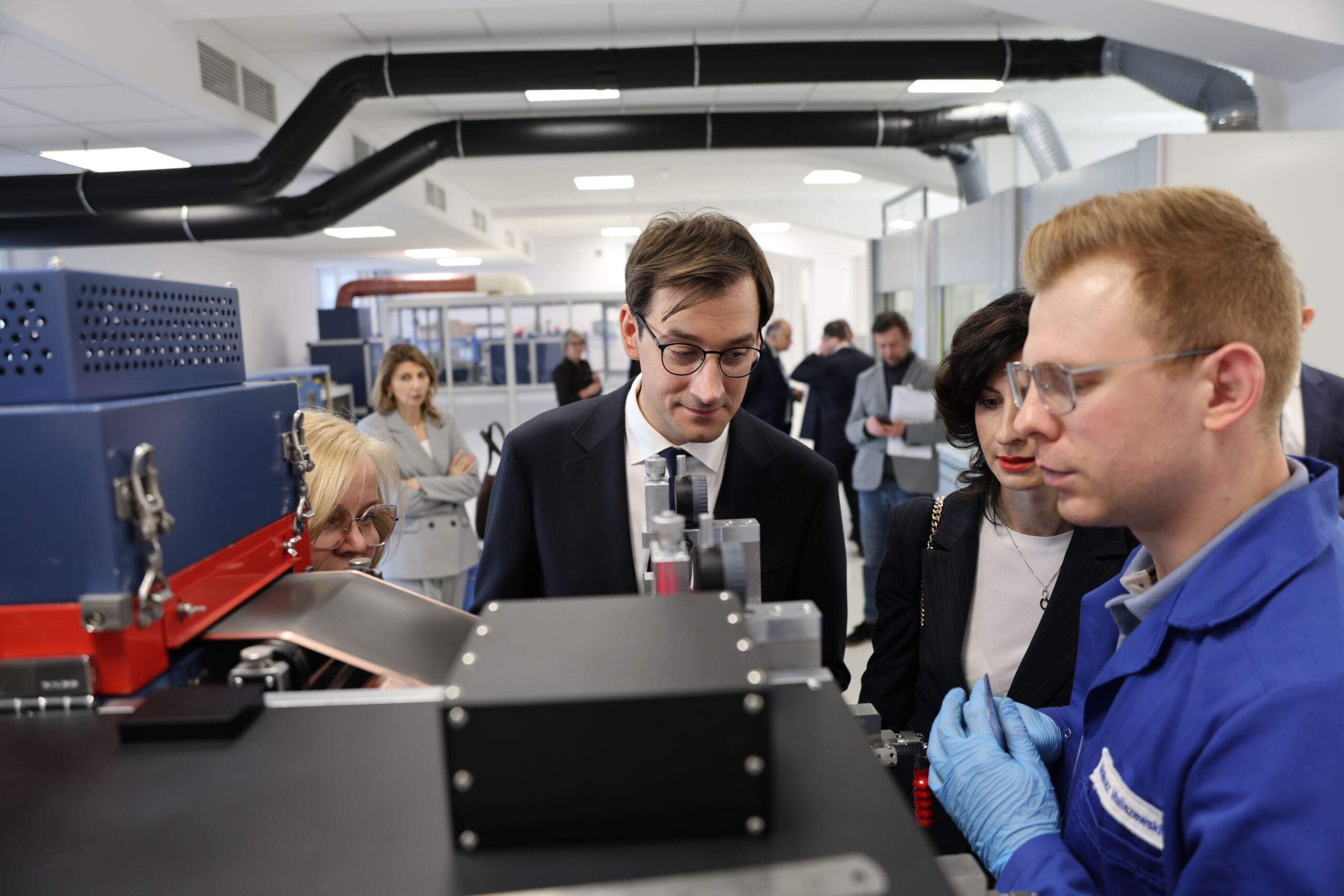
Poland has gained infrastructure that is unique on a European scale and makes it possible to develop and test advanced battery technologies under conditions close to industrial production. Łukasiewicz – Institute of Non-Ferrous Metals (IMN) in Poznań has launched a modern pilot line for prototyping lithium and sodium-ion cells in pouch format.
The infrastructure is a key bridge between scientific research and industrial implementation. It enables a rapid transition from materials developed in the laboratory to testing them under conditions that meet production requirements.
The new line significantly strengthens the potential of Łukasiewicz – IMN, which is developing competences in chemical power sources and modern energy storage technologies. At the same time, it is an important element in the development of research infrastructure across the entire Łukasiewicz Research Network and fits into strategic directions related to the energy transition, defence and state security, noted Dr Hubert Cichocki, President of the Łukasiewicz Center.
“The launch of the pilot line in Poznań proves that, within the Łukasiewicz Research Network, we are able to transform research results into real technologies more effectively than just a few years ago,” President Cichocki emphasised. “This is not only an investment in modern battery technologies, but above all in Poland’s ability to independently develop and implement innovations of strategic importance for the economy, defence and energy security.”
A bridge between science and industry
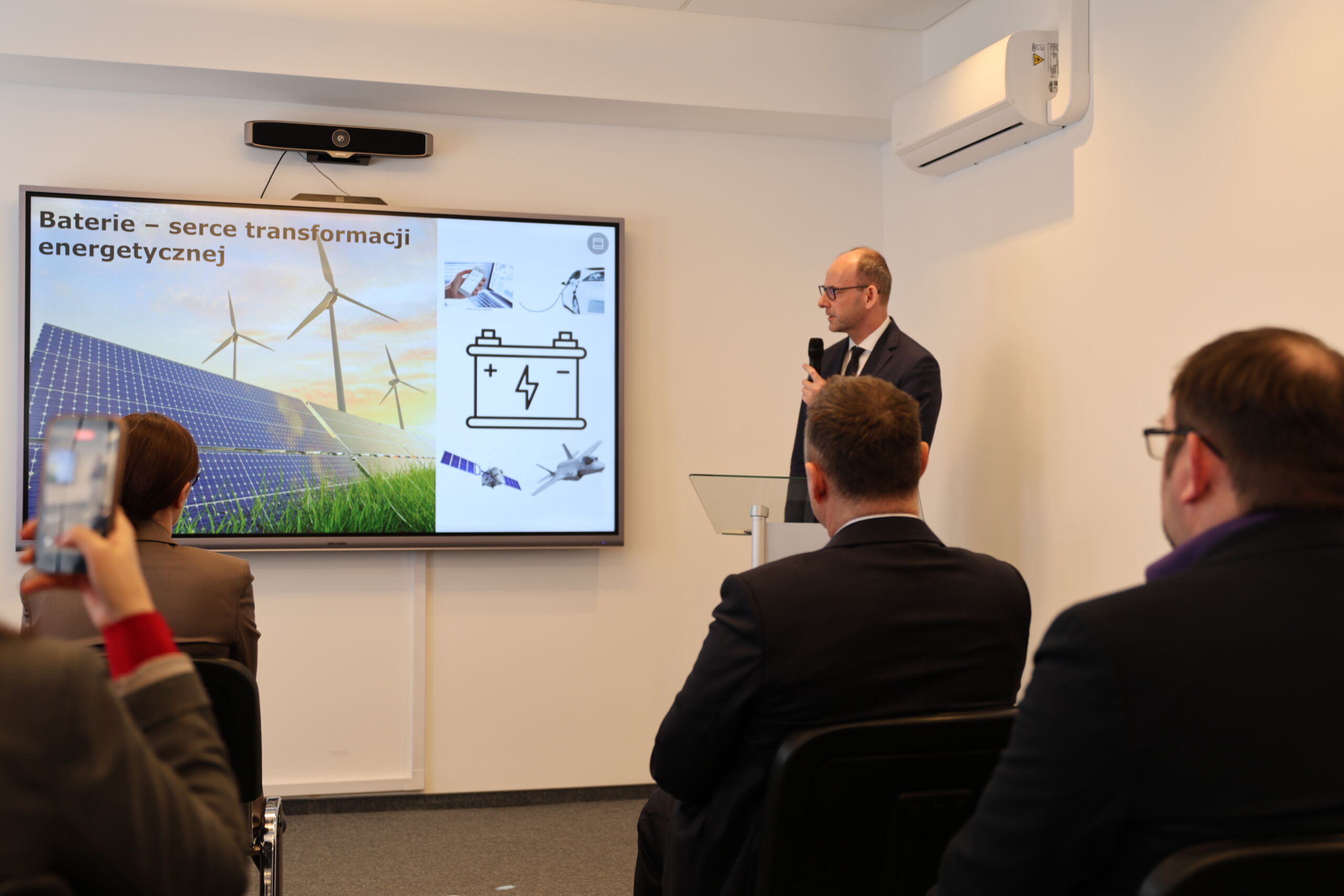
The dynamic development of electromobility, renewable energy sources and modern electronics is driving growing demand for innovative battery technologies. The new pilot line responds to this need by enabling rapid prototyping and testing of cells on a semi-technical scale.
As a result, industrial and scientific partners gain access to infrastructure that makes it possible to accelerate the implementation of new battery materials, reduce technological risk at the scaling stage, verify technologies under conditions close to production and prepare solutions for commercialisation.
Cell prototypes produced using the new pilot line will support the development of new generations of batteries with improved parameters, which will ultimately be used, among other areas, in smartphones, laptops, electric vehicles and even military applications.
The importance of the pilot line is highlighted by Dr Eng. Barbara Juszczyk, Director of Łukasiewicz – IMN.
“The uniqueness of this investment lies primarily in combining research functions with the ability to produce prototypes on a semi-industrial scale. This makes it possible to move much faster from laboratory research results to technology demonstrators that can be assessed for industrial applications,” Director Juszczyk adds.
A comprehensive process for manufacturing pouch cells
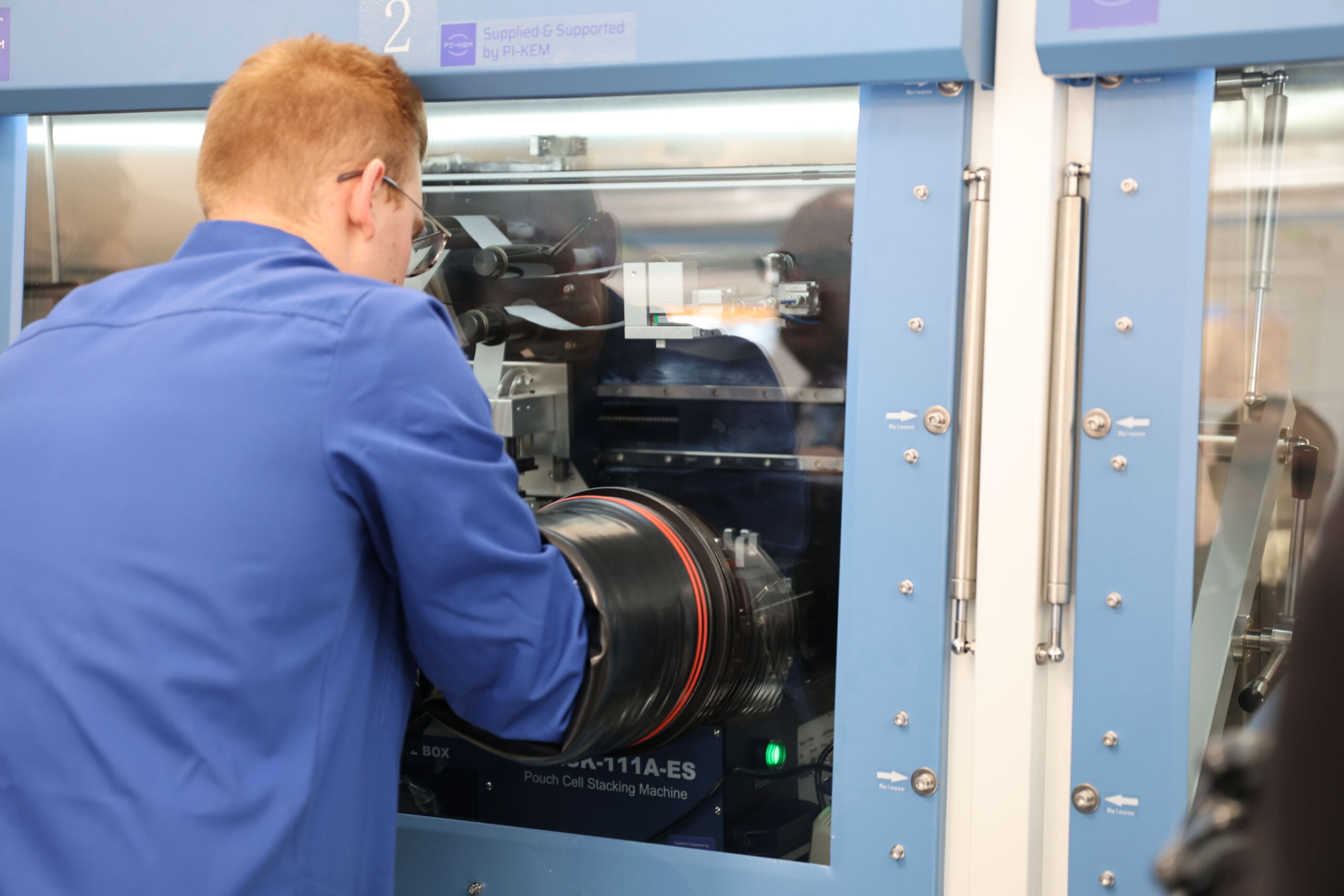
The line enables the comprehensive implementation of the pouch-cell manufacturing process – from electrode preparation and cell assembly to formation and electrochemical testing.
The infrastructure includes, among other elements, the preparation of electrode slurries and coating of current collectors, drying, calendering and electrode cutting, stacking of electrode packages and installation of separators, encapsulation of cells in pouch casings, operations in a controlled atmosphere (dry room, glove boxes), electrolyte dosing and cell sealing, as well as electrochemical formation and performance testing.
The line operates on a semi-technical scale, ensuring high process repeatability and full control over technological parameters. It also enables work with a broad spectrum of materials – from conventional lithium-ion systems, through sodium-ion technologies, to experimental and pre-commercial materials, including lithium-metal anodes.
“The new pilot line allows scientists to translate materials research results directly into prototype cells on a semi-technical scale, under conditions close to industrial production,” says Dr hab. Eng. Mariusz Walkowiak, Director of the Centre of Chemical Power Sources at Łukasiewicz – IMN. “This allows us to quickly verify new material concepts – from conventional lithium-ion systems to lithium-metal and sodium-ion technologies.”
New cooperation opportunities for industry and science
The infrastructure that has been launched opens up broad opportunities for cooperation with both domestic and international partners. The research and technical team offers support in the implementation of research and development work, including the development of cell prototypes based on partners’ materials, validation of new battery technologies, scaling of technological processes and optimisation of production parameters.
The pilot line also provides a base for projects financed under national and international programmes such as Horizon Europe, M-ERA.NET and initiatives of the National Centre for Research and Development. Its importance for Łukasiewicz is also emphasised by Prof. Dr hab. Eng. Grzegorz Lota, Director of the Poznań Branch of Łukasiewicz – IMN.
“The modern pilot line for the production of lithium-ion and post-lithium cells will make it possible to research and test new materials and technological processes on a scale close to industrial production. This may translate into increased implementation capacity, strengthen the Łukasiewicz Research Network in the European battery ecosystem and develop cooperation with industry in the fields of electromobility and energy storage.”
One of the few investments of this kind in Europe – real benefits for Poland and the economy
The infrastructure launched in Poznań is one of the few investments of this kind in Europe – the nearest comparable lines operate in Germany and Austria. Thanks to it, Poland gains access to advanced research and development facilities in the field of battery technologies without having to rely on foreign centres.
For the country, this means building key competences in one of the most important sectors of the future. The new infrastructure strengthens Poland’s position in the European battery technology ecosystem and enables the development of the most advanced solutions, such as high-energy-density cells and technologies using metallic lithium.
The benefits are also directly tangible for the economy. The investment accelerates the transfer of knowledge from science to industry, enables the development of innovative technologies in Poland and increases the country’s attractiveness as a partner in international research and development projects.
The pilot line is a practical tool that supports the energy transition and the development of a modern, competitive economy.
The total cost of modernising the laboratory and equipping it exceeded PLN 9 million, of which more than PLN 7 million came from a ministerial subsidy.