Authors
Łukasiewicz – PORT
Magdalena Wilk-Kozubek, PhD Eng, magdalena.wilk-kozubek@port.lukasiewicz.gov.pl
Bartłomiej Potaniec, PhD Eng, bartlomiej.potaniec@port.lukasiewicz.gov.pl
Joanna Cybińska – Director of Materials Science & Engineering Center, PhD, DSc is the Leader of Advanced Materials Synthesis Group (AdMat Group) at Łukasiewicz – PORT, joanna.cybinska@port.lukasiewicz.gov.pl
Aim of the project
The researchers at the Advanced Materials Synthesis Group within the Materials Science & Engineering Center at Łukasiewicz – PORT wanted to develop a visual defrosting indicator that would enable the monitoring of storage and transportation conditions for products requiring maintenance at a constant and specific low temperature. Until now, similar solutions were only available for high temperatures. The proposed solution will allow monitoring of potential irregularities in the storage and transport of products. Furthermore, consumers will be assured of purchasing products stored in the appropriate temperature conditions.
Short description of the problem addressed by this project
In 2015-2018, a listeriosis epidemic occurred in Europe, caused by a Belgian frozen food manufacturer who failed to maintain the appropriate temperature in one of its freezing tunnels. As a result:
- 19% of the hospitalized people died.
- €30 million in financial losses were incurred by the company.
- The company’s stock value suffered a 38% decrease.
The challenge of maintaining the proper temperature of frozen food remains after it leaves the producer. According to the UN report, 13% of the world’s food production is wasted on the way from the producer to consumer due to the failure to maintain a cold supply chain. This could be mitigated with a solution to monitor the temperature of frozen products effectively.
Main results and achievements
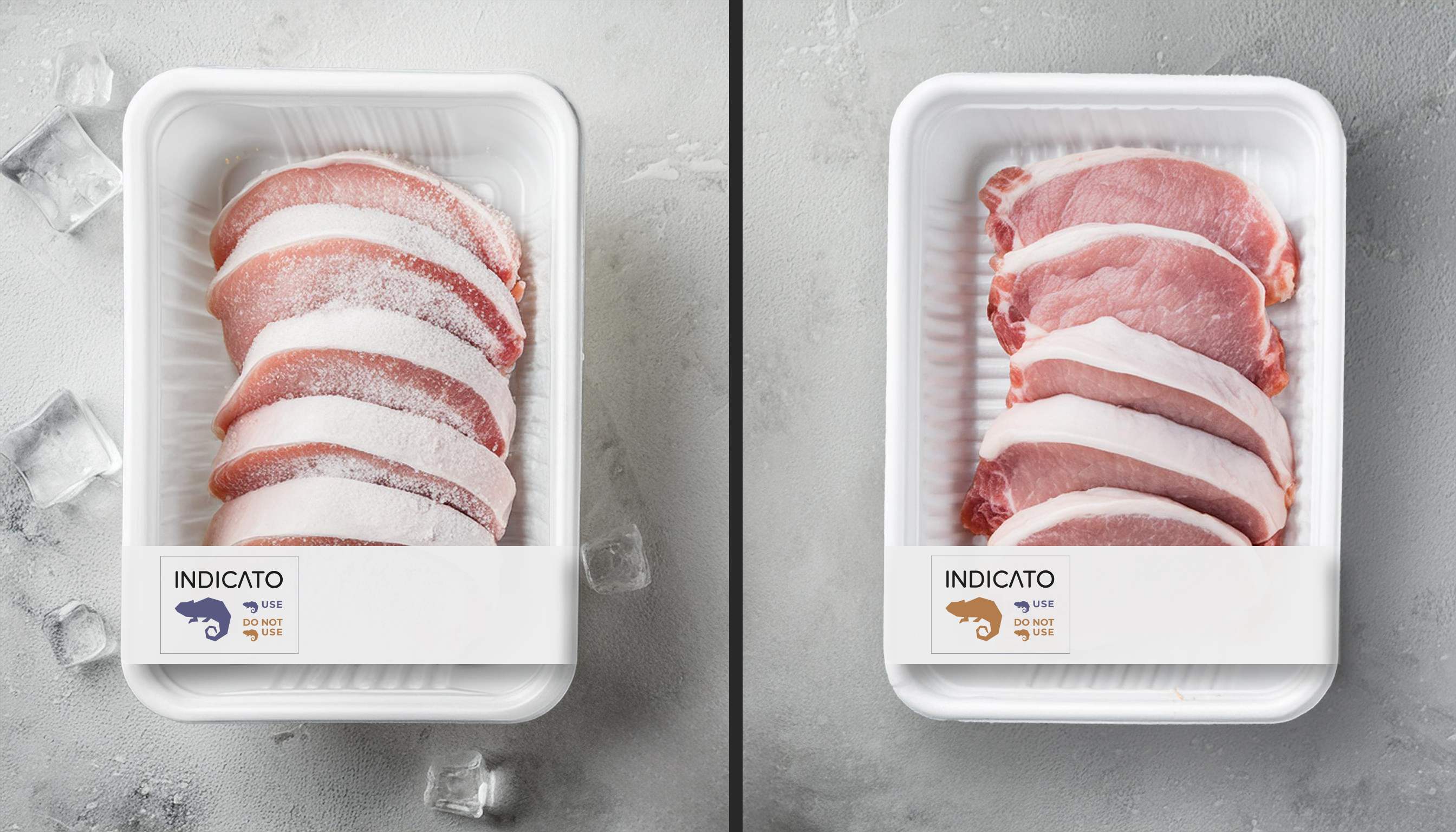
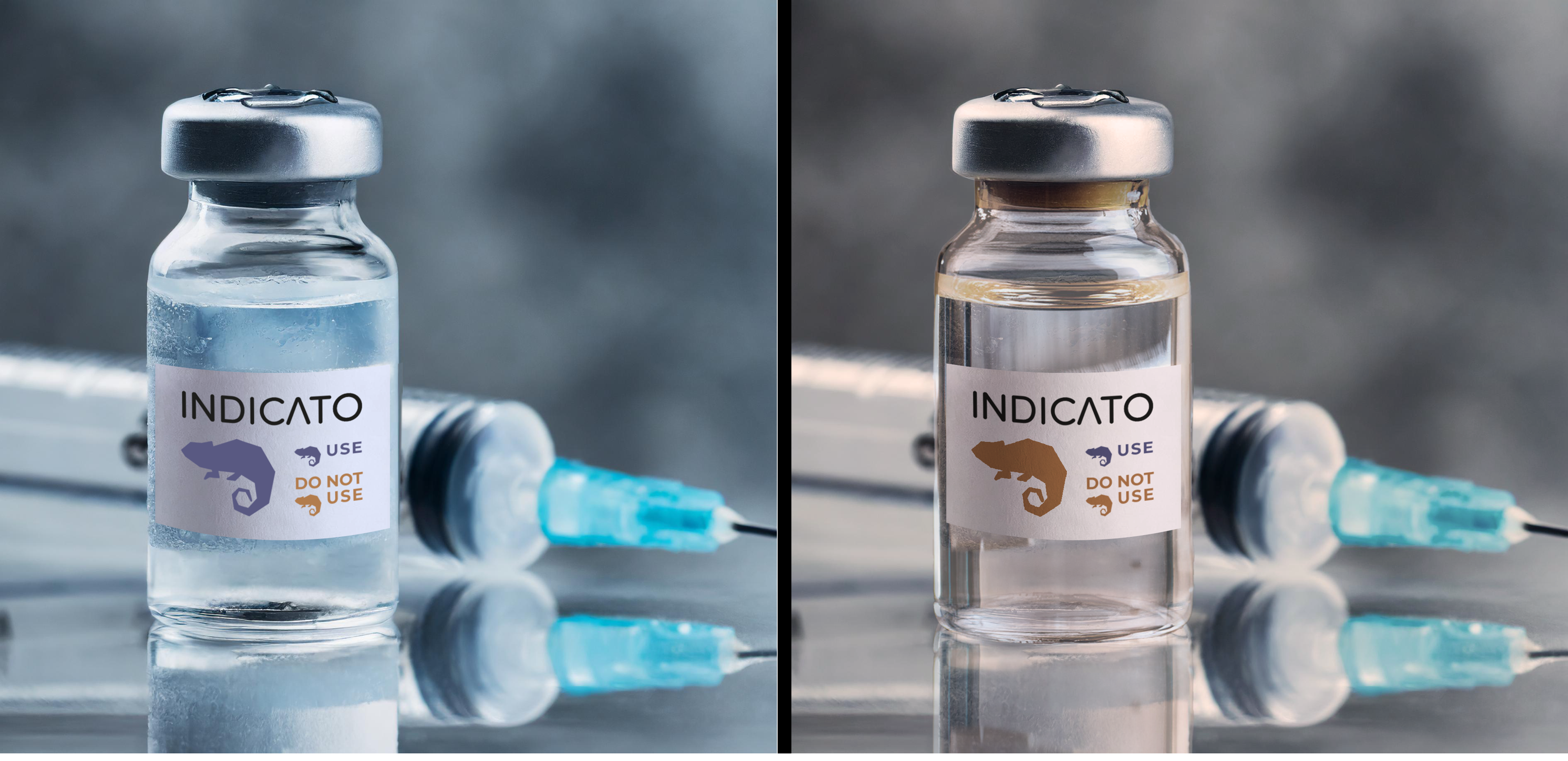
The Łukasiewicz – PORT research team has developed easy-to-apply and easy-to-activate visual indicators of temperature change, the only ones on the market that fulfill their function at low temperatures.
What makes the INDICATO technology unique is that it is used in manufacturing of the frozen food and thermolabile medical products, i.e., wherever low temperatures are required to maintain product quality. INDICATO allows temperature control in the range of -30 to +10 °C, which is unique on the market. Until now, such solutions were only possible for high temperatures.
If the cold supply chain is interrupted, the indicator printed on the packaging will irreversibly change from blue to red. This is possible due to the polymerization of activated ingredient when a specific threshold temperature is exceeded. Adding a thermochromic ingredient to the printing ink makes marking packages less complicated, and the printed indicator is an integral part of the package.
Thanks to the technology used, researchers created a durable, robust solution at an affordable price.
Conclusion
The most significant benefit of developing visual defrosting indicators is the introduction of new possibilities for the food, catering, and pharmaceutical industries to control the storage and transport conditions of food products, vaccines, or medicines.
But there is more! The team is currently developing technology in which the indicator present on the packaging can provide information about exceeding the permissible temperature and how long the product has been exposed to the elevated temperature.
Acknowledgement
This project was financed by the National Centre for Research and Development under the Lider XI program, grant agreement No. LIDER/38/0135/L-11/19/NCBR/2020.