Authors
Krzysztof Czyż, EngD, krzysztof.czyz@port.lukasiewicz.gov.pl, Materials Science & Engineering Center at Łukasiewicz – PORT.
Aim of the project
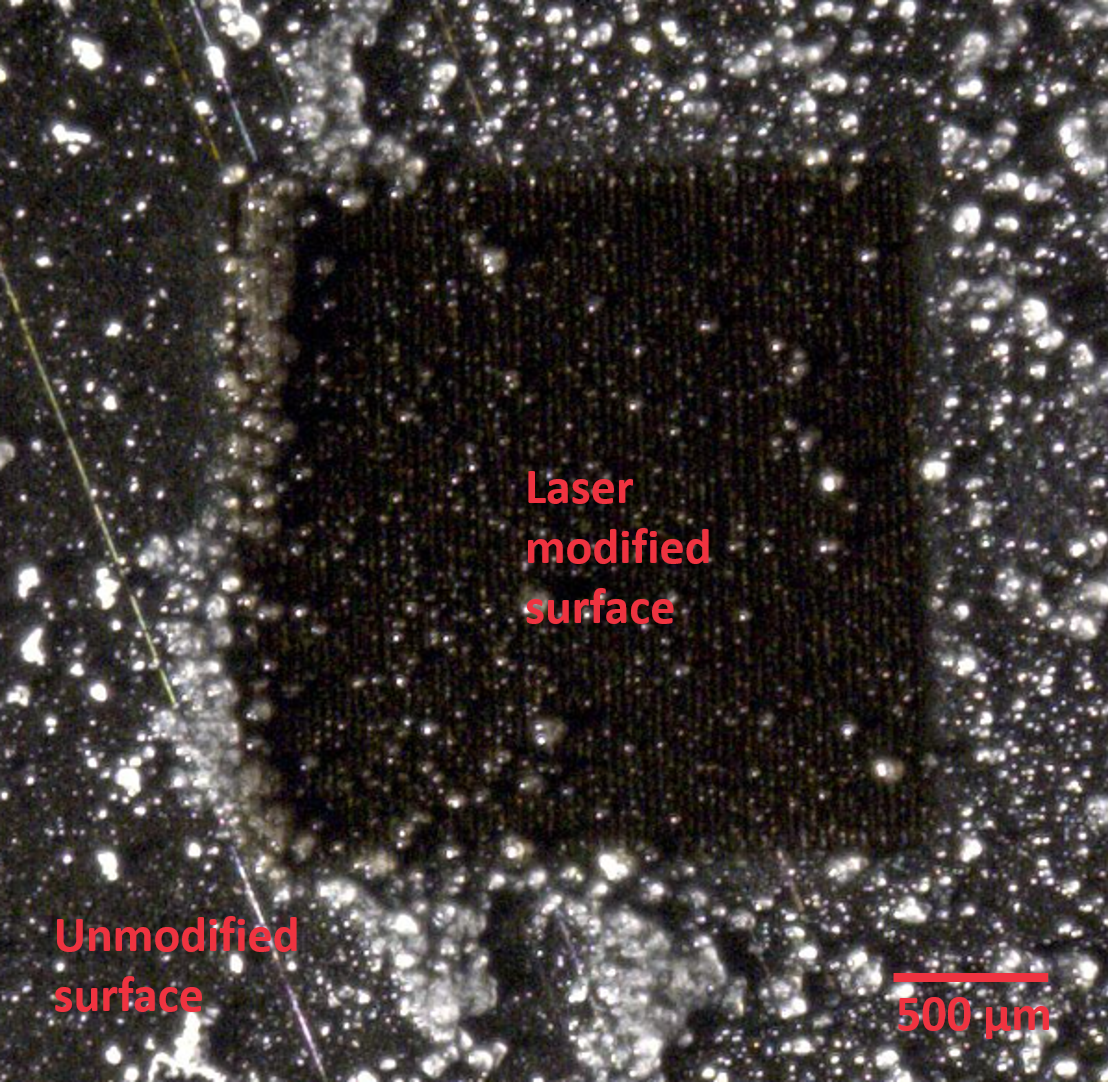
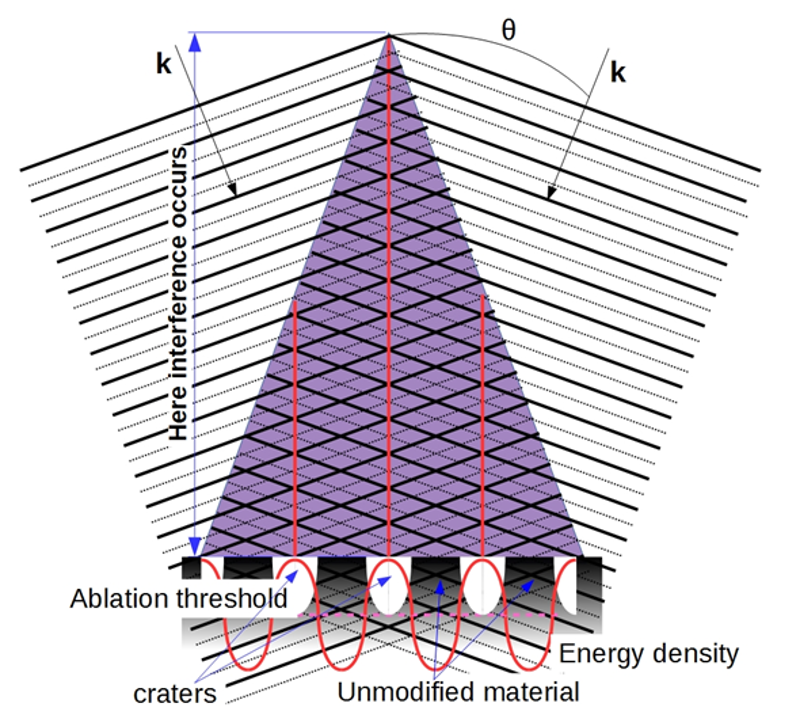
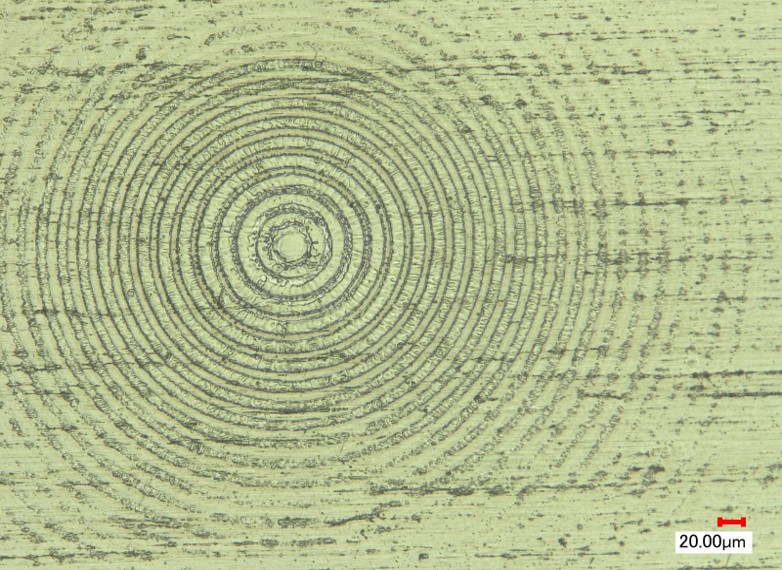
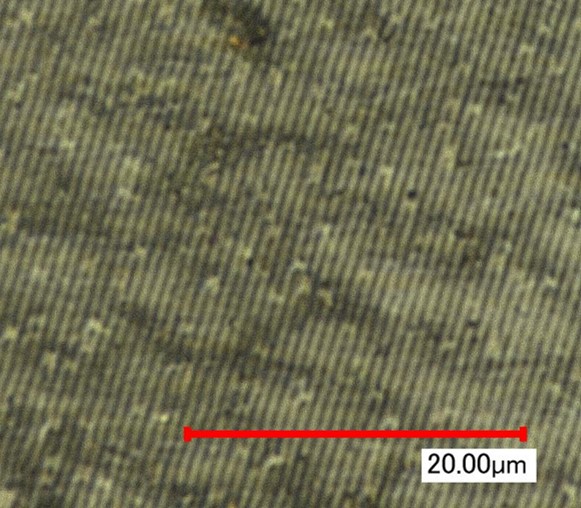
The application of laser processing techniques to alter the surface of functional materials aims to enhance specific desirable properties. Laser texturing enables the modification of specific material attributes, such as wettability, self-cleaning capabilities, and biocompatibility. The paramount technique employed within this project’s scope is Direct Laser Interference Patterning (DLIP). This method offers unparalleled opportunities for surface modification, achieving resolutions as fine as 300 nanometers.
Short description of the problem addressed by this project
The application of precise laser treatment can create surface structures endowed with anti-corrosive properties. This amalgamation of structural modifications and alterations of chemical properties significantly enhances the durability of functional materials, such as steel, particularly under the conditions that facilitate corrosion.
The strategic induction of controlled alterations on material surfaces facilitates manipulation of their characteristics. For instance, such modifications can bestow materials with hydrophobic (reduced water wetting) and oleophobic (reduced oil wetting in aqueous environments) properties, culminating in attributes such as self-cleaning capabilities.
In the realm of implants and grafts, the era of smooth surfaces has evolved to a preference for textured surfaces, which are instrumental in promoting easier osseointegration. The introduction of uniform roughness across surfaces ensures consistent properties throughout. Furthermore, surfaces modified through laser technology have been shown to inhibit bacterial proliferation by more than 90%, significantly reducing the risk of infection.
Main results and achievements
An important property of the hydrophobic surfaces is the reduced attraction of water-based components, minerals, and dust. It will be demonstrated that a properly modified surface attracts such minerals to a lesser extent. Moreover, it will also be demonstrated that the modified surface is more oleophobic than the an unmodified one. Such modification also facilitates keeping the surface clean, so it needs to be cleaned less often, and the usage of chemical agents and energy consumption is reduced. All presented results were obtained using 316L steel.
Conclusions
Laser processing offers enormous opportunities to change the properties of materials. Importantly, it is possible to improve one of the characteristics of the material without compromising its other properties. This makes it possible to reduce the costs of using a given tool and infrastructure elements, increase the life of the implant, or reduce the risk of its rejection, to name just a few benefits.
Acknowledgements
Purchase as part of the Lower Silesian Center for Materials and Biomaterials Wrocław Research Center EIT+ project