Authors
Katarzyna Skrzypczyńska
Łukasiewicz Research Network – Industrial Chemistry Institute, Rydygiera 8, Warsaw, 01-793, Poland
Wojciech Tokarz
Łukasiewicz Research Network – Industrial Chemistry Institute, Rydygiera 8, Warsaw, 01-793, Poland
Aim of the project
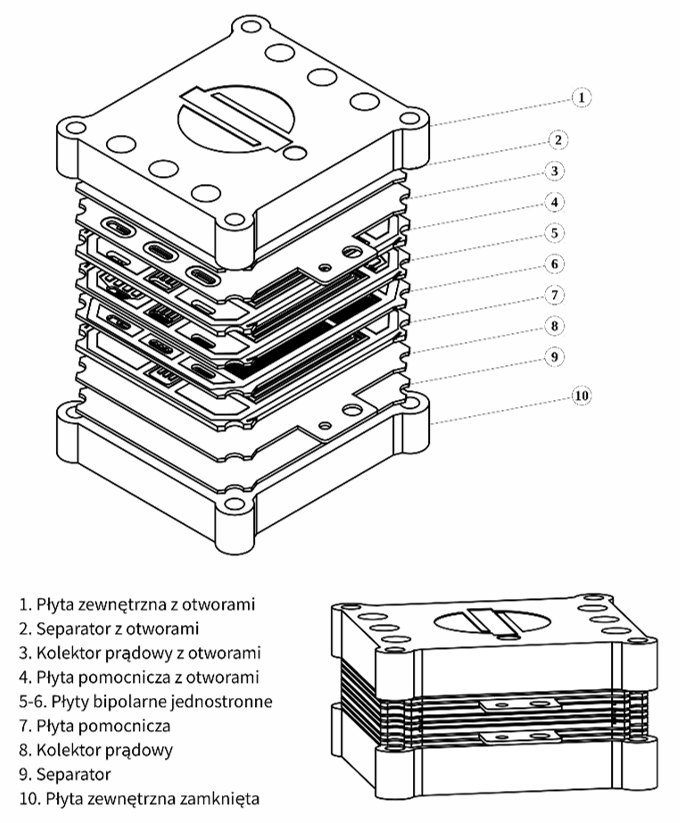
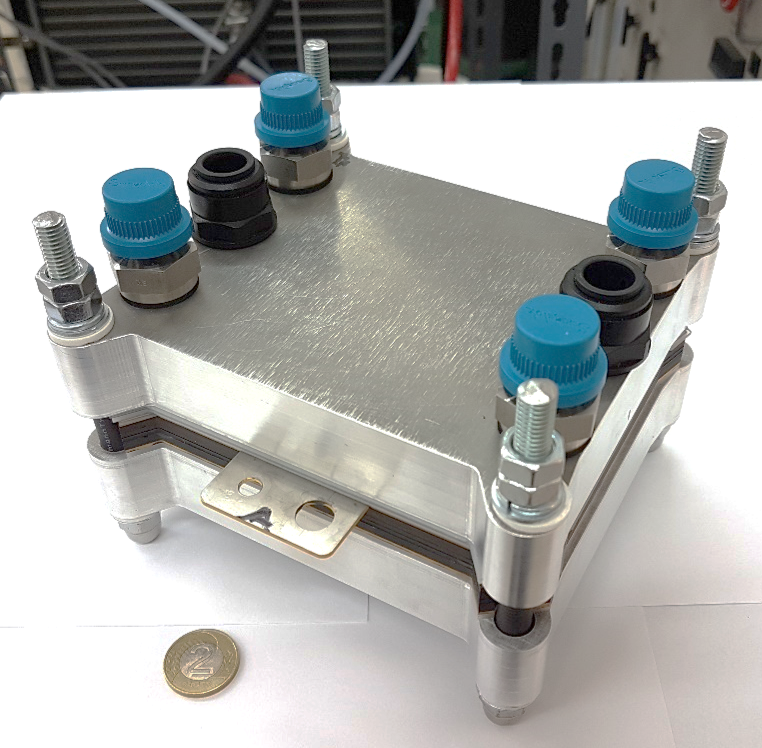
The project aimed to develop a unique prototype fuel cell stack of the PEMFC type with a single-cell active area of 100 cm2. We tested various open-type flow field geometries to ensure rapid removal of water condensate from the active zone, a feature that sets our design apart. The flow field shape was meticulously designed and studied using CFD simulations. The resulting optimal flow field architecture was machined and tested in single fuel cell configurations. A key task was to develop a custom silicone seal, which successfully sealed the stack. The self-designed and assembled PEMFC stack was then rigorously tested on a test bench.
Short description of the problem, addressed by this project
The project addresses a crucial issue in fuel cell technology, i.e., the development of a technology for storing and safely transferring hydrogen and its utilization to produce electricity in a fuel cell. The key to solving this problem lies in developing material solutions that improve the technology, including extension of the device’s lifespan and reduction of its operating costs. Our approach was based on the proprietary design of bipolar plates developed at the Lukasiewicz IPC, using a new type of flow field characterized by open transport channels. The selection of a suitable material for the plates was a critical step, and they were ultimately made from graphite material by a Polish specialized CNC machining facility. This led to the successful design and fabrication of the fuel cell stack.
Main results and achievements
Milestones achieved:
- Complete CAD design of the cell stack;
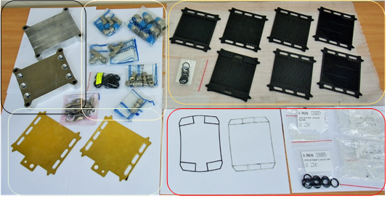
- Selection of manufacturers and distributors of structural materials for the designed link stack;
- Selection of method and subcontractor for components of the designed stack;
- Tests of the flow field in a single cell with a dimension of 5 cm2.
- Fabrication and testing of the 1st generation prototype;
- Design of the 2nd generation stack;
- Design of an open-type flow field for the 3rd generation prototype stack;
Conclusion:
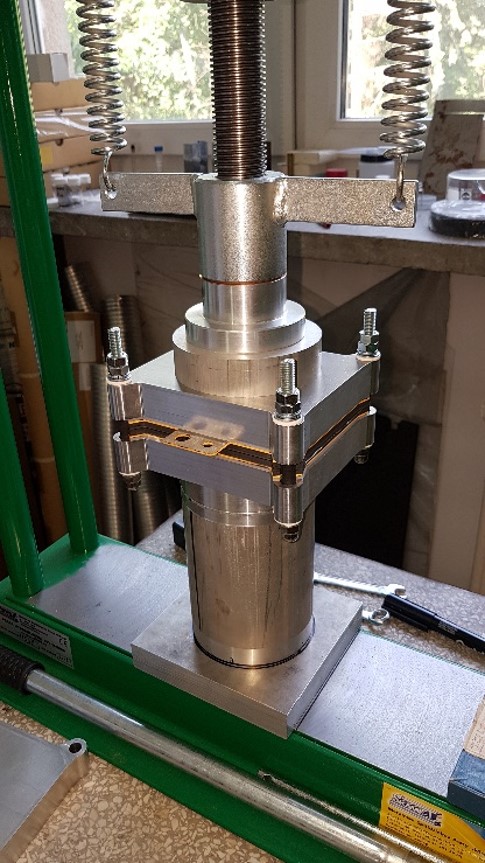
The prototype is promising, suggests correct progress of development, and can be applied to stationary cogeneration thermal power plant applications. The project resulted in development of a method for assembling PEM-type fuel cell stacks, an assembly station, and a method for sealing the cell stack. The project’s second objective was to test the feasibility of combining a commercial fuel cell-based CHP plant with a biological hydrogen source derived from sugar waste fermentation. The design and fabrication of the fuel cell stack offer the prospect of being used in commercial mCHP equipment. Planned further development includes the design of the stack itself, introduction of new components, and work on its application in e.g., transportation.
Acknowledgements
Biostrateg II NCBR (297310/13/2016) “Innovative installation for microbial hydrogen and methane production based on anaerobic digestion of bio-waste and by-products of the sugar industry, including ways of use of the obtained gaseous biofuels and ensuring energy self-sufficiency of waste-water treatment plant in a sugar factory”. The consortium consisted of: IBB PAN, Łukasiewicz-IChP, KSC Cukrownia Dobrzelin, IFJ PAN, Politechnika Łódzka 2016-2021.