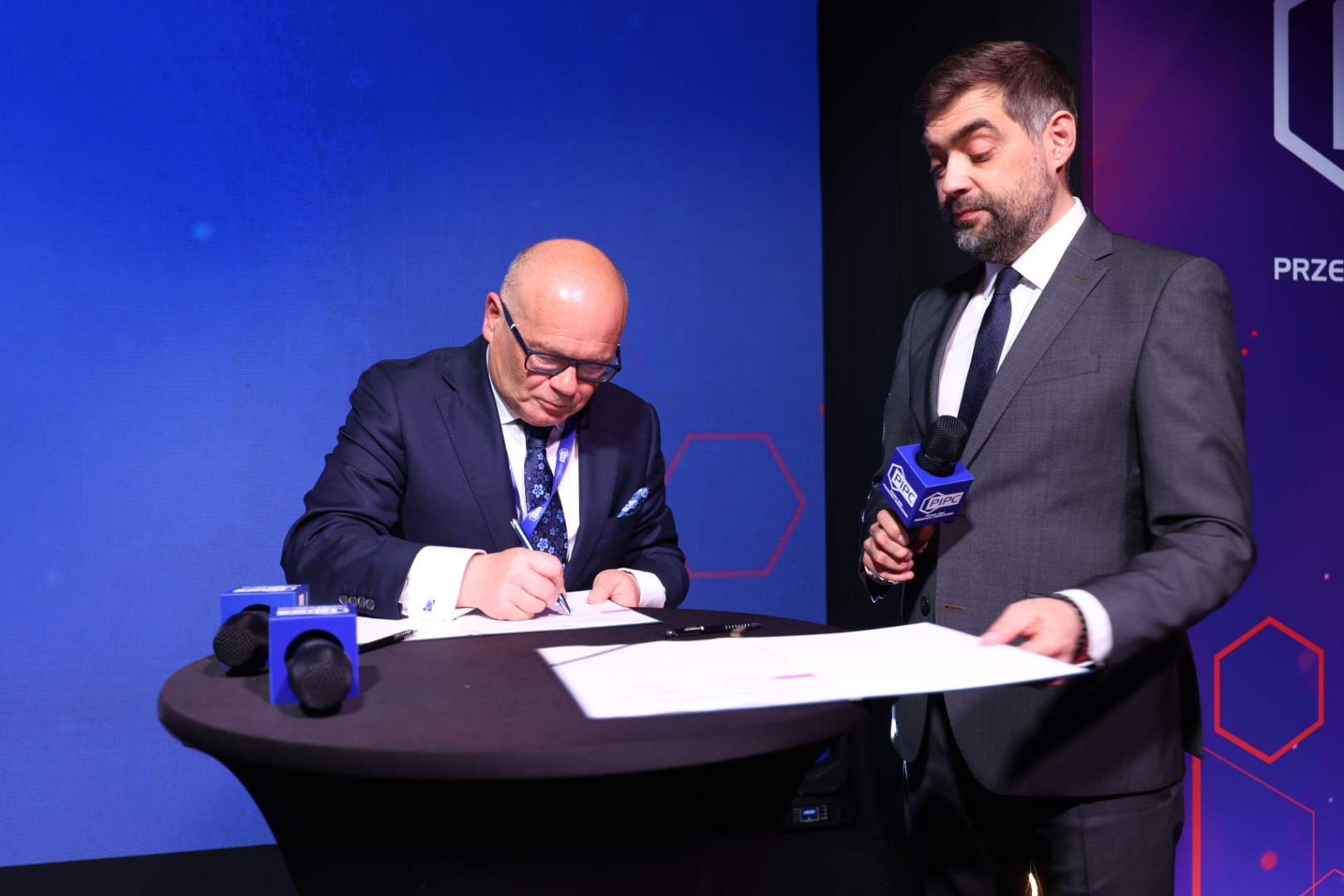
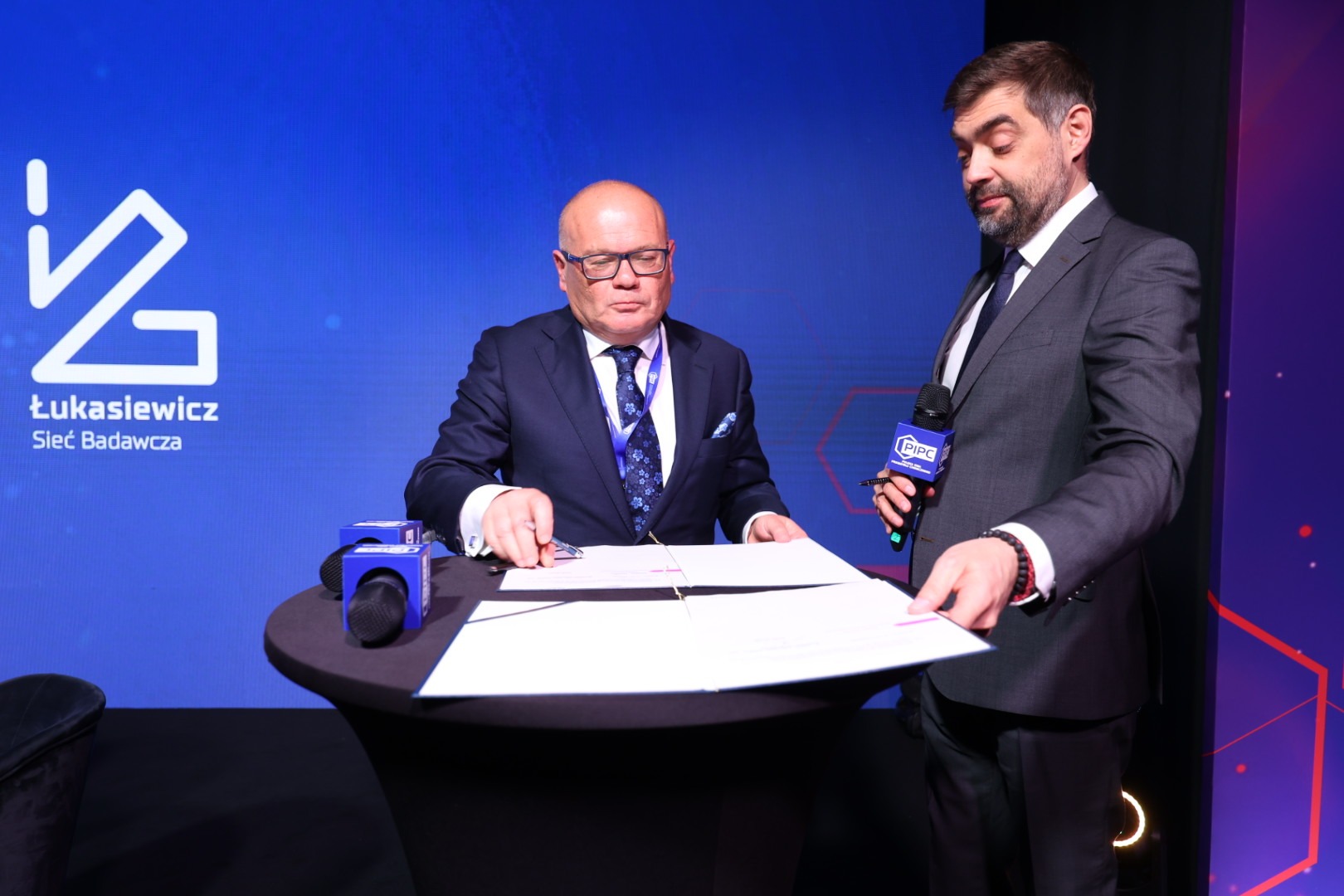
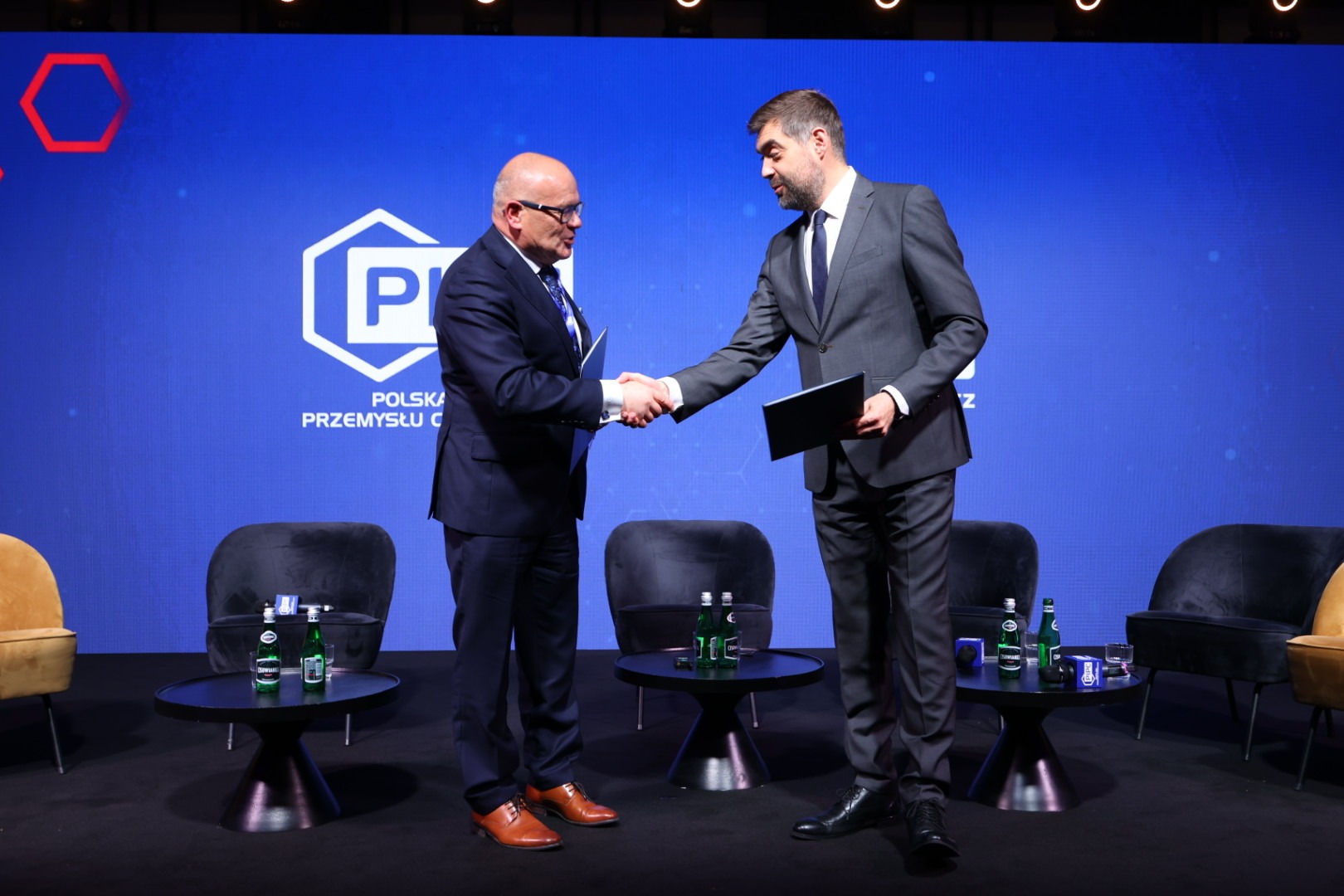
At the 12th Polish Chemistry Congress in Kraków, Łukasiewicz Research Network signed a partnership agreement with the Polish Chamber of Chemical Industry (PIPC). The agreement aims to strengthen collaboration between science and industry and jointly build an innovative, sustainable, and competitive chemical sector in Poland.
“This is a step toward very concrete cooperation between our Institutes and the companies affiliated with PIPC. It may evolve into a strategic partnership, similar to the one we already have with Grupa Azoty,” emphasized Wiesław Skwarko, Vice President of the Łukasiewicz Center. “PIPC brings together nearly all key chemical companies operating in Poland, including international ones,” he added.
The agreement includes the development of joint R&D and implementation projects, support for the energy transition, circular economy, and technologies of defense and strategic importance. Both parties committed to supporting initiatives aimed at increasing the rate of innovation in the chemical sector, including promoting research results, facilitating connections between institutes and enterprises, and joint legislative efforts, includeing the EU level.
“We cannot talk about industrial development today without a scientific foundation that understands market realities and effectively responds to specific challenges. The partnership between the Polish Chamber of Chemical Industry and Łukasiewicz Research Network strengthens the role of innovation, especially in decarbonization and technological transformation,” emphasized Tomasz Zieliński, President of PIPC. “Chemistry is the foundation of the economy. Many sectors depend on it, including energy, medicine, agriculture, construction, and automotive. The chemical industry, as the Industry of Industries, is finally being recognized as a key element of Europe’s security. That is why chemistry, supported by strong partnerships such as PIPC with Łukasiewicz Research Network, is the starting point for building a resilient, innovative, and sovereign Europe powered by modern industry,” he added.
The cooperation is based on a new model of strategic partnerships, in which Łukasiewicz institutes—including the Industrial Chemistry Institute, Institute of Heavy Organic Synthesis, Institute of Organic Industry, and Institute of New Chemical Syntheses—will closely collaborate with enterprises in research, development, and technology commercialization. One of the key goals is the decarbonization of the chemical industry and enhancing its competitiveness.
The agreement with PIPC is part of Łukasiewicz’s strategy, which focuses on four key areas: industrial chemistry, national defense and security, energy transition, and circular economy. Łukasiewicz’s first strategy was approved in December 2024.
Thanks to the cooperation with PIPC, it will be possible to respond more effectively to the challenges facing the sector—from high energy costs to competitive pressure from outside the EU. “Chemical sector enterprises contribute significantly to Poland’s GDP—yet they face major challenges in increasing the innovativeness and competitiveness of their operational processes. The experience of our institutes is the answer to these challenges,” summarized Hubert Cichocki, CEO of the Łukasiewicz Research Network.