Authors
Łukasiewicz Research Network – Institute of Microelectronics and Photonics
Warsaw University of Technology
Małgorzata Djas, DEng, malgorzata.djas@imif.lukasiewicz.gov.pl
Aim of the project
The project aims to identify mechanisms and detailed experimental research on an innovative method of flake graphene production by direct exfoliation using supercritical carbon dioxide (scCO2). ScCO2 is applied as a solvent and an agent to intercalate, expand, and exfoliate flake graphite into graphene sheets. The supercritical fluid penetrates the gap between the graphite layers. When the pressure decreases abruptly, the scCO2 decomposes into the gaseous product, resulting in a significant pressure difference between the inner carbon layers of graphite and the ambient environment. The pressure difference evokes force to push apart graphene layers of graphite. Production of flake graphene via direct exfoliation using scCO2 is a new method that is still poorly investigated and documented.
Short description of the problem addressed by this project
Traditional direct exfoliation of flake graphite to form flake graphene is conducted in organic solvents. However, these solvents are toxic and have a high boiling point, which makes them environmentally unfriendly and difficult to remove from the product. From this point of view, supercritical fluids are now expected as alternative solvents for exfoliation. A supercritical fluid (SCF) is any substance at a temperature and pressure above its critical point, where distinct liquid and gas phases do not exist. Because of the low interfacial tension, excellent wettability of the surface, low viscosity, and high diffusion coefficient, SCFs are expected to be solvents suitable for penetration of the nanosheets of graphite. Taking advantage of the excellent penetration ability, supercritical fluids have been applied to intercalate and delaminate tightly stacked layered materials, such as flake graphite. Supercritical carbon dioxide is the most intensively used supercritical fluid because of its low critical parameters, non-toxicity, inertness, low cost, and easy product separation. Direct exfoliation of graphite using scCO2 is an example of ‘green’ technology that is consistent with Green Chemistry principles. Moreover, graphene production can be significantly shortened by taking advantage of the penetration ability of SCFs and high-pressure environments.
Main results and achievements
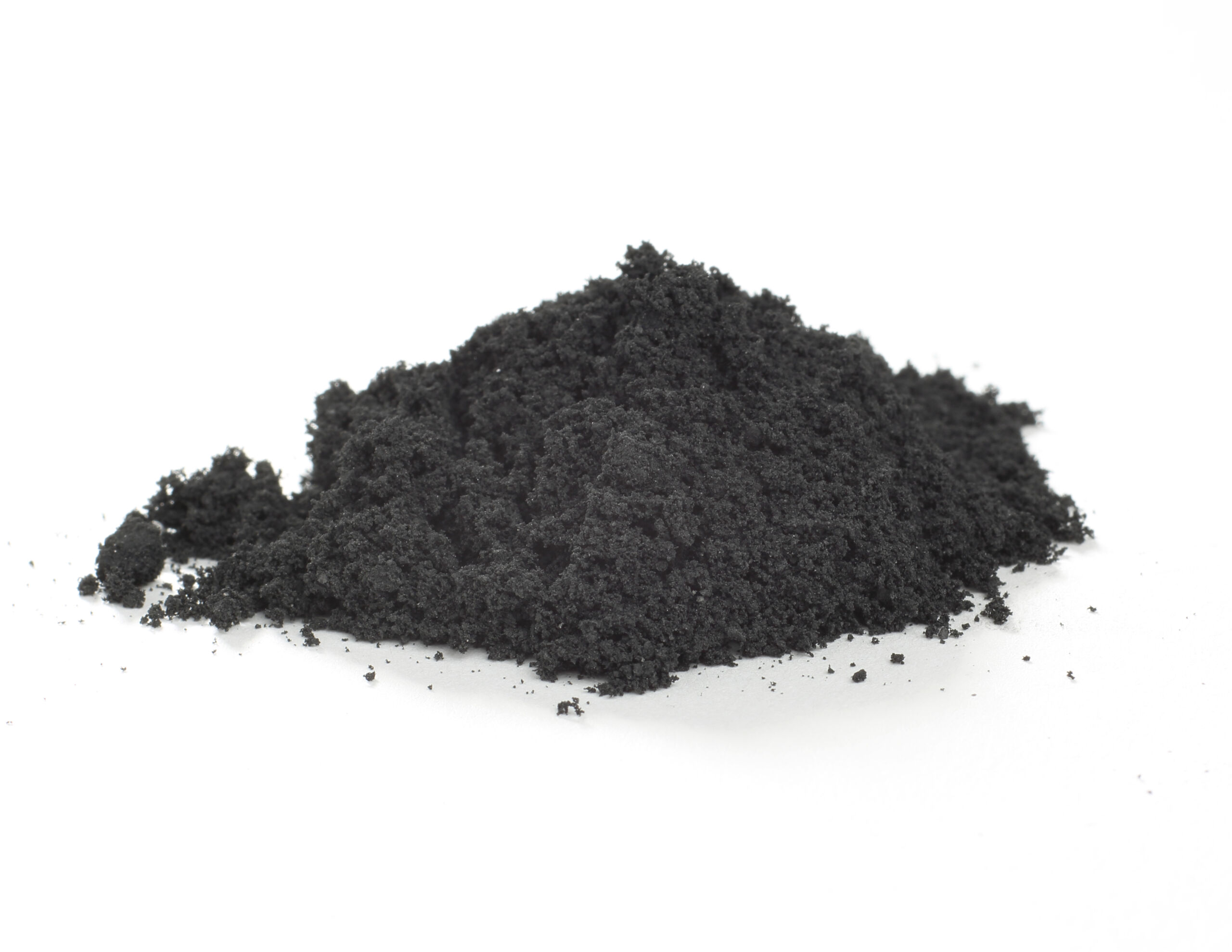
As a result of the project, flake graphene has been produced as graphene nanoplatelets. Graphene obtained by direct exfoliation using scCO2 is much less defective, has high purity, and has better electrical conductivity than graphene obtained by traditional methods. The properties of the obtained flake graphene have been determined using scanning electron microscopy, Raman spectroscopy, atomic force microscopy, and elemental analysis.
In this project, the mechanisms of direct exfoliation in scCO2, including the interaction between graphene sheets in scCO2 and the mechanism of exfoliation via depressurization have been identified.
Conclusions
As a result of the project, an innovative and effective method of flake graphene production using scCO2 has been developed. The obtained graphene is characterised by high quality and purity. The developed method is environmentally friendly and is an alternative to the standard chemical method of the flake graphene production.
Acknowledgments
This research was funded by National Science Centre, Poland – grant “Identification of mechanisms and investigations of flake graphene production by direct exfoliation using supercritical carbon dioxide”, project number 2019/35/D/ST8/02977.