Authors:
Jarosław Smyła, PhD Eng.
Łukasiewicz Research Network – Institute of Innovative Technologies EMAG
jaroslaw.smyla@emag.lukasiewicz.gov.pl
Aim of the project
Development of a digital twins of an industrial WP-70 type heating boiler with the subsequent possibility of adapting the solution to other models of power and heating boilers
Short description of the problem addressed by this project
Main research problem:
- Development and implementation of a mathematical model that, with many input parameters and many operator settings, will ensure adequate modelling of thermodynamic and chemical processes.
- Emulation is an important part of the boiler automation in the virtual boiler. The main controllers, limit parameters and other elements of the control logic should be emulated.
Main technological problems:
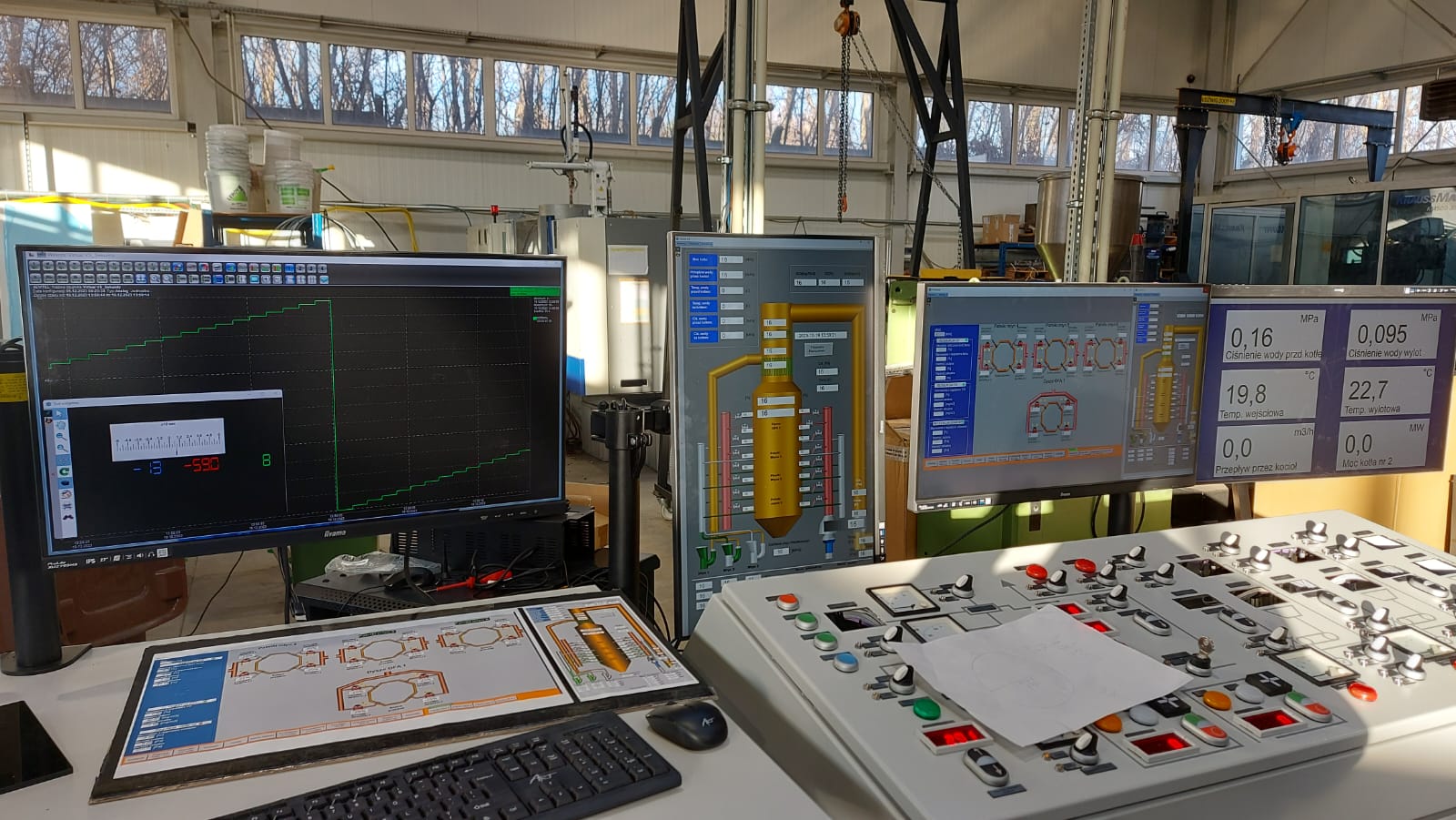
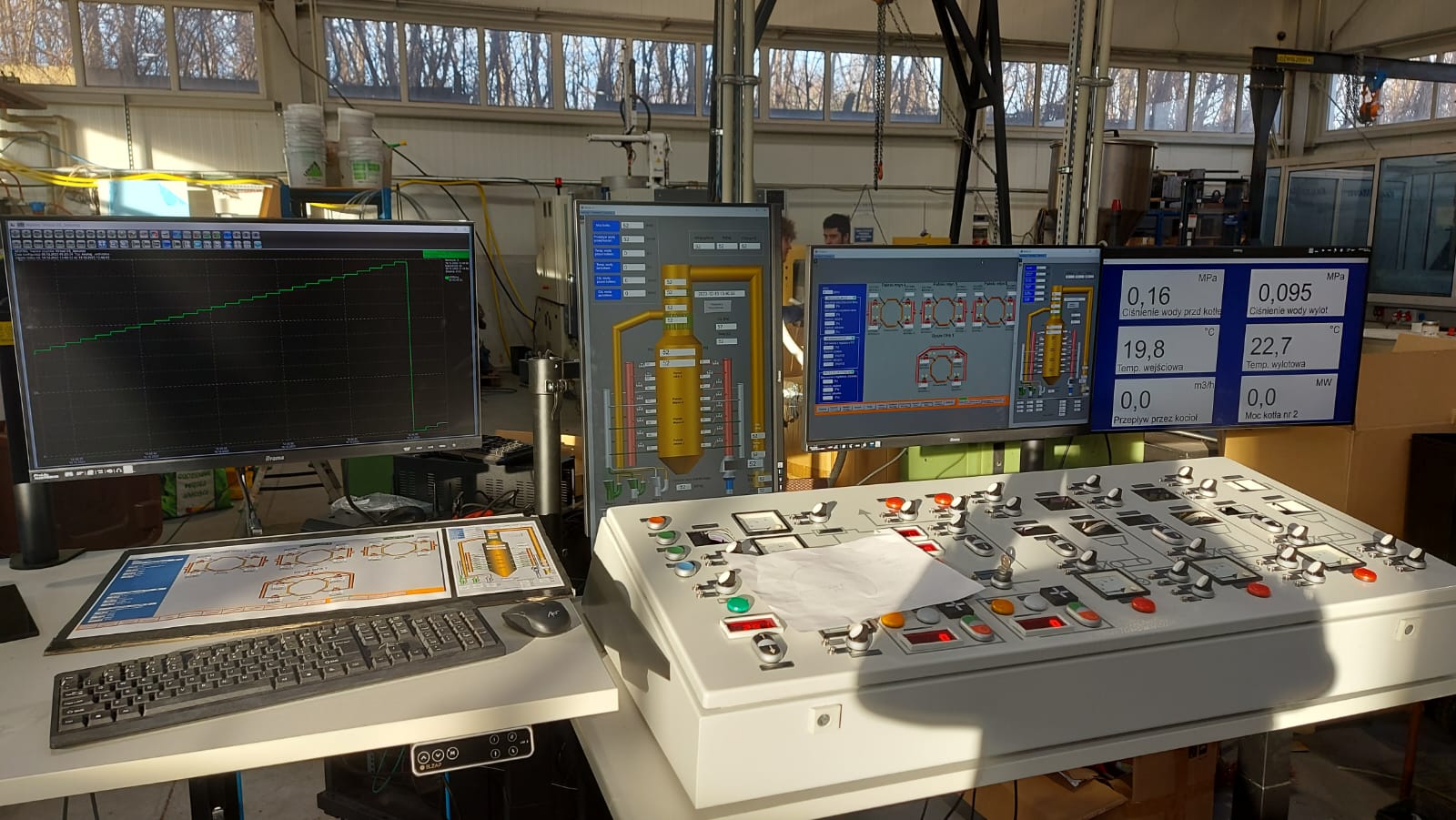
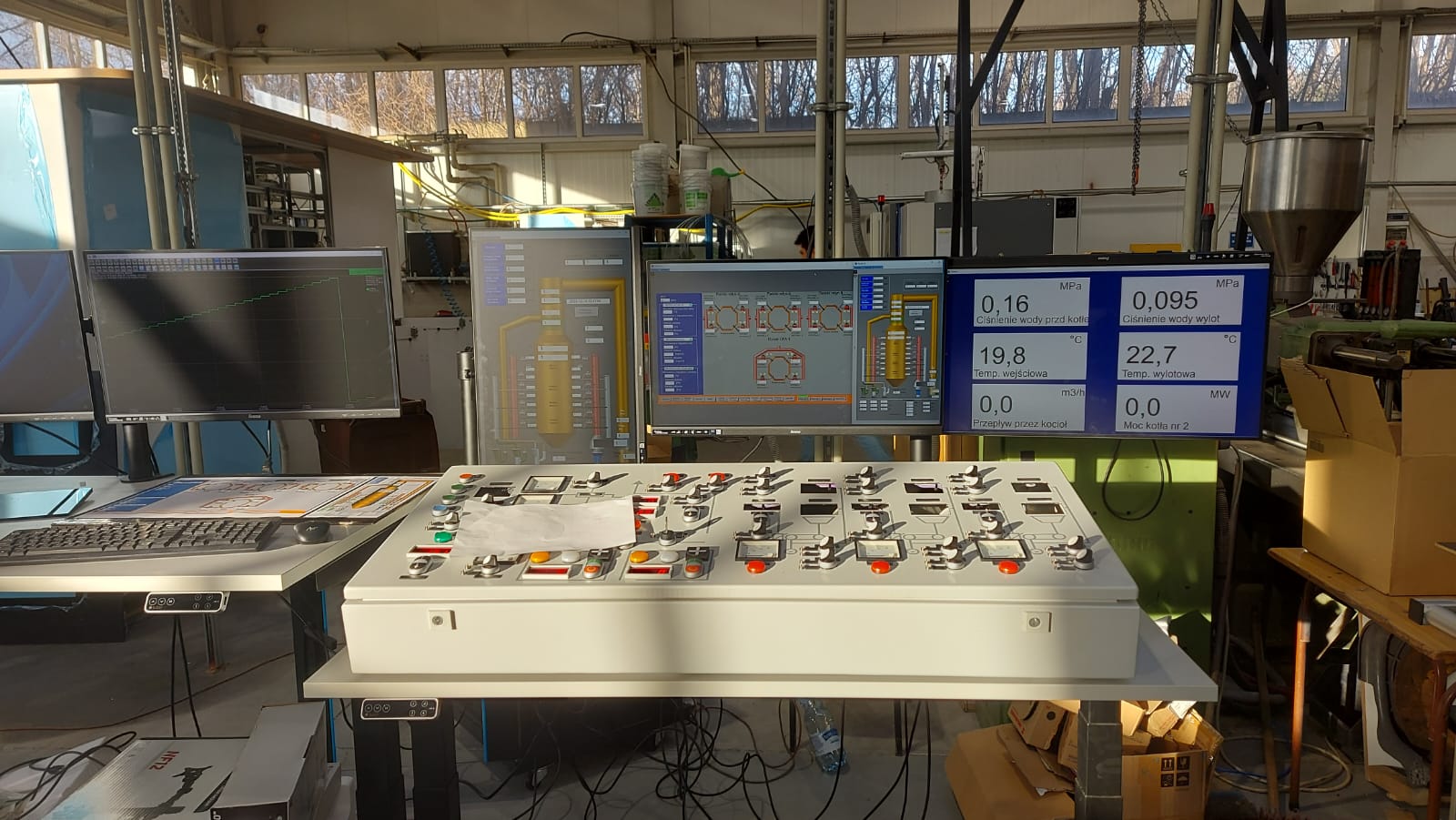
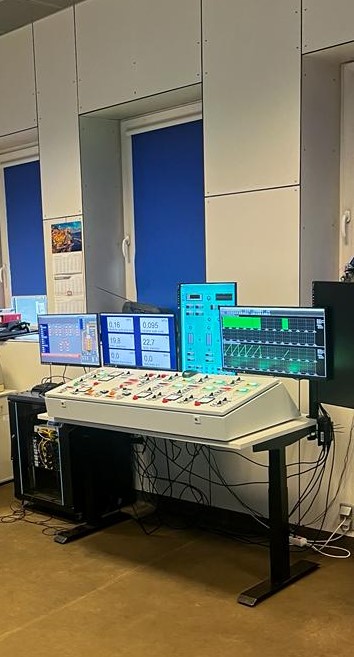
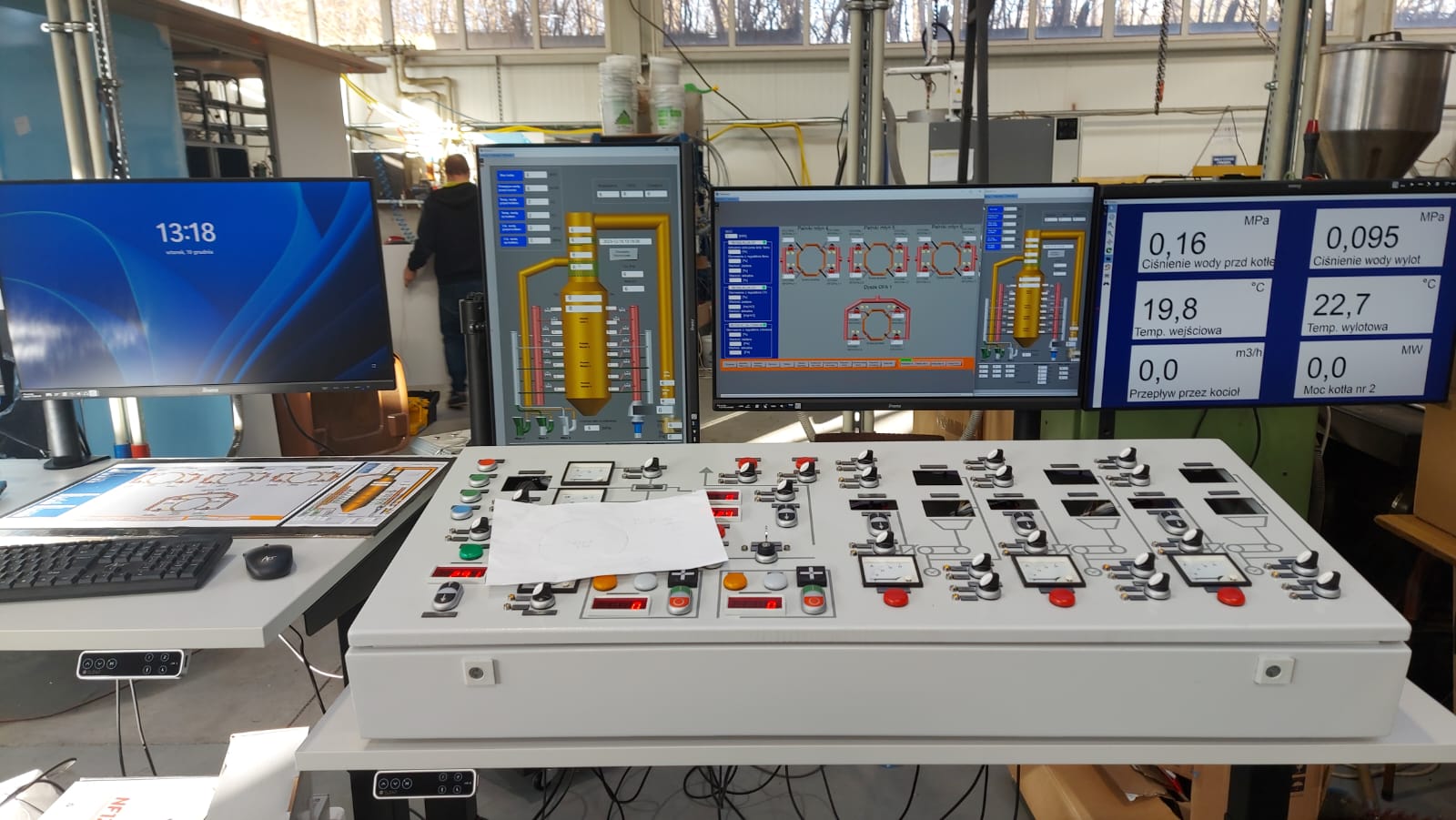
- Development of an operator’s workstation reflecting the real environment.
- Optimization of communication efficiency and reliability. Limitations resulting from disruptions, delays and potential failures should be considered.
- Implementation of mechanisms integrating the cybersecurity system and protection against external threats.
New knowledge:
- Assessment of the effectiveness and selection of mathematical methods for simulating the thermodynamics of the WP-70 boiler.
- Result of the analysis of the WP-70 boiler regulators, assessment of their importance for the simulation of boiler operation; selection of a group of parameters crucial for the effectiveness of the simulation.
- Result of the analysis of the WP-70 boiler regulation limit values and limit indications.
- Results of testing the accuracy of mapping a real boiler by a digital simulator using selected mathematical modeling methods and controllers.
- Optimized mathematical models and controller configurations for simulating the behavior of the WP-70 boiler.
Main results and achievements
The solution is to provide high-quality simulations of the operation of a real boiler and thus to ensure the possibility of operational optimization, testing and implementation of improvements, increase of the operational safety of heating plants or power plants, and professional development of operators. An improvement in boiler availability and higher reliability of energy production is expected thanks to the elimination of some operator errors and type analyses. In training conditions, the solution will serve as an educational and research milieu for future operators and energy engineers, allowing them to improve professional skills and test extreme scenarios and optimization assumptions.
Conclusion
The innovation of the project is based on advanced modeling of thermodynamic processes, the ability to adapt controllers, and the use of specialized knowledge for high-fidelity simulations.
An important feature of the solution is a faithful reflection of the operators’ working environment.
In the tests conducted so far, comparison of the values returned by the model with real data shows that most of the parameters are well reproduced by the mathematical model. However, there are exceptions. Any errors may be caused by the following problems:
- inadequately small complexity of a specific model,
- uncertainties related to the measurement of a given quantity – quality of measurement data.
Currently, the solution is still being tested at the thermal power plant.
Acknowledgements
The project was implemented by Kuncar S.A. and co-financed by the National Center for Research and Development. Furthermore, a special acknowledgment is extended to the PEC Gliwice heating company for their help in the implementation of this project.