Authors
Katarzyna Zielinska
Łukasiewicz Research Network – Institute of Heavy Organic Synthesis “Blachownia”
katarzyna.zielinska@icso.lukasiewicz.gov.pl
Aim of the project
The aim of the project was to develop a technology for obtaining Bisphenol TMC as a raw material and as a modifier of innovative polycarbonates. The addition of BPTMC to polycarbonate materials has a positive effect on their functional parameters and facilitates their processing.
Short description of the problem addressed by the project:
Bisphenol TMC (BPTMC) is the raw material to produce modified polycarbonates with unique properties. They combine a high glass transition temperature (up to 220°C) with transparency and improved rheological and structural properties. Demand for this type of plastic is the fastest growing factor in the plastics sector. In a first step, 3,3,5-trimethylcyclohexanone (TMC) was subjected to a condensation reaction with phenol, and the resulting BPTMC was separated in subsequent steps of crystallization of its adduct with phenol and further crystallization from a solvent more volatile than phenol. Nowadays, polycarbonate materials are subject to increasingly stringent requirements, in particular with regard to maintaining transparency or the absence of the characteristic yellow tint.
As there are no suppliers of BPTMC production technology on the market, its development is essential to provide a raw material for the production of high molecular weight structural polycarbonates, which, when used in modular construction, can provide better strength parameters and also higher thermal resistance, which is particularly important in the case of dark colored components exposed to direct sunlight on hot days.
Main results and achievements
The project focused on a development of a technology concept for the production of BPTMC by the condensation reaction of phenol with 3,3,5-trimethylcyclohexanone in the presence of a specially selected acidic catalytic system. The process parameters have been optimized to maximize the selectivity and efficiency of the process. Analytical methods have been developed to allow constant and accurate control of the process, as well as to assess the purity of the resulting product.
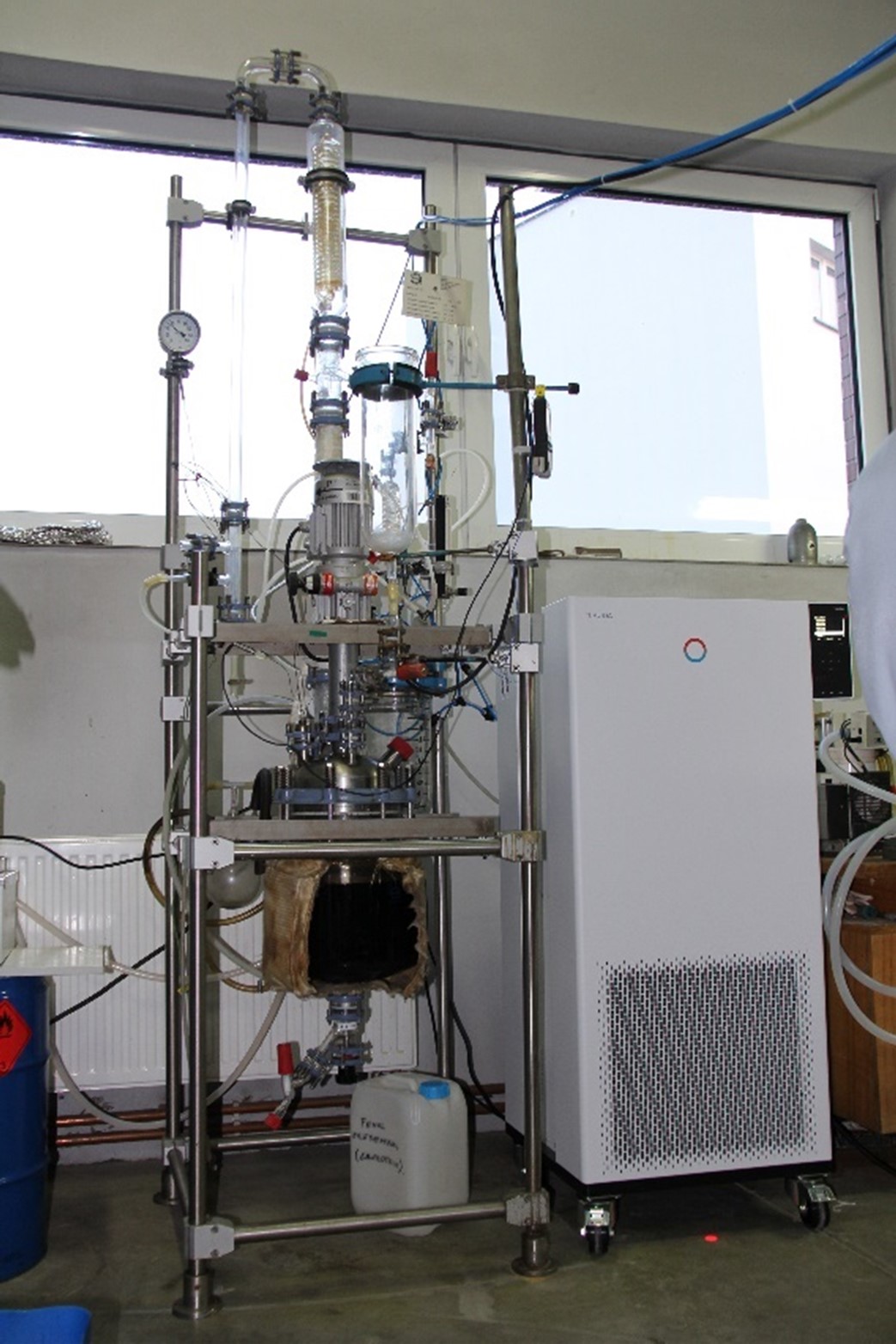
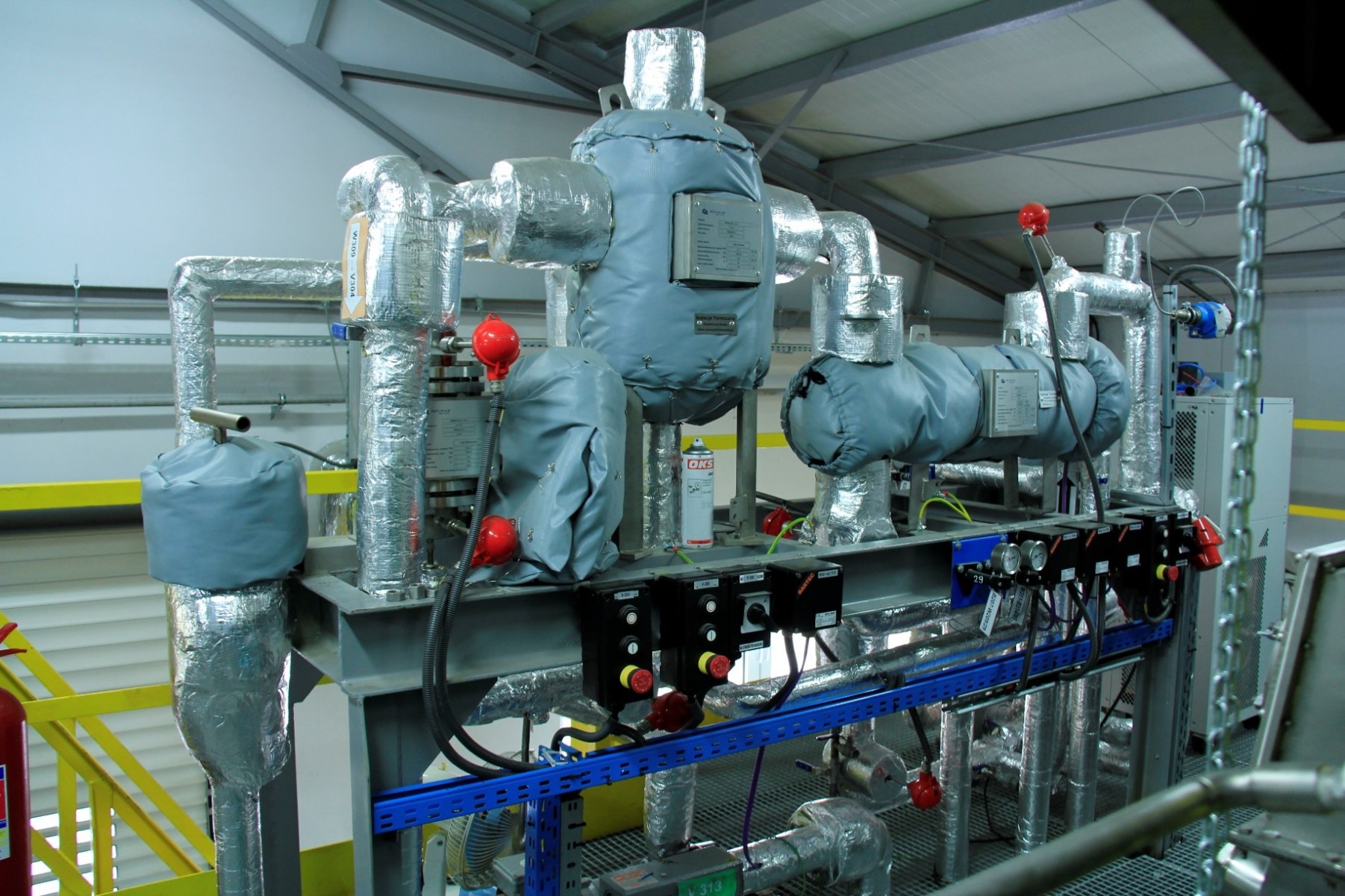
An efficient method was developed to separate crude BPTMC from the reaction mixture by adduct filtration and crystallization followed by solvent crystallization. Trials were carried out to scale up the process to production scale, the size and type of specialist equipment was selected and tested. Process design assumptions were developed.
The product (BPTMC) obtained by the project team was successfully used in application tests, resulting in production of a high-quality polycarbonate material that met the requirements established at the start of the project.
Conclusions
We present the innovative technology for obtaining high quality bisphenol TMC to change the perspective on modified polycarbonates.
The implementation of the project has made it possible to develop a concept for the technology of obtaining BPTMC, which will successfully meet the requirements for raw materials used in the production of polycarbonate plastics to be used in e.g., optics, electronics and modern building applications.
Bisphenol TMC was obtained through the condensation reaction of phenol with 3,3,5-trimethylcyclohexanone in the presence of the appropriate combination of the acidic catalysts under relatively mild conditions (low temperature, slow stirring, inert gas atmosphere). The unique equipment combination was designed to make the process more efficient and cost attractive. Crude products are separated from the reaction mixture in a form of BPTMC-phenol adduct by filtration and crystallization method and then purified by crystallization.
Acknowledgments
Work was financed from the State Budget as part of the PC-MODULE project: „BPTMC – an addition to the production of innovative structural polycarbonates for modular construction” in 2021-2023.