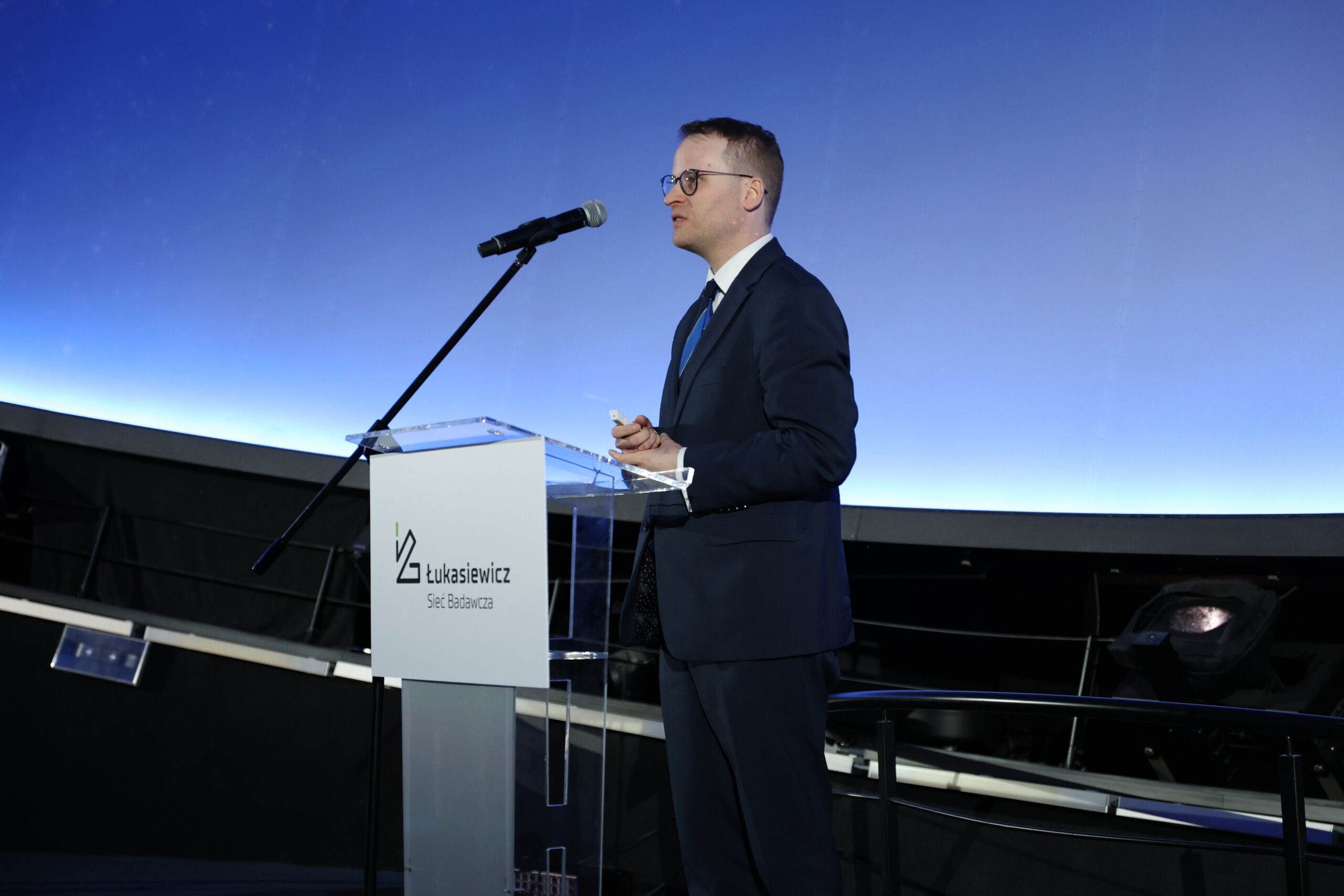
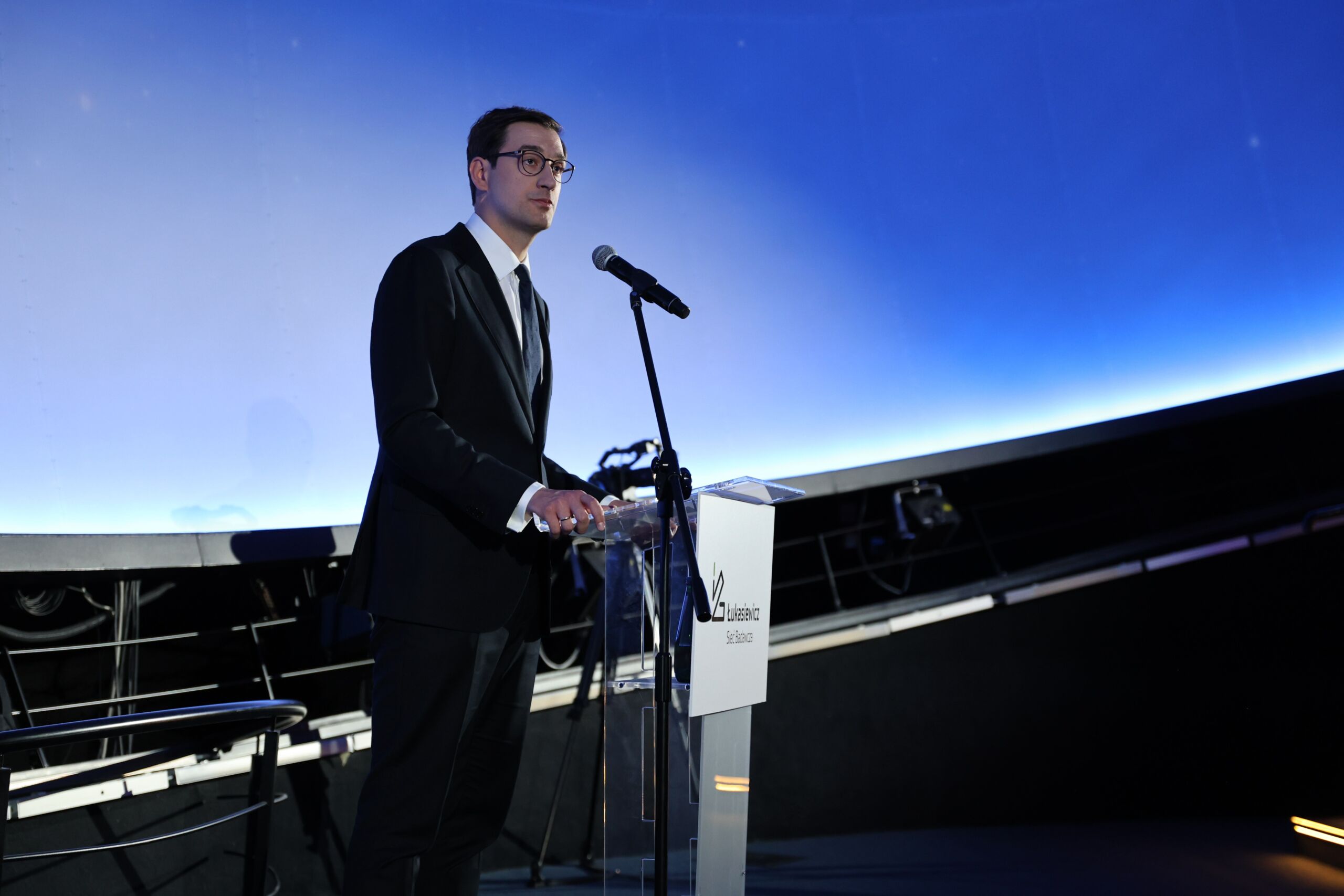
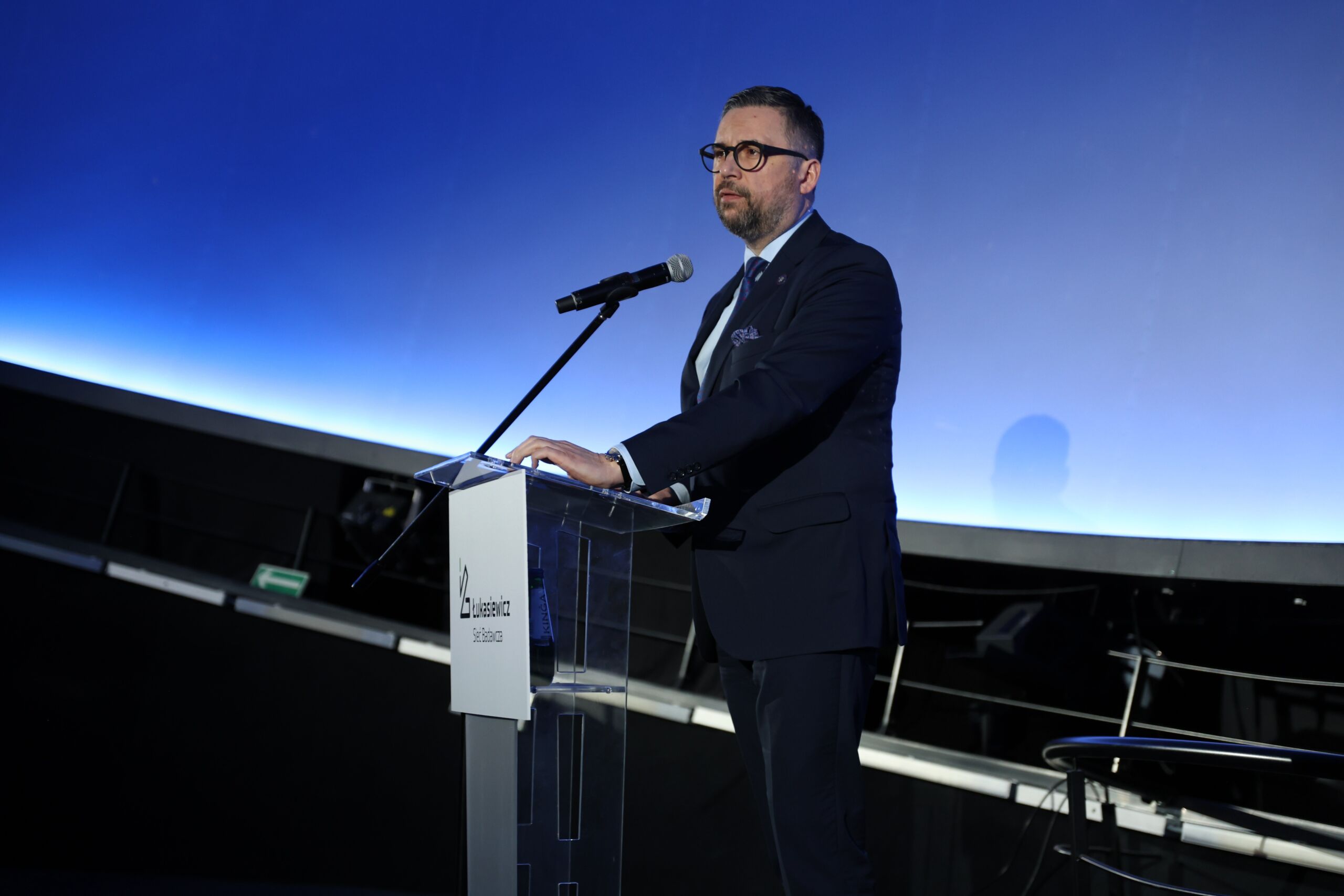
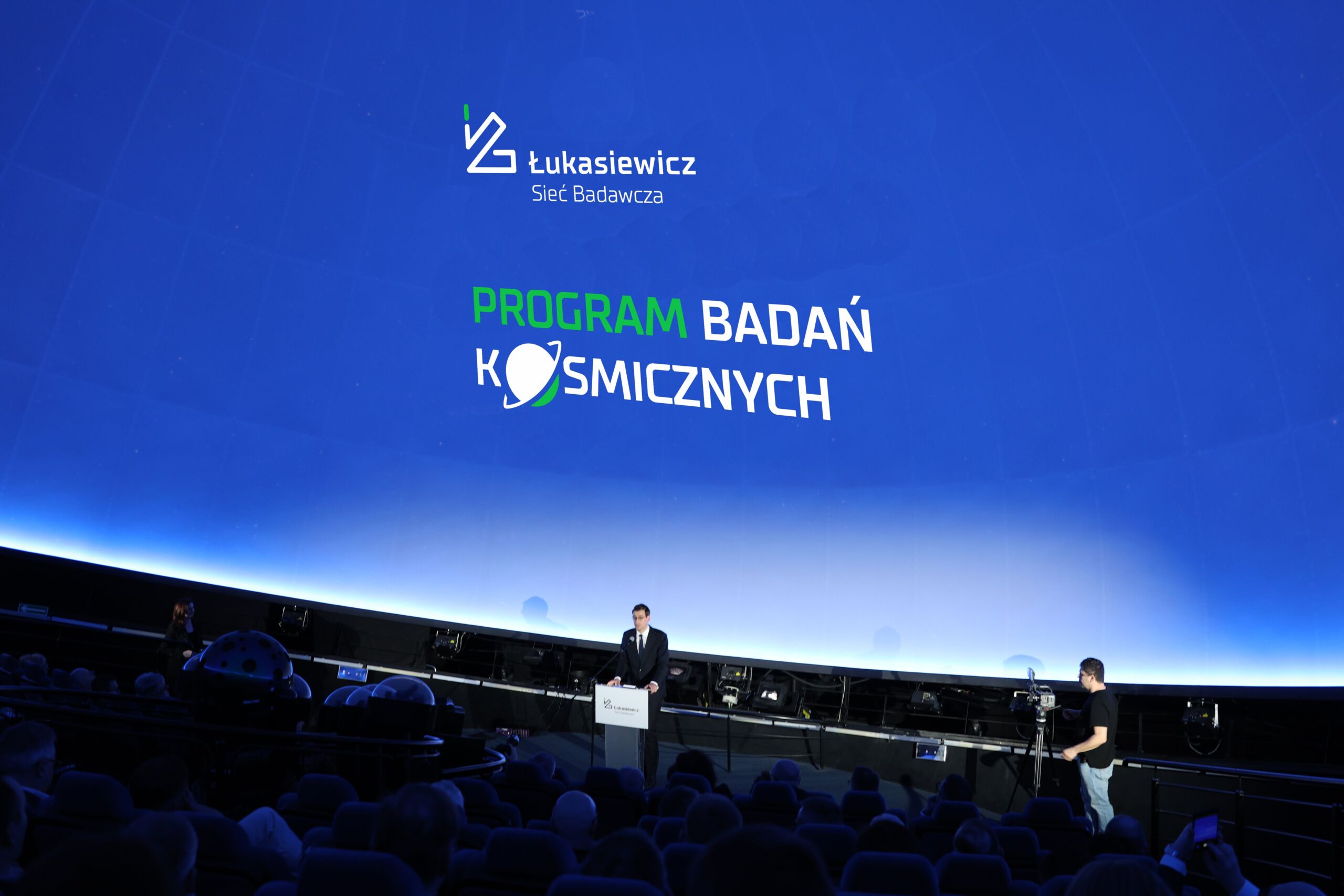
The Łukasiewicz Research Network’s Space Research Program will consist of several dozen research projects planned through 2035. They will focus on three areas: development of satellite platforms and technologies for placing them into orbit, as well as the payloads.
Full budget of the Łukasiewicz Research Network’s Space Research Program is estimated at approximately PLN 2.4 billion over 10 years. Money is expected to come from the Network’s own resources, external defense and space technology funds, and cooperation with the private sector. It will offer services to Polish and international clients and will enable civilian technologies to be used for defense purposes (dual-use). ładunkami użytecznymi (aparaturą badawczą lub innym oprzyrządowaniem umieszczonym w kosmosie).
The program will support Poland’s sovereignty in access to key space technologies, as noted by Dr Marcin Kulasek, Minister of Science and Higher Education:
“By consolidating the resources of as many as 22 institutes in the Network, we have a historic opportunity to become a European leader in space industry technologies, including in highly specialised areas such as satellite servicing and the development of green propulsion,” the Minister of Science noted. “We cannot afford to waste such an opportunity or settle for mediocrity. All the more so because we are not starting from scratch. Last year’s mission by Sławosz Uznański-Wiśniewski already placed Poland in orbit around its space ambitions. Now the Łukasiewicz Research Network’s programme is intended to anchor us even more firmly in the European space sector.”
Analysts estimate that by 2040 the global value of space projects will triple. This outlook is also confirmed by historical data from the European Space Agency, as pointed out by Dr Hubert Cichocki, President of Łukasiewicz Research Network.
“Łukasiewicz is the strategic partner for major companies specialising, among other areas, in communications. We do not want this opportunity to pass us by. The Space Research Programme is an investment in the future: in the Polish economy, Polish industry and national security,” Dr Cichocki said. He added: “Poland’s access to orbit cannot rely solely on foreign corporations and their subcontractors, on which we are currently dependent.”
Podczas inauguracji zaprezentowano plany dotyczące m.in. wynoszenia satelitów na niskie orbity za pomocą mobilnych wyrzutni i samolotów, wyspecjalizowanych zastosowań sztucznej inteligencji czy zaawansowanych materiałów, w tym obniżających wykrywalność ultraczarnych powłok. wynoszenia satelitów na niskie orbity za pomocą mobilnych wyrzutni i samolotów, wyspecjalizowanych zastosowań sztucznej inteligencji czy zaawansowanych materiałów, w tym obniżających wykrywalność ultraczarnych powłok.
The program consolidates resources of the 22 institutes belonging to the Łukasiewicz Research Network and is coordinated by the Łukasiewicz Research Network – Institute of Aviation (Łukasiewicz – ILOT). Network’s engineers have extensive experience in the space sector, particularly in cooperation with the European Space Agency, for which they are currently carrying out more than 50 projects. Within the next two years, the SPARK satellite, developed jointly by a group of the Network’s institutes coordinated by Łukasiewicz – ILOT, will be launched into orbit.
“We can put the achievements of our engineers into practice: not only by launching satellites, but also by servicing them. This means entering a new segment of the space market with enormous growth and commercialisation potential,” said Cezary Szczepański, DSc, Eng., Director of Łukasiewicz – ILOT. “Poland has a chance to become a European leader in satellite servicing, the development of digital technologies and green propulsion — and to do so with its own satellite in orbit,” he added.
The role of the Łukasiewicz Research Network’s Space Research Program in the defense context was assessed by General Mieczysław Cieniuch, former Chief of the General Staff of the Polish Armed Forces: “Satellites provide an advantage in reconnaissance and communications: they strengthen the ability to respond quickly and coordinate operations. Despite lasting alliances, the Polish Armed Forces today need solutions based on technological sovereignty, which ensures resilience and independence.”
Adam Okniński, coordinator of the Space Research Programme, pointed out that the programme is an opportunity for the development of quantum technologies, big data and artificial intelligence: “Over the past decade, Polish space sector has developed significant competences, addressing specific niches. Ever closer cooperation between public administration and domestic industrial partners will be essential.” An additional return on investment is expected due to the achievement of autonomy and security in space, Dr Okniński commented.
The proposed scope of the Programme is aligned both with national R&D priorities, particularly those related to national defence, and with the EU/ESA vision.