Authors
Unia Sp. z o.o. (consortium leader)
Łukasiewicz – Poznań Institute of Technology (consortium partner)
Łukasiewicz – Institute of Aviation (consortium partner)
info@ilot.lukasiewicz.gov.pl
Aim of the project
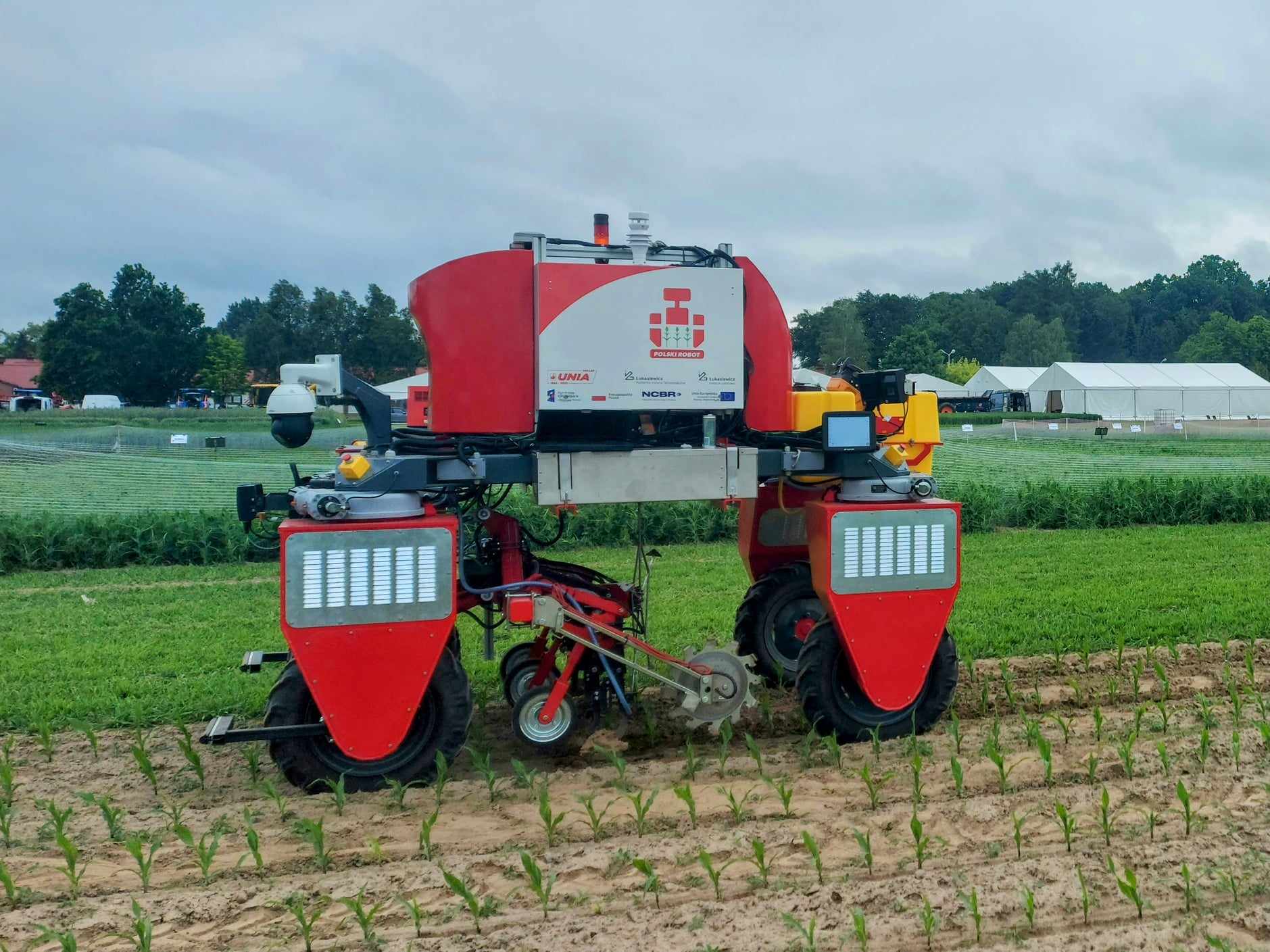
The project aims to develop, build, and implement a Field Robot for sowing and care of maize in a wide-row cultivation. It is a solution to the problems of modern agriculture (excessive use of harmful fertilizers and plant protection products (PPP)). The Field Robot in the proposed configuration will be intended for sowing, mechanical weeding, and selective spraying. It is equipped with a complex sensor system, a data processing system, and a precise system for controlling the implementation of agrotechnical processes that support work in accordance with modern agrotechnical knowledge. The Field Robot will meet the requirements of precision agriculture. The project integrates issues related to machine automation and automation of agricultural processes. The target customers for the Field Robot are the owners of fields involved in the production of maize, both in large-scale industries and in small ecological farms.
Short description of the problem addressed by the project
The project’s primary objective is to mitigate the use of environmentally harmful pesticides and fertilizers. Additionally, environmental conservation necessitates reduction of the fuel consumption and carbon dioxide emissions. Moreover, addressing the rapidly escalating costs of global food production presents a significant challenge.
Precision agriculture employs advanced technologies such as GPS, drones, and sensor networks to optimize resource management. By precisely targeting areas that require treatment, farmers can minimize the application of pesticides and fertilizers, thus reducing environmental contamination and preserving soil health. Furthermore, variable rate application enables tailored adjustments, enhancing efficiency and reducing waste.
Limiting fuel consumption involves adoption of the optimized route planning and reduced machinery usage. This not only decreases carbon emissions but also cuts operational expenses. Moreover, integrating renewable energy sources into agricultural operations further supports sustainability objectives.
Faced with rising food production costs, precision agriculture offers solutions through enhanced productivity and resource utilization. By optimizing inputs and minimizing waste, farmers can achieve higher yields while lowering production expenses.
In summary, precision agriculture plays a pivotal role in addressing environmental concerns, cost reduction, and ensuring sustainable food production worldwide.
Main results and achievements
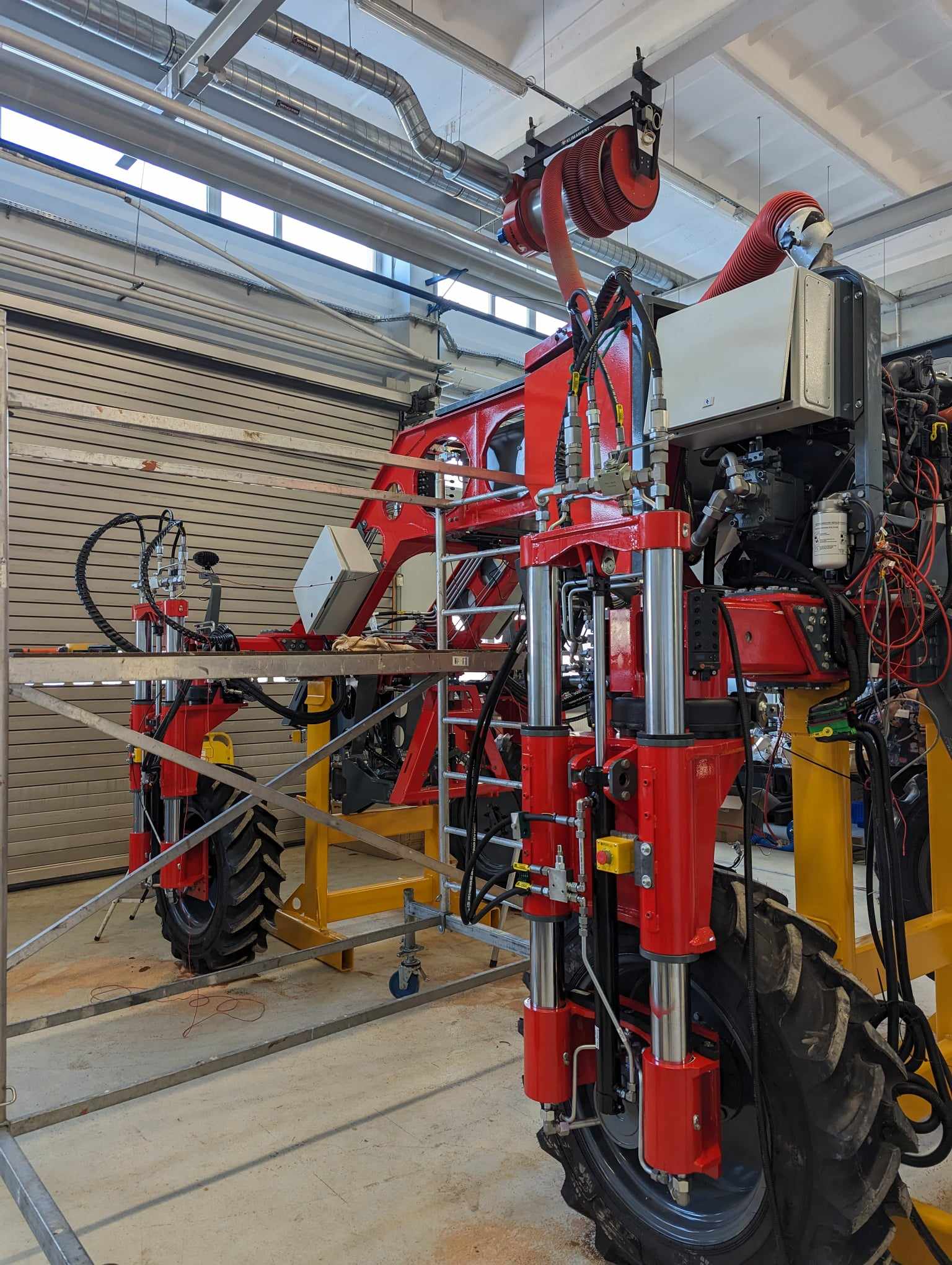
The project involves a comprehensive effort to advance agricultural practices through technological innovation. Central to this initiative is the development of a Complete Field Robot Sensing system. This system will coordinate sensors for gathering vital data about the robot’s environment, including plant status, their precise locations, and their position within the field. Additionally, a Crop Cultivation Database system will be established to store standardized corn growth and health data, aiding in plant identification and assessment. Furthermore, the project includes designing a sophisticated control system and algorithms for the Field Robot to manage traction and execute agrotechnical processes effectively. A specialized precision seeder for maize sowing, compatible with an autonomous driving platform will be developed. Weeding tools capable of managing inter-row spaces and areas between crop rows will also be created. Additionally, selective surface and subsurface spraying tools will be devised to optimize crop management. Finally, the project will involve construction of an experimental model and prototype of the Field Robot, followed by rigorous testing and validation through both laboratory experiments and real-world field trials.
Conclusion
The solution to modern agricultural problems may be an application of a standard tool platform such as an autonomous robot for seeding, weeding, and selective spraying with it design (power demand, stability, maneuverability, tool suspension) adapted to these operations. This will result in a lightweight machine with good traction properties, causing minimal soil degradation and capable of performing tasks in challenging terrain conditions.
Field Robots capable of performing such agricultural tasks are not produced in Poland, and their availability worldwide is limited. Developing a system for plant identification and localization in the field and guiding the robot through the rows of cultivated plants will be the primary goals of the ongoing research. This system will include two subunits: Complete Field Robot Sensing (CFRS) and Crop Cultivation Database (CCD). Its operation will involve acquiring data and processing it to obtain precise information transmitted to the control systems of executive elements.
Acknowledgments
We want to thank the entire team for all the achievements made in this project. We are honored with the opportunity to participate in such a wonderfully organized collaboration among project partners. We express our gratitude to the engineers, scientific team, and all project support staff. Without you, this magnificent success would not have been possible. Our achievement is a testament to the entire team’s dedication, expertise, collaboration, and total commitment.